
When a laboratory manager or procurement officer begins to evaluate laboratory autoclave price in India, the decision is rarely about the sticker cost alone. Sterilisation reliability, compliance with Indian standards, after‑sales service, and total cost of ownership all shape the final purchase. In this guide we break down the technical fundamentals, key specifications, and practical buying tips so you can compare offers with confidence.
Table of Contents
- How a laboratory autoclave works – the science behind the steam
- Major types of laboratory autoclaves available in India
- Key specifications that influence laboratory autoclave price in India
- Practical selection criteria for Indian laboratories
- Comparing autoclave options – a quick side‑by‑side
- Installation, calibration and routine maintenance
- Common mistakes to avoid when buying an autoclave
- Frequently Asked Questions
- Final verdict – balancing cost and capability
How a laboratory autoclave works – the science behind the steam
All laboratory autoclaves rely on saturated steam under pressure to achieve sterilisation. The basic cycle consists of:
- Pressurisation: Water is heated to generate steam, typically at 121 °C (15 psi) or 134 °C (30 psi) for tougher loads.
- Exposure: The steam penetrates the load for a predefined dwell time (usually 15–30 min) to inactivate bacterial spores.
- Exhaust: Controlled venting releases pressure and removes residual moisture.
- Drying (optional): A vacuum or heated air phase reduces moisture on glassware and instruments.
The combination of temperature, pressure, and time is defined by the BIS standards for autoclaves, which ensure that the equipment meets Indian regulatory requirements for medical and research use.
Major types of laboratory autoclaves available in India
Choosing the right model starts with understanding the three most common configurations:
1. Horizontal (bench‑top) autoclaves
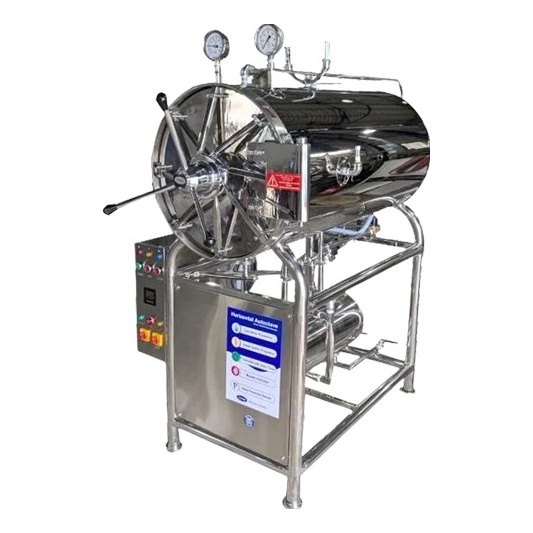
These units have a horizontal chamber and a swinging door, making them ideal for loading racks, glassware, and media bottles. They are popular in teaching labs and small‑scale research facilities. Capacity ranges from 10 L to 30 L, with price points typically between ₹1.5 lakh and ₹4 lakh depending on automation level.
2. Vertical (standing‑type) autoclaves
Vertical autoclaves feature a top‑loading door and a compact footprint, suited for space‑constrained environments such as pharma quality‑control labs in Chennai or Bangalore. Capacities of 15 L to 40 L are common, and the price can vary from ₹2 lakh to ₹5 lakh.
3. Large‑capacity or industrial autoclaves
For high‑throughput sterilisation—e.g., hospitals, biotech manufacturing, or large research institutes—industrial autoclaves offer 50 L to 200 L chambers with programmable cycles, data logging, and robust stainless‑steel construction. Prices start around ₹6 lakh and can exceed ₹15 lakh.
Key specifications that influence laboratory autoclave price in India
While the base price is the most visible figure, several technical parameters drive cost differences:
- Chamber capacity: Larger volumes require thicker stainless‑steel walls and more powerful steam generators.
- Temperature & pressure range: Models that reach 134 °C/30 psi or offer vacuum drying are priced higher.
- Control system: Touch‑screen PLCs, remote monitoring, and data‑logging capabilities add to the price.
- Safety features: Over‑pressure relief valves, door interlocks, and automatic lockout mechanisms are mandatory for compliance and affect cost.
- Energy efficiency: Insulated chambers and variable‑frequency drives reduce operating expenses but increase upfront cost.
- Warranty & service package: Extended warranty (2–5 years) and on‑site calibration services are often bundled, influencing the quoted price.
Practical selection criteria for Indian laboratories
When you compare laboratory autoclave price in India across vendors, keep the following checklist in mind:
- Application profile: Identify the typical load (glassware, media, metal instruments) and required cycle (standard, high‑temperature, or liquid).
- Space availability: Measure the floor area and ceiling height; vertical units fit tighter spaces.
- Power supply: Verify that the lab can provide the required voltage (220 V/1 phase or 380 V/3 phase) and amperage.
- Regulatory compliance: Confirm that the autoclave meets BIS, ISO 13485, and, if relevant, US FDA GMP guidelines.
- After‑sales support: A local service network in Chennai, Mumbai, or Delhi reduces downtime.
- Total cost of ownership: Include consumables (water filters, gasket replacements), energy usage, and calibration fees.
Comparing autoclave options – a quick side‑by‑side
| Feature | Horizontal bench‑top | Vertical standing‑type | Industrial large‑capacity |
|---|---|---|---|
| Typical capacity | 10‑30 L | 15‑40 L | 50‑200 L |
| Footprint | Wide, low | Tall, narrow | Large floor area |
| Cycle flexibility | Standard & 134 °C | Standard, 134 °C, vacuum | All of the above + programmable protocols |
| Price range (₹) | 1.5 lakh – 4 lakh | 2 lakh – 5 lakh | 6 lakh – 15 lakh+ |
| Ideal users | Teaching labs, small research groups | Pharma QC, biotech startups | Hospitals, large R&D centres |
Installation, calibration and routine maintenance
Proper installation is essential for safety and performance. Follow these steps:
- Place the autoclave on a level, vibration‑free surface with a dedicated drainage line.
- Connect to a clean water supply with a 5 µm filter to prevent scale buildup.
- Verify electrical grounding and install a dedicated circuit breaker as per the manufacturer’s manual.
- Perform a first‑use validation run with a biological indicator (e.g., Bacillus subtilis spores) to confirm sterility assurance level (SAL) 10⁻⁶.
- Schedule quarterly calibration of temperature and pressure sensors; many Indian suppliers offer on‑site calibration as part of a service contract.
Common mistakes to avoid when buying an autoclave
Even experienced procurement teams can overlook simple pitfalls:
- Focusing solely on price: A low upfront cost may hide higher operating expenses due to poor insulation or lack of energy‑saving features.
- Ignoring local service availability: A unit without a nearby technician can lead to prolonged downtime.
- Skipping validation: Not performing a biological indicator test after installation can compromise research integrity.
- Under‑estimating space: Forgetting door swing clearance can cause installation delays.
- Choosing the wrong capacity: Oversized chambers waste energy; undersized units require frequent cycle repeats.
Frequently Asked Questions
What is the typical lifespan of a laboratory autoclave in India?
With regular maintenance, most stainless‑steel autoclaves last 10‑15 years. Critical components such as gaskets and pressure switches usually require replacement every 3‑5 years.
Are there any tax incentives for purchasing sterilisation equipment?
Under the GST regime, laboratory equipment is taxed at 18 %. Certain research institutions may claim capital subsidies under the Department of Science & Technology, but you should consult your finance team for eligibility.
How does water quality affect autoclave performance?
Hard water leads to scale on the heating element, reducing steam generation efficiency and increasing energy consumption. Installing a water softener or using deionised water can extend the service interval.
Can I automate record‑keeping for sterilisation cycles?
Modern units with PLC controllers provide USB or Ethernet data export. Integration with LIMS (Laboratory Information Management System) is possible, especially for GMP‑regulated environments.
Is a vacuum dryer necessary for glassware?
Vacuum drying accelerates moisture removal, preventing water spots on delicate glassware. For routine microbiology work, a standard dry cycle is sufficient; for analytical chemistry, a vacuum dryer adds value.
Final verdict – balancing cost and capability
Understanding laboratory autoclave price in India requires looking beyond the headline number. Align the equipment’s capacity, temperature range, and control features with your lab’s workload, and factor in installation, calibration, and service contracts. For most Indian research institutions, a mid‑range horizontal autoclave with a 20‑L chamber and programmable cycles offers the best mix of affordability and functionality. Larger pharmaceutical quality‑control labs may justify the extra expense of a vertical unit with vacuum drying.
Before you finalize the purchase, ask the supplier for a detailed quotation that breaks down the base price, optional accessories, warranty, and annual service fees. Verify that the model complies with BIS standards and that spare parts are stocked locally.
Ready to explore specific models that match your budget and technical needs? Check the latest horizontal autoclave offerings from Indian manufacturers and request a free on‑site quotation today.
