In laboratory practice, maintaining precise temperature control is essential for reproducible results, especially in pharmaceutical research, analytical chemistry, and biotechnology. For facilities located in Tamil Nadu, the search for reliable laboratory chiller manufacturers in Chennai often begins with a focus on local expertise, service response time, and compliance with Indian standards. This guide walks you through the technical fundamentals, selection criteria, and after‑sales considerations that help laboratory managers and procurement teams make an informed decision.
Table of Contents
- How a Laboratory Chiller Works – Core Principles
- Key Features to Evaluate from Laboratory chiller manufacturers in Chennai
- Why Local laboratory chiller manufacturers in Chennai Matter
- Types of Laboratory Chillers Available from Chennai Suppliers
- Practical Selection Criteria for Procurement Teams
- Comparison with Alternative Temperature‑Control Technologies
- Installation, Calibration, and Routine Maintenance
- Common Mistakes to Avoid When Purchasing a Laboratory Chiller
- Frequently Asked Questions
- Final Verdict and Next Steps
How a Laboratory Chiller Works – Core Principles
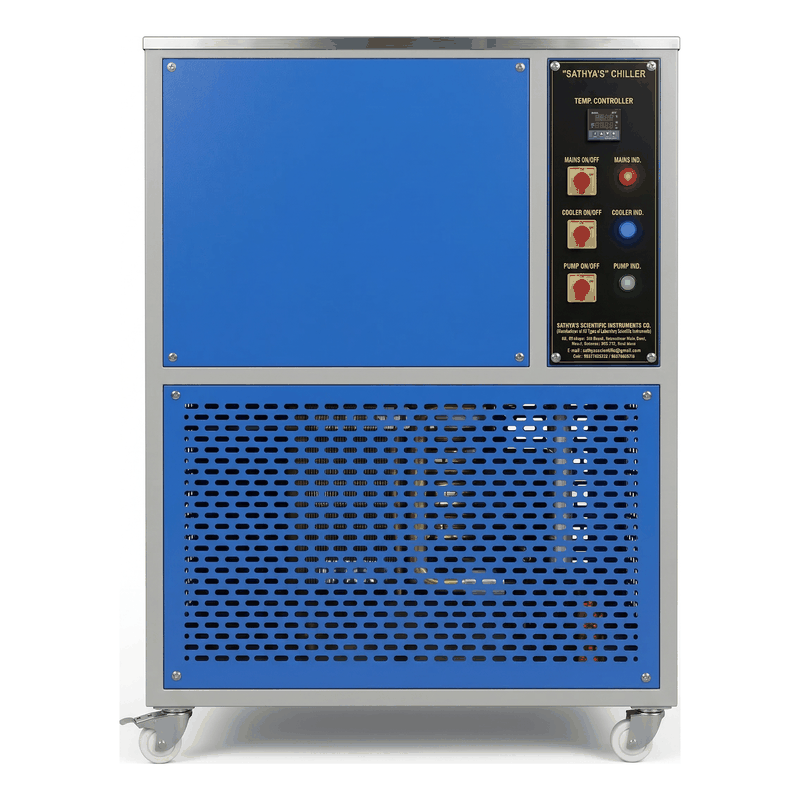
A laboratory chiller is a closed‑loop refrigeration system designed to extract heat from a circulating fluid (usually water or a glycol‑water mixture) and maintain it at a set temperature. The basic cycle includes:
- Compressor: Raises the refrigerant pressure, enabling heat absorption.
- Condenser: Releases heat to the ambient environment, often with a fan‑assisted heat exchanger.
- Expansion valve: Drops the refrigerant pressure, creating a low‑temperature zone.
- Evaporator: Directly cools the circulating fluid through a heat‑exchange coil.
- Temperature controller: Provides digital set‑point control, typically with ±0.1 °C accuracy.
In most Indian labs, a glycol‑water mix (10‑30 % ethylene glycol) is used to prevent freezing when the chiller operates below 0 °C. The system is sealed, so contamination risk is minimal, and the fluid can be filtered to remove particulates that could affect heat transfer.
Key Features to Evaluate from Laboratory chiller manufacturers in Chennai
When you compare different vendors, focus on the following specifications:
- Temperature range: –20 °C to +40 °C covers most analytical and bioprocess needs.
- Cooling capacity: Expressed in kW or BTU/h; match it to the heat load of your equipment (e.g., chromatography columns, incubators).
- Stability and accuracy: ±0.1 °C or better is typical for high‑precision work.
- Construction material: Stainless‑steel (304/316) tanks resist corrosion from glycol and chemicals.
- Control interface: LCD display, programmable alarms, remote monitoring (RS‑485 or Ethernet) for integration with lab management software.
- Safety features: Low‑fluid level alarm, high‑temperature cut‑off, and built‑in pressure relief.
Why Local laboratory chiller manufacturers in Chennai Matter
Choosing a Chennai‑based supplier brings several practical advantages:
- Quick response time: On‑site service engineers can reach most parts of Tamil Nadu within a day, minimizing equipment downtime.
- Regulatory alignment: Local manufacturers are familiar with Bureau of Indian Standards (BIS) guidelines for temperature‑controlled devices, ensuring that the chiller meets IS 15287 and related safety norms.
- Customization: Many Chennai firms can tailor tank size, pump capacity, or control logic to fit niche applications such as high‑throughput screening or cryogenic sample storage.
- Spare‑parts ecosystem: A regional network of distributors means faster access to replacement compressors, thermostats, and pumps.
Types of Laboratory Chillers Available from Chennai Suppliers
Recirculating Water Chillers
These are the most common models, using a water‑to‑water heat exchange. They are ideal for cooling HPLC columns, spectrophotometers, and reaction vessels. Capacity typically ranges from 0.5 kW to 10 kW.
Glycol‑Based Chillers
When sub‑zero temperatures are required, a glycol mixture prevents the fluid from freezing. These units often include a built‑in pump with variable speed control to match flow demand.
Compact Bench‑Top Chillers
For teaching labs or small R&D benches, a bench‑top chiller occupies less than 30 cm of width and can be mounted on a laboratory cart. They usually provide 0.5‑2 kW cooling capacity.
Industrial‑Scale Chillers
Large pharmaceutical plants may need multi‑ton chillers with modular designs, redundant compressors, and PLC‑based control for continuous operation.
Practical Selection Criteria for Procurement Teams
Below is a checklist that laboratory managers can use when evaluating potential laboratory chiller manufacturers in Chennai:
- Does the supplier provide a detailed data sheet with temperature accuracy, stability, and power consumption?
- Is the chiller certified by BIS or another recognized authority?
- What is the warranty period and what does it cover (compressor, tank, control electronics)?
- Are installation, commissioning, and calibration services included?
- Can the manufacturer supply spare parts within 7‑10 business days?
- Is there a provision for remote diagnostics or IoT connectivity?
- What are the total cost of ownership factors – energy efficiency (EER), expected maintenance intervals, and consumables?
Comparison with Alternative Temperature‑Control Technologies
While chillers are the workhorse for liquid cooling, other options exist:
- Thermoelectric (Peltier) coolers: Offer precise control for low‑capacity (< 100 W) applications but have lower efficiency and limited temperature range.
- Ice‑water baths: Simple and inexpensive for short‑term cooling, yet they lack temperature stability and require manual ice replenishment.
- Cryogenic freezers: Provide temperatures below –80 °C, suitable for long‑term sample storage, but they are not interchangeable with standard laboratory chillers.
For most analytical and process‑control needs, a dedicated recirculating chiller remains the most reliable and energy‑efficient choice.
Installation, Calibration, and Routine Maintenance
Proper installation ensures longevity and performance:
- Location: Place the chiller on a level, vibration‑free surface with at least 30 cm clearance on all sides for airflow.
- Electrical supply: Verify voltage, phase, and grounding according to the manufacturer’s nameplate.
- Plumbing: Use insulated tubing to reduce heat gain; install a pressure‑relief valve and a vent to avoid air bubbles.
- Calibration: Perform an initial calibration using a certified reference thermometer; repeat annually or after major service.
- Maintenance schedule: Clean condenser fins quarterly, replace the evaporator filter every 6 months, and inspect the refrigerant charge annually.
Most Chennai manufacturers offer a service contract that includes preventive maintenance visits, which can be a cost‑effective way to keep the system in spec.
Common Mistakes to Avoid When Purchasing a Laboratory Chiller
- Choosing a unit solely based on price without verifying temperature stability.
- Neglecting to match the pump flow rate to the heat load, leading to temperature gradients.
- Overlooking the need for a glycol‑compatible tank when sub‑zero operation is planned.
- Skipping the review of warranty terms and after‑sales support availability.
- Installing the chiller in a high‑humidity area without proper dehumidification, which can cause corrosion.
Frequently Asked Questions
What is the typical lifespan of a laboratory chiller?
With regular maintenance, most chillers last 10–15 years. Compressor wear and refrigerant leakage are the primary factors that can shorten this period.
Can I integrate a chiller with a laboratory information management system (LIMS)?
Many modern chillers offer Ethernet or RS‑485 ports that allow data logging and remote control. Integration requires compatible software drivers, which most manufacturers provide upon request.
Is glycol safe for all laboratory applications?
Glycol is generally safe for most chemical processes, but it can interfere with certain enzymatic assays. In such cases, use pure deionized water and ensure the chiller’s temperature range does not drop below 0 °C.
How do I calculate the required cooling capacity?
Estimate the total heat load (in watts) of the equipment you intend to cool, add a 20 % safety margin, and select a chiller whose capacity exceeds this value. Manufacturers often provide a sizing calculator in their product literature.
Do Indian standards require a specific safety certification for chillers?
Yes. Chillers used in laboratories must comply with BIS IS 15287 for refrigeration safety and IS 1350 for electrical safety. Verify that the supplier provides a compliance certificate.
Final Verdict and Next Steps
For laboratories in Chennai and the broader Tamil Nadu region, partnering with a local laboratory chiller manufacturers in Chennai offers faster service, easier customization, and assurance of compliance with Indian standards. Evaluate the technical specifications, warranty, and after‑sales support before finalizing a purchase. Remember that the total cost of ownership includes energy consumption, maintenance contracts, and spare‑part availability.
If you are ready to explore specific models or need a quote, browse the chiller catalog on our site and feel free to reach out. You may also find our guide on laboratory fume cupboard suppliers in Tamil Nadu useful for related procurement decisions.