When you search for laboratory water bath manufacturers in India, you are looking for reliable partners who can deliver temperature‑controlled immersion equipment that meets the strict demands of pharma, biotech, academic, and industrial labs. In this guide we explore how water baths work, the key features offered by Indian manufacturers, and what you should verify before signing a purchase order.
Table of Contents
- How a Laboratory Water Bath Operates – Core Working Principle
- Key Components and Their Functions
- Typical Specifications from Indian Water Bath Manufacturers
- Applications Across Sectors
- Choosing the Right Water Bath – Practical Selection Criteria
- Comparing Indian Manufacturers with Global Brands
- Maintenance, Safety, and Troubleshooting Tips
- Common Mistakes to Avoid When Purchasing
- Frequently Asked Questions
- Final Verdict and Next Steps
How a Laboratory Water Bath Operates – Core Working Principle
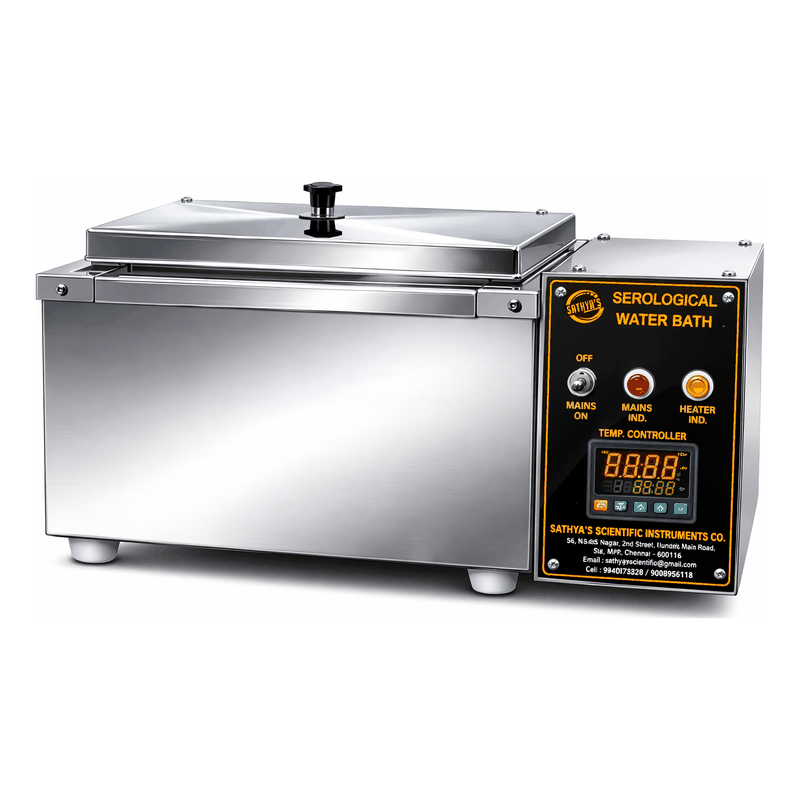
At its heart a water bath is a closed vessel filled with distilled or de‑ionised water heated by an electric heating element. A thermostat monitors the water temperature with a precision sensor (usually a Pt100 or thermistor) and adjusts the power to the heater to maintain the set point. Circulation pumps (optional) ensure uniform temperature throughout the bath, while insulated walls minimise heat loss and protect users from accidental burns.
Key Components and Their Functions
- Heating element: Typically stainless‑steel or titanium, rated for 500 W to 2 kW depending on bath size.
- Temperature controller: Digital PID controller with LCD display; some models offer RS‑232 or USB communication for data logging.
- Tank material: Food‑grade stainless steel (SS304/SS316) or high‑density polypropylene for corrosion resistance.
- Safety devices: Over‑temperature cut‑off, dry‑run protection, and insulated lids.
- Accessories: Adjustable racks, magnetic stirrers, and sample holders for 12‑hole or 24‑hole configurations.
Typical Specifications from Indian Water Bath Manufacturers
While exact figures vary, most Indian suppliers provide water baths with the following ranges:
- Temperature range: 20 °C – 99 °C (some models extend to 120 °C for oil baths).
- Capacity: 2 L – 30 L, with modular designs for larger volumes.
- Temperature accuracy: ±0.1 °C to ±0.5 °C (class A compliance).
- Uniformity: ±0.2 °C across the tank for baths equipped with circulation.
- Power supply: 220 V ± 10 % (single‑phase) or 380 V three‑phase for high‑capacity units.
Applications Across Sectors
Laboratory water baths are indispensable in:
- Pharmaceutical stability testing (e.g., dissolution, incubation).
- Microbiology for culturing temperature‑sensitive organisms.
- Biochemistry for enzyme reactions and sample thawing.
- Educational labs where multiple students need simultaneous access.
- Quality control units performing viscosity or density measurements.
Choosing the Right Water Bath – Practical Selection Criteria
1. Temperature Range and Accuracy
Identify the narrowest temperature window required for your protocols. For cell‑culture work, a ±0.1 °C accuracy is often essential, whereas a broader ±0.5 °C tolerance may suffice for simple heating tasks.
2. Capacity and Footprint
Match the bath volume to the number of samples you process daily. A 12‑hole 5 L bath fits most academic labs, while a 30 L unit with a stainless‑steel tank is better for industrial scale.
3. Control Interface
Digital PID controllers with programmable alarms reduce operator error. If you need remote monitoring, select a model with RS‑485 or Ethernet connectivity.
4. Material Compatibility
For corrosive reagents, stainless‑steel (SS316) tanks are preferred. For routine aqueous work, high‑density polypropylene offers cost savings.
5. After‑Sales Support
Consider the availability of spare parts, on‑site installation, and calibration services. Indian manufacturers often provide a 12‑month warranty and optional extended service contracts.
Comparing Indian Manufacturers with Global Brands
Global brands such as Thermo Fisher or Julabo are known for high precision but command premium pricing and longer lead times. Indian manufacturers—many located in Chennai, Bangalore, and Pune—offer comparable temperature stability, local service engineers, and competitive pricing due to lower logistics costs. The trade‑off can be in the depth of documentation; however, most Indian suppliers now provide ISO‑9001 certification and BIS conformity.
Maintenance, Safety, and Troubleshooting Tips
- Regular cleaning: Drain the bath weekly, wipe the interior with a mild detergent, and refill with fresh distilled water to prevent mineral buildup.
- Calibration: Verify temperature accuracy quarterly using a calibrated reference thermometer (traceable to BIS or NIST standards).
- Safety checks: Test over‑temperature cut‑off and dry‑run protection before each use.
- Troubleshooting: If temperature drifts, inspect the heating element for scaling, verify the thermostat sensor connection, and ensure the circulation pump (if fitted) operates correctly.
Common Mistakes to Avoid When Purchasing
1. Over‑specifying capacity: Buying a 30 L bath for a 5 L need inflates cost and space requirements.
2. Ignoring local service network: A distant service centre can cause prolonged downtime.
3. Neglecting compliance: Ensure the unit meets BIS water bath standards (BIS water bath standards) and, where applicable, ISO 9001 for quality management.
4. Skipping accessories: Racks, magnetic stirrers, and lid seals are often sold separately; confirm they are included in the quotation.
Frequently Asked Questions
What is the typical warranty offered by Indian water bath manufacturers?
Most provide a standard 12‑month warranty covering parts and labor. Extended warranties of up to three years are available at additional cost.
Can water baths be used for oil heating?
Only models specifically designed for oil (with higher temperature ratings and oil‑compatible seals) should be used. Using oil in a standard water bath can damage the tank and void the warranty.
How do I ensure temperature uniformity across multiple samples?
Choose a bath with a built‑in circulation pump or add an external magnetic stirrer. Position samples evenly and avoid over‑loading the rack.
Are there any certifications I should look for?
ISO 9001 for quality management, NABL traceable temperature calibration and CE electrical safety compliance, and CE marking for safety are key indicators of compliance.
Is it possible to integrate the water bath with a laboratory information management system (LIMS)?
Models equipped with RS‑232, USB, or Ethernet ports can be linked to LIMS for automated data capture. Verify the communication protocol with the supplier.
Final Verdict and Next Steps
India hosts a growing ecosystem of competent laboratory water bath manufacturers in India that combine accurate temperature control, robust construction, and responsive after‑sales service. By matching your application’s temperature range, capacity, and control needs with the specifications outlined above, you can make an informed purchase that minimizes downtime and ensures reproducible results.
Looking for a dependable laboratory water bath built to stringent research and quality control standards? Explore Sathya Scientific Serological Water Baths and Concentric Rings Multi-Hole Water Baths. Manufactured in Chennai with high-grade SS-304/SS-316 chambers, digital PID microprocessors, and full pan-India manufacturer warranty.
Get Direct Manufacturer Pricing for Laboratory Water Baths
Consult directly with our engineering team for custom dimensions, temperature specifications, and fast dispatch across Tamil Nadu & India.
View Specifications & Request QuoteWhatsApp Engineering Team