In laboratory practice, the Hot Air Oven Uses in Pharma, Microbiology and Food Labs are pivotal for drying, sterilising, and heat‑treatment processes that meet strict regulatory standards. Whether you are managing a GMP‑compliant pharmaceutical suite in Chennai, a microbiology research unit at a Tamil Nadu university, or a food safety lab in Bangalore, understanding how to select, operate, and maintain a hot air oven can save time, reduce contamination risk, and ensure reliable results.
Table of Contents
- Working principle of a hot air oven
- Key components and their functions
- Hot Air Oven Uses in Pharma, Microbiology and Food Labs – Core Applications
- Selecting the right hot air oven for pharma, microbiology and food labs
- Alternative technologies – When to consider a muffle furnace or a tray dryer
- Installation, calibration and routine maintenance
- Safety precautions and common operational mistakes
- Questions to ask a supplier before purchase
- Frequently Asked Questions
- Final verdict and practical recommendation
Working principle of a hot air oven
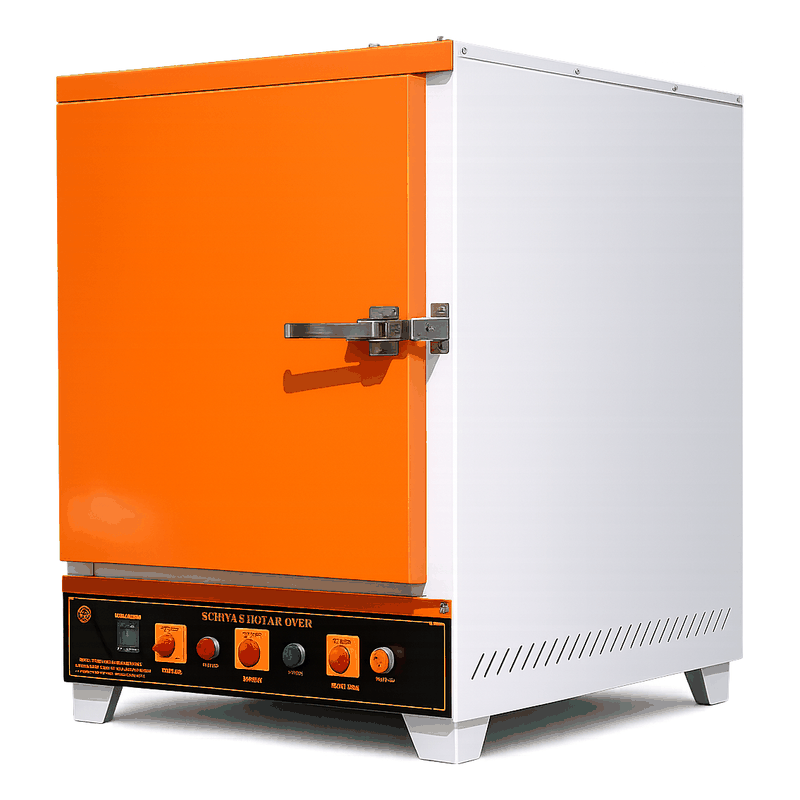
A hot air oven circulates uniformly heated air across a chamber using a fan‑assisted convection system. The heating element, usually a stainless‑steel coil, raises the air temperature to the set point, while the thermostat maintains accuracy within ±1 °C. The constant airflow eliminates temperature gradients, making the oven ideal for batch drying of powders, glassware sterilisation, and heat‑stable assay preparation.
Key components and their functions
- Heating chamber: Typically constructed from 304 L stainless steel for corrosion resistance.
- Fan and ductwork: Provides even air distribution and prevents hot spots.
- Temperature controller: Digital PID controller with programmable ramps and soak periods.
- Safety interlocks: Door lock, over‑temperature cut‑off, and emergency stop.
- Insulation: High‑temperature ceramic fibre to reduce heat loss and improve energy efficiency.
Hot Air Oven Uses in Pharma, Microbiology and Food Labs – Core Applications
Pharmaceutical manufacturing and QC
Regulatory bodies such as the FDA pharmaceutical quality guidelines require validated drying and sterilisation steps. Hot air ovens are employed for:
- Drying of glassware, metal instruments, and bulk powders before weighing.
- Sterilising heat‑stable media, filters, and components used in aseptic processing.
- Heat‑curing of polymeric packaging and tablet coatings.
Microbiology research and diagnostics
In microbiology labs, the oven provides a controlled environment for:
- Drying culture plates, petri dishes, and inoculation loops.
- Heat‑inactivation of pathogens for safe downstream analysis.
- Preparing standard reference materials that require low‑moisture conditions.
Food safety and quality control
Food laboratories rely on hot air ovens for:
- Moisture content determination of spices, powders, and dried fruits.
- Thermal stability testing of additives and preservatives.
- Pre‑sterilisation of sampling containers before microbiological enumeration.
Selecting the right hot air oven for pharma, microbiology and food labs
When evaluating options, laboratory managers should compare the following specifications:
- Temperature range: Most applications need 50 °C–250 °C; some pharma processes may require up to 300 °C.
- Capacity: Choose chamber volume based on tray count – typical sizes range from 10 L to 100 L.
- Temperature uniformity: Look for ±1 °C across the chamber (verified by a calibrated probe).
- Control features: Programmable timers, ramp‑up/down rates, and data logging for audit trails.
- Construction material: 304 L stainless steel is standard; for corrosive chemicals, consider 316 L.
- Safety certifications: CE, ISO 9001, and compliance with Indian Standard IS 15686 for laboratory ovens.
For a ready‑made solution, explore the Laboratory Hot Air Oven offered by Sathya Scientific, which meets the above criteria and includes local service support in Chennai.
Alternative technologies – When to consider a muffle furnace or a tray dryer
While hot air ovens excel at low‑to‑moderate temperature drying, a muffle furnace provides higher temperatures (up to 1200 °C) for ashing or high‑temperature heat‑treatment of metal parts. Conversely, a tray dryer with forced hot air can handle continuous bulk drying of food products but often lacks the precise temperature control needed for analytical validation. Choose a hot air oven when you need uniform, repeatable drying at temperatures below 300 °C with an emphasis on regulatory compliance.
Installation, calibration and routine maintenance
Proper installation ensures temperature stability:
- Place the oven on a level, vibration‑free bench away from drafts.
- Allow a 30‑minute warm‑up period before first use.
- Calibrate the thermostat annually with a NIST‑traceable thermometer.
- Clean the interior weekly with a lint‑free cloth; avoid abrasive cleaners that can damage the coating.
- Inspect the fan and door seals for wear; replace seals to maintain safety interlocks.
Safety precautions and common operational mistakes
Key safety measures include wearing heat‑resistant gloves, never exceeding the oven’s maximum temperature rating, and ensuring the door is fully closed before start. Common mistakes are:
- Overloading trays, which restricts airflow and creates hot spots.
- Using the oven for temperature‑sensitive biological samples that require a moist heat environment.
- Neglecting regular calibration, leading to inaccurate moisture content results.
Questions to ask a supplier before purchase
- What is the warranty period and what does it cover?
- Are spare parts such as heating elements and fans stocked locally?
- Do you provide installation, training, and validation documentation?
- Can the unit be integrated with laboratory information management systems (LIMS) for data export?
- What are the total cost of ownership considerations – power consumption, service contracts, and expected lifespan?
Frequently Asked Questions
Can a hot air oven be used for sterilising liquids?
No. Liquids require moist heat (autoclave) to achieve sterilisation. Hot air ovens are suitable only for heat‑stable, dry items.
What is the typical drying time for powdered samples?
Drying time depends on sample mass, moisture level, and temperature. A common protocol is 105 °C for 2 hours, followed by gravimetric weighing to confirm constant weight.
How does a hot air oven differ from a convection oven?
Both use forced air, but laboratory hot air ovens are built to tighter temperature tolerances, have stainless‑steel interiors, and include safety interlocks required for GMP environments.
Is it necessary to validate the oven for each new assay?
Yes. Validation ensures that temperature uniformity and drying performance meet the assay’s acceptance criteria, which is essential for regulatory submissions.
Can the oven be used in a cleanroom environment?
When the oven’s exterior is cleaned regularly and it is placed within the designated ISO class area, it can operate without compromising cleanroom integrity.
Final verdict and practical recommendation
For laboratories in Chennai, Tamil Nadu, and across India that need reliable, compliant drying and sterilisation, the Hot Air Oven Uses in Pharma, Microbiology and Food Labs remain unmatched in terms of temperature uniformity, ease of use, and regulatory acceptance. Evaluate capacity, temperature range, and control features against your specific protocols, and verify that the supplier offers local after‑sales support and calibration services. By following the selection checklist and maintenance guidelines outlined above, you can maximise uptime and data integrity.
Ready to upgrade your lab’s drying capabilities? Explore the Laboratory Hot Air Oven from Sathya Scientific and request a quote tailored to your Chennai‑based facility today.