
When a laboratory manager or procurement officer in Chennai or elsewhere in Tamil Tamil Nadu looks for a reliable sterilisation solution, the first question is often “Vertical vs Horizontal Autoclave: Differences, Uses and Prices”. Both configurations are proven steam‑sterilisation technologies, yet they differ in design, workflow, capacity, and cost‑structure. This guide breaks down the technical distinctions, typical applications, and price drivers so you can decide which model fits your lab’s workflow and budget.
Table of Contents
- Vertical vs Horizontal Autoclave: Differences in Design and Operation
- Vertical vs Horizontal Autoclave: Uses in Indian Laboratories
- How to Compare Specifications Before Buying
- Practical Buying Checklist for Laboratory Managers
- Maintenance, Safety and Troubleshooting Tips
- Common Mistakes to Avoid
- Frequently Asked Questions
- Final Verdict and Recommendation
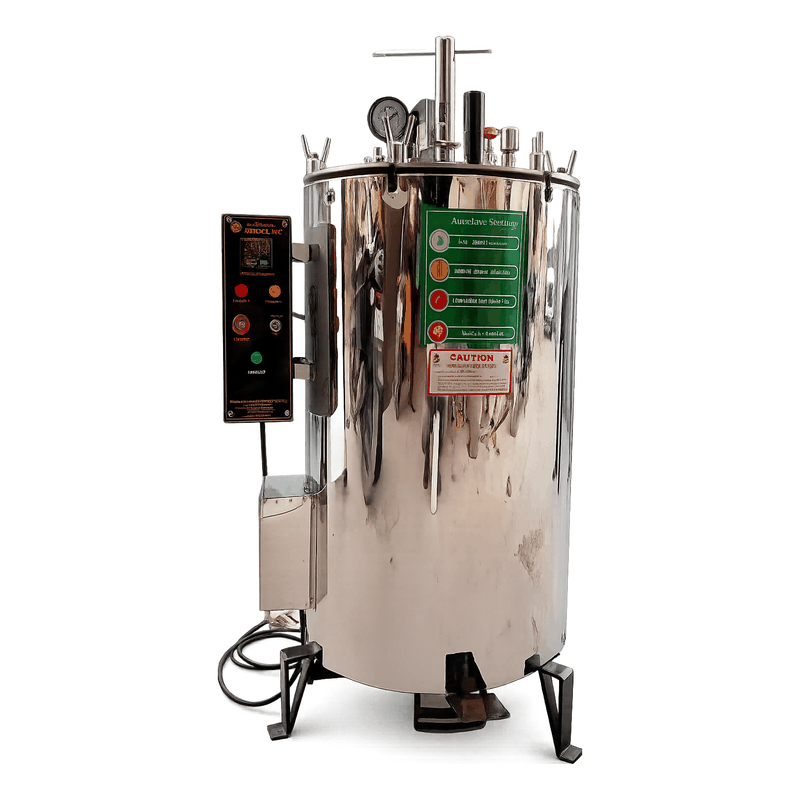
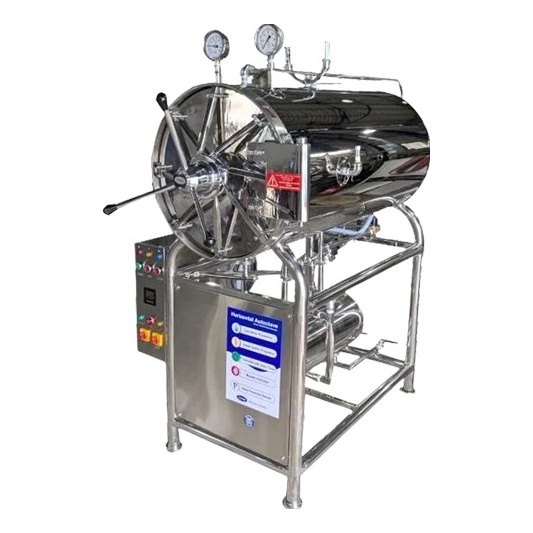
Vertical vs Horizontal Autoclave: Differences in Design and Operation
Both autoclave types rely on saturated steam at 121 °C–134 °C and a pressure of 0.1–0.3 MPa to achieve a 12‑log reduction of bacterial spores. The core difference lies in the chamber orientation:
- Vertical autoclave: The chamber is upright; items are loaded from the top on a removable rack or basket. Steam rises naturally, providing uniform heat distribution. This design is common for small‑to‑medium batches of glassware, media bottles, and surgical instruments.
- Horizontal autoclave: The chamber lies flat; loads are placed on a tray that slides in from the front or side. Steam circulates horizontally, which can be advantageous for large‑volume, flat‑packed items such as trays of culture plates, disposable pipette tips, or bulk polymer components.
Key mechanical components
Regardless of orientation, an autoclave contains a boiler, pressure vessel, temperature/pressure sensors, safety valves, and a control panel. Vertical units often incorporate a rotating or swinging rack to maximise space, while horizontal models feature a robust sliding door with interlocks to prevent accidental opening under pressure.
Vertical vs Horizontal Autoclave: Uses in Indian Laboratories
Choosing the right orientation depends on the typical load profile of your facility:
- Vertical autoclaves excel in academic and clinical labs where glassware, small instruments, and occasional media batches dominate. Their compact footprint suits bench‑side placement in teaching labs of universities in Chennai.
- Horizontal autoclaves are preferred in pharmaceutical manufacturing, biotech pilot plants, and large research institutes where high‑throughput sterilisation of trays, pouches, or bulk consumables is required. The horizontal door allows rapid loading/unloading, reducing cycle downtime.
Typical capacity ranges (Indian market)
Vertical models are usually offered from 10 L to 50 L chambers, while horizontal units start around 30 L and can exceed 200 L for industrial use. Capacity directly influences price: a 20 L vertical autoclave may start at INR 2.5 lakhs, whereas a 100 L horizontal system can be priced above INR 12 lakhs, depending on automation level and certifications.
How to Compare Specifications Before Buying
When evaluating a supplier, focus on these measurable parameters:
- Temperature accuracy & stability: ±0.2 °C is standard for ISO‑validated sterilisation.
- Pressure range: 0.1–0.3 MPa for standard cycles; higher pressures are needed for resistant loads.
- Cycle time: Look for programmable “fast‑cycle” options (e.g., 15 min at 121 °C) for high‑throughput labs.
- Control interface: Touchscreen with data logging meets GMP requirements and simplifies validation.
- Construction material: Stainless‑steel (AISI 304) interior prolongs service life and resists corrosion from repeated steam exposure.
- Safety features: Automatic pressure release, door interlock, and over‑temperature protection are mandatory under ISO 17665 sterilization standard.
Price‑influencing factors in India
Beyond capacity, the following elements affect the final quotation:
- Degree of automation (semi‑automatic vs fully automatic loading).
- Local manufacturing vs imported components (domestic stainless steel and electronics can reduce cost).
- After‑sales support package (spare‑parts availability, calibration service, warranty length).
- Regulatory compliance (ISO 13485, WHO GMP guidelines) which may add certification fees.
Practical Buying Checklist for Laboratory Managers
Before signing a purchase order, ask the supplier these questions:
- What is the validated cycle protocol for the specific load size?
- Can the unit generate a full data log that complies with 21 CFR 820 for pharmaceutical labs?
- What is the mean time between failures (MTBF) based on field data?
- Are installation, commissioning, and user training included?
- How quickly can critical spare parts (door seals, pressure sensors) be sourced within India?
Maintenance, Safety and Troubleshooting Tips
Regular upkeep prolongs the service life of both vertical and horizontal autoclaves:
- Perform a weekly visual inspection of door seals and gaskets; replace if cracks appear.
- Calibrate temperature and pressure sensors annually using a certified reference instrument.
- Run a “steam leak test” after every major service to ensure pressure integrity.
- For horizontal models, clean the sliding tracks to avoid door‑binding, which can trigger safety interlocks.
- Never overload the chamber; excessive load hampers steam penetration and can cause sterilisation failure.
Common Mistakes to Avoid
Even experienced technicians can slip into habits that reduce efficiency:
- Loading glassware upside‑down in a vertical autoclave, which blocks steam flow.
- Using non‑compatible plastics that melt at 121 °C – always verify material specifications.
- Skipping the pre‑vacuum phase in a horizontal unit when processing porous loads; this step removes air pockets and ensures proper steam contact.
- Neglecting to update the firmware of modern digital controllers, which may contain critical safety patches.
Frequently Asked Questions
Which autoclave type is more energy‑efficient?
Vertical autoclaves generally consume less power per cycle because the steam has a shorter travel distance. However, if a horizontal unit runs at a higher load factor, its overall energy per sterilised item can be comparable.
Can a vertical autoclave be used for large‑volume media preparation?
It is possible, but you may need to split the batch into several cycles, which increases total processing time. For continuous high‑volume media, a horizontal system with a larger chamber is more practical.
Do Indian regulations require a specific type of autoclave?
The Drugs and Cosmetics Act (Schedule M) does not prescribe orientation, only that the device meets ISO 17665 and provides documented validation. Choose the configuration that best matches your workflow while ensuring compliance.
What is the typical warranty period for autoclaves sold in India?
Most reputable suppliers offer a 12‑month comprehensive warranty, with optional extensions up to three years covering parts and labor.
Is it necessary to have a separate water treatment system?
High‑purity water reduces scale buildup on the boiler. A small reverse‑osmosis unit is recommended for facilities with hard water, especially for horizontal autoclaves that operate continuously.
Final Verdict and Recommendation
Both vertical and horizontal autoclaves deliver reliable steam sterilisation, but the choice hinges on load size, laboratory layout, and budget. If your lab primarily handles glassware, small instruments, and occasional media batches, a compact vertical autoclave offers lower upfront cost and a smaller footprint. For high‑throughput environments—pharmaceutical pilot plants, biotech research centres, or large teaching hospitals—a horizontal autoclave reduces cycle time and eases handling of bulky trays.
Consider the total cost of ownership: purchase price, installation, energy consumption, maintenance contracts, and compliance documentation. Engaging a supplier that provides local support in Chennai will minimise downtime and ensure smooth validation.
Ready to evaluate a vertical model that meets Indian GMP standards? Explore our vertical autoclave range here and request a free on‑site assessment.
