Laboratory managers and procurement teams across India often ask the same question: Muffle Furnace Price in India: 900°C, 1200°C and 1400°C Models Compared. Whether you run a pharmaceutical quality‑control lab in Chennai, a university research facility in Delhi, or an industrial testing centre in Pune, understanding the cost drivers and performance differences between these temperature classes is essential for a sound investment.
Table of Contents
- How a Muffle Furnace Works – The Basic Principle
- Key Components and Their Functions
- Muffle Furnace Price in India: 900°C, 1200°C and 1400°C Models Compared – Key Specifications
- Selection Criteria – Matching the Furnace to Your Application
- Price Drivers in the Indian Market
- Muffle Furnace Price in India: 900°C, 1200°C and 1400°C Models Compared – Buying Guide
- Alternative Technologies – When a Muffle Furnace May Not Be Ideal
- Installation, Calibration, and Routine Maintenance
- Safety Precautions and Common Operational Mistakes
- Frequently Asked Questions
- Final Verdict – Making the Right Choice for Your Lab
How a Muffle Furnace Works – The Basic Principle
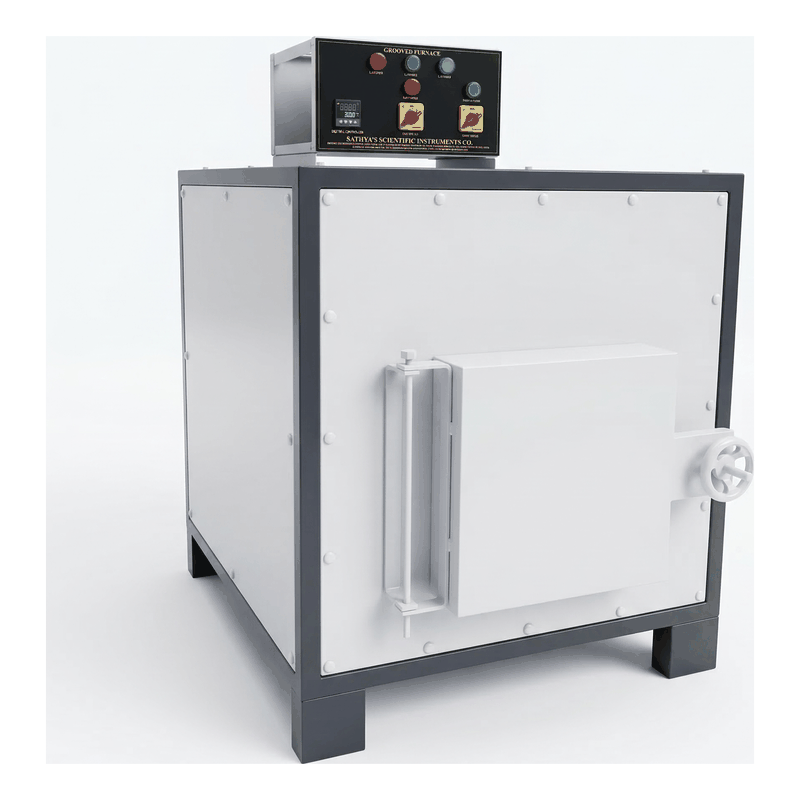
A muffle furnace is a closed, electrically heated chamber in which the heating elements are isolated from the sample by a refractory “muffle” wall. This design eliminates direct contact with combustion gases, ensuring a clean, oxygen‑controlled environment. The furnace typically uses a PID (Proportional‑Integral‑Derivative) controller to maintain temperature within ±1 °C, and the heating zone is insulated with ceramic fiber to minimise heat loss.
Key Components and Their Functions
- Heating Elements: Usually made of high‑grade nichrome or Kanthal that can sustain temperatures up to 1500 °C.
- Muffle Chamber: Constructed from alumina, mullite or high‑temperature stainless steel, providing chemical inertness.
- Temperature Controller: Digital display with programmable ramps and soak times; some models offer remote monitoring via RS‑485.
- Safety Interlocks: Door‑lock switches, over‑temperature cut‑off, and emergency stop buttons.
Muffle Furnace Price in India: 900°C, 1200°C and 1400°C Models Compared – Key Specifications
The three most common temperature ranges—900 °C, 1200 °C and 1400 °C—differ not only in maximum temperature but also in construction material, capacity, and price. Below is a concise snapshot of typical specifications found in the Indian market:
- 900 °C Model: Capacity 5–15 L, stainless‑steel outer shell, ±2 °C accuracy, suitable for low‑temperature calcination, drying, and simple ashing.
- 1200 °C Model: Capacity 10–30 L, alumina‑lined muffle, ±1 °C accuracy, ideal for ceramic sintering, glass fibre production, and high‑purity ashing.
- 1400 °C Model: Capacity 15–40 L, mullite or high‑purity alumina muffle, ±1 °C accuracy, used for refractory testing, advanced material research, and high‑temperature oxidation studies.
Selection Criteria – Matching the Furnace to Your Application
When you compare Muffle Furnace Price in India: 900°C, 1200°C and 1400°C Models Compared, the decision should be driven by:
- Maximum Temperature Requirement: Choose the lowest temperature class that meets the process; higher‑temperature furnaces cost more both upfront and in energy consumption.
- Sample Volume and Geometry: Larger capacity reduces batch cycles but increases price.
- Material Compatibility: Corrosive or acidic samples need a chemically inert muffle (e.g., alumina).
- Control Features: Ramp‑rate programming, multi‑step cycles, and data logging are valuable for research labs.
- Energy Efficiency: Look for double‑wall insulation and low‑loss designs; they affect operating cost over the furnace’s life.
Price Drivers in the Indian Market
Several factors influence the final quotation you receive:
- Temperature Rating: 1400 °C units typically carry a 30–45 % premium over 900 °C models.
- Capacity: A 30 L furnace can be 20 % more expensive than a 10 L version of the same temperature class.
- Control System: Advanced PLC‑based controllers with remote access raise the price.
- Local Manufacturing vs. Import: Indian‑made furnaces avoid import duties, but some specialised high‑temperature components are still sourced abroad.
- After‑Sales Service: Warranty length, on‑site installation, and spare‑part availability are often bundled into the price.
Muffle Furnace Price in India: 900°C, 1200°C and 1400°C Models Compared – Buying Guide
Before you sign a purchase order, ask the supplier the following questions:
- What is the exact temperature uniformity across the chamber (e.g., ±1 °C at 1200 °C)?
- Are the heating elements and muffle replaceable in‑house?
- What is the standard warranty period and what does it cover?
- Is calibration service included, and how often is it recommended?
- Can the furnace be integrated with existing lab management software?
These queries help you compare offers beyond the headline Muffle Furnace Price in India: 900°C, 1200°C and 1400°C Models Compared and focus on total cost of ownership.
Alternative Technologies – When a Muffle Furnace May Not Be Ideal
In some cases, a high‑temperature oven, a tubular furnace, or a microwave‑assisted furnace can deliver similar results at a lower price. Tubular furnaces excel in continuous processing, while high‑temperature ovens provide better temperature uniformity for large flat samples. Evaluate the specific heat‑treatment profile of your application before committing to the most expensive option.
Installation, Calibration, and Routine Maintenance
Proper installation is critical for both safety and price justification. Follow these steps:
- Place the furnace on a vibration‑free, heat‑resistant platform with adequate clearance for ventilation.
- Connect the power supply as per the manufacturer’s rating (typically 3‑phase 415 V for 5 kW and above).
- Perform a first‑run calibration using a certified thermocouple traceable to the National Physical Laboratory (NPL) or an equivalent standard.
- Schedule monthly visual inspections of the door gasket, heating elements, and insulation.
- Clean the muffle chamber after each batch to prevent residue buildup, which can affect temperature uniformity.
Safety Precautions and Common Operational Mistakes
Even experienced technicians can overlook simple safety steps:
- Never exceed the rated load; over‑loading leads to uneven heating and premature wear.
- Always wear heat‑resistant gloves and eye protection when loading or unloading hot samples.
- Do not use flammable solvents inside the furnace; the sealed environment can cause pressure buildup.
- Avoid rapid temperature ramps beyond the manufacturer’s recommended limits; this can crack the refractory lining.
Frequently Asked Questions
What is the typical lifespan of a muffle furnace in an Indian laboratory?
With regular maintenance, a well‑constructed 1200 °C furnace can operate reliably for 10–15 years. High‑temperature 1400 °C units may require more frequent element replacement, reducing the effective lifespan to about 8–12 years.
Can I use a muffle furnace for sterilisation of glassware?
Yes, but it is less efficient than a dedicated autoclave. The furnace can achieve dry heat sterilisation at 160 °C for 2 hours, which is suitable for certain glassware but not for heat‑sensitive plastics.
Is there a standard certification required for muffle furnaces sold in India?
While there is no specific Indian standard for muffle furnaces, many manufacturers comply with IEC 60204‑1 for electrical safety and ASTM D6489 for performance testing. Refer to the ASTM D6489 standard for detailed specifications.
How does the price of a 900 °C furnace compare to a 1400 °C furnace on a per‑kilowatt basis?
Generally, the cost per kilowatt rises with temperature because higher‑grade heating elements and refractory materials are required. A 900 °C unit may cost INR 1.2 Lakh per kW, whereas a 1400 °C model can be INR 1.8–2.0 Lakh per kW.
Final Verdict – Making the Right Choice for Your Lab
When you evaluate Muffle Furnace Price in India: 900°C, 1200°C and 1400°C Models Compared, remember that the cheapest upfront price is not always the most economical in the long run. Align the furnace’s temperature rating, capacity, and control features with your specific workflow, and factor in energy consumption, maintenance, and after‑sales support.
For a balanced investment, many Indian laboratories find the 1200 °C model to be the sweet spot—offering sufficient temperature range for most analytical and material‑science applications while keeping the price and operating cost moderate.
Ready to explore a model that fits your budget and technical needs? Explore our Muffle Furnace range and request a customized quotation today.