Laboratory managers and procurement teams in India often ask, “Where can I find reliable biosafety cabinet manufacturers in India?” In this guide we break down the technical fundamentals, key selection criteria, and buying considerations so you can make an informed decision without wading through vague marketing copy.
Table of Contents
- How a Biosafety Cabinet Works – Core Principles
- Major Types of Biosafety Cabinets Offered by Indian Manufacturers
- Key Features to Compare Across Indian Suppliers
- Practical Selection Criteria for Indian Laboratories
- Comparing Biosafety Cabinets with Alternative Containment Solutions
- Installation, Calibration, and Routine Maintenance
- Common Mistakes to Avoid
- Frequently Asked Questions
- Final Verdict – Choosing the Right Manufacturer
How a Biosafety Cabinet Works – Core Principles
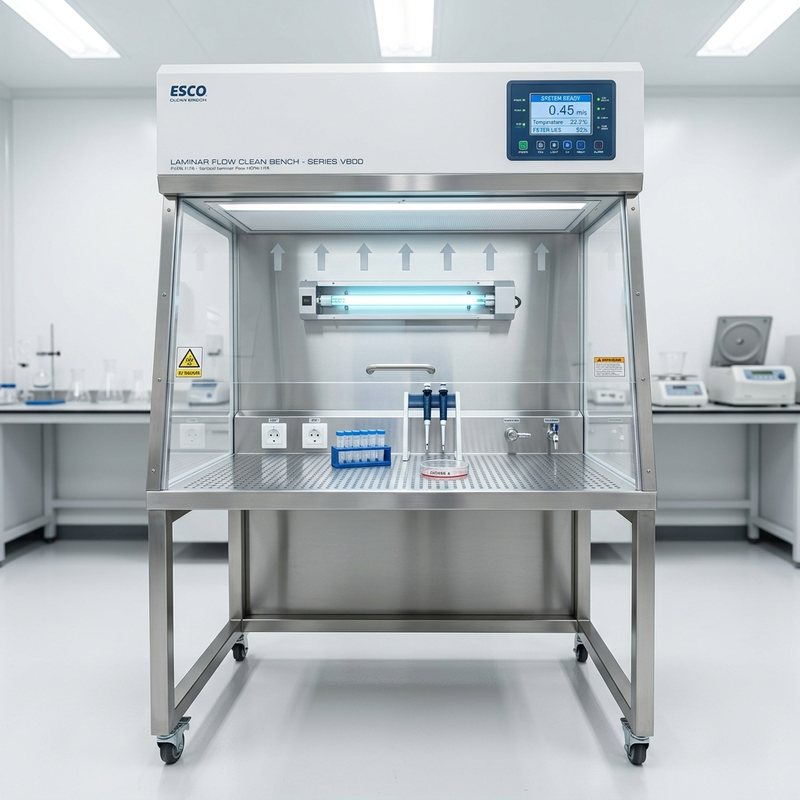
A biosafety cabinet (BSC) is a ventilated enclosure that protects the operator, the environment, and the product being handled. The device creates a laminar airflow that passes through high‑efficiency particulate air (HEPA) filters. In Class II BSCs, 70 % of the incoming air is recirculated after filtration, while the remaining 30 % is exhausted outside the laboratory. This airflow pattern maintains a negative pressure zone inside the cabinet, preventing aerosols from escaping.
Key components include:
- Pre‑filter: Captures large particles and extends HEPA filter life.
- HEPA filter: Removes ≥99.99 % of particles ≥0.3 µm.
- Fan and motor assembly: Generates the required airflow velocity (typically 0.38–0.51 m s⁻¹ for Class II).
- Work surface and sash: Provides a physical barrier; the sash can be fixed or variable.
- Control panel: Displays airflow speed, filter status, and alarm conditions.
Major Types of Biosafety Cabinets Offered by Indian Manufacturers
Class II Type A2
Most common in microbiology labs. Recirculates 70 % of air after HEPA filtration; the exhaust is filtered but not vented. Suitable for work with BSL‑1 and BSL‑2 agents, provided the lab has a suitable exhaust system.
Class II Type B2
Provides 100 % exhausted air, making it ideal for work with volatile chemicals or BSL‑3 agents. Requires a dedicated exhaust duct to the outside.
Class III (Glove Box)
Fully sealed, gas‑tight enclosure with attached gloves. Used for high‑risk pathogens (BSL‑4) and for work where the material cannot be exposed to the environment.
Key Features to Compare Across Indian Suppliers
- Certification: Look for compliance with ISO 14644‑1, NSF/ANSI 49, and Indian Bureau of Standards (BIS) certification.
- Airflow monitoring: Integrated digital sensors that trigger alarms if velocity falls below safe limits.
- Construction material: Stainless‑steel (grade 304) interior for corrosion resistance; powder‑coated exterior for durability.
- Service network: Availability of local service engineers in Chennai, Bengaluru, Hyderabad, and Delhi.
- Warranty & spares: Minimum 12 months on the cabinet and 24 months on the HEPA filter.
Practical Selection Criteria for Indian Laboratories
A common consideration during equipment selection is the intended biosafety level and the type of work. Use the checklist below to match your needs with the right cabinet:
- What biosafety level (BSL‑1, BSL‑2, BSL‑3) is required?
- Will you handle volatile chemicals or only aqueous cultures?
- Is a fixed or variable sash more suitable for your workflow?
- Do you need a cabinet with UV decontamination, integrated pass‑through chamber, or a built‑in incubator?
- What is the available floor space and power supply (230 V, 3‑phase)?
For institutions in Tamil Nadu, many local distributors also act as laminar air flow suppliers in Tamil Nadu, which can simplify installation and after‑sales support.
Comparing Biosafety Cabinets with Alternative Containment Solutions
Fume hoods are often mistaken for BSCs, but they serve different purposes. A fume hood protects the user from chemical vapors by exhausting 100 % of the air, but it does not provide product protection or HEPA filtration. In contrast, a Class II BSC offers both operator and product protection, making it the appropriate choice for microbiology, cell culture, and virology work.
Another alternative is a portable biosafety cabinet. While convenient for field work, these units usually lack the robust airflow control and certification required for permanent laboratory installations.
Installation, Calibration, and Routine Maintenance
Proper installation is critical for maintaining the cabinet’s certified performance:
- Location: Place the cabinet away from high‑traffic zones and ensure at least 0.6 m clearance on all sides.
- Ducting: For Type B2 cabinets, use rigid metal ducts with a minimum 0.5 m s⁻¹ exhaust velocity.
- Calibration: Perform a face‑velocity test using a calibrated anemometer after installation and annually thereafter.
- Cleaning: Wipe interior surfaces with 70 % ethanol before and after each use; replace pre‑filters every 6–12 months depending on workload.
- Troubleshooting: Common alarms include “airflow low” (check for blocked filters) and “sash open” (ensure sash is fully closed).
Common Mistakes to Avoid
Even experienced lab managers can slip into habits that compromise safety:
- Turning off the cabinet while work is in progress – this eliminates the protective airflow.
- Placing large equipment inside the cabinet that blocks airflow – always keep the work surface clear.
- Using non‑HEPA‑rated consumables (e.g., disposable gloves with pores) – opt for certified low‑particulate gloves.
- Neglecting regular filter integrity testing – a compromised HEPA filter can allow pathogen escape.
Frequently Asked Questions
What certifications should Indian biosafety cabinet manufacturers have?
Look for ISO 14644‑1 cleanroom classification, NSF/ANSI 49 compliance for BSCs, and BIS certification. International standards such as EN 12469 are also accepted.
Can I install a Class II BSC in a standard laboratory without a dedicated exhaust?
Type A2 cabinets can operate without a dedicated exhaust if the room has sufficient air changes per hour (≥12 ACH). However, for volatile chemicals a Type B2 with a dedicated exhaust is mandatory.
How often should the HEPA filter be replaced?
Filter life depends on usage and pre‑filter condition, but a typical replacement interval is 12–24 months. Conduct a leak test (e.g., DOP test) to verify performance before deciding.
Are there Indian manufacturers that provide custom cabinet sizes?
Yes, several manufacturers offer modular designs where the work surface width, height, and sash type can be customized to fit specific bench dimensions.
What is the price range for a Class II BSC in India?
Pricing varies based on size, certification level, and optional accessories. A standard 120 cm × 60 cm Type A2 cabinet typically ranges from INR 3 lakh to INR 6 lakh, while a Type B2 with advanced controls can exceed INR 10 lakh.
Final Verdict – Choosing the Right Manufacturer
When evaluating biosafety cabinet manufacturers in India, prioritize certified performance, a responsive local service network, and transparent warranty terms. Verify that the supplier can provide:
- ISO and BIS certification documents.
- On‑site installation and validation services.
- Spare‑part availability within 30 days.
- Training for end‑users on safe operation.
By aligning the cabinet’s class and features with your laboratory’s biosafety level, you ensure both compliance and operational efficiency. For a curated selection of certified cabinets and professional assistance, explore the range offered by Sathya Scientific.
Visit our product catalog to compare specifications and request a quotation tailored to your facility.
For authoritative guidance on biosafety cabinet standards, refer to the WHO Biosafety Cabinet guidelines.