Laboratory managers in Chennai, Coimbatore, and across Tamil Tamil Nadu often face the same question when planning a new bench‑side enclosure: Fume Hood vs Laminar Air Flow: What Is the Difference? The answer determines not only the safety of the personnel but also the integrity of the experiment. In this guide we break down the operating principles, key components, application zones, and buying considerations for both fume hoods and laminar air flow cabinets, helping you select the right system for your facility.
Table of Contents
Understanding the Core Working Principles
Both fume hoods and laminar flow cabinets manipulate airflow, but they do so with opposite goals. A fume hood draws potentially hazardous vapour away from the user, while a laminar flow cabinet pushes filtered, particle‑free air across the work surface to protect the product.
How a Fume Hood Protects the User
A conventional ducted fume hood creates a negative pressure zone inside the cabinet. Air is drawn from the laboratory, passes through an intake grille, and is exhausted to the outside via a duct system equipped with a high‑efficiency particulate air (HEPA) filter or a scrubber, depending on the contaminant. The face velocity—typically 0.5 m s⁻¹ (100 ft min⁻¹)—ensures that gases and aerosols are pulled inward, preventing them from escaping into the lab.
Laminar Air Flow: Clean Air for Sensitive Work
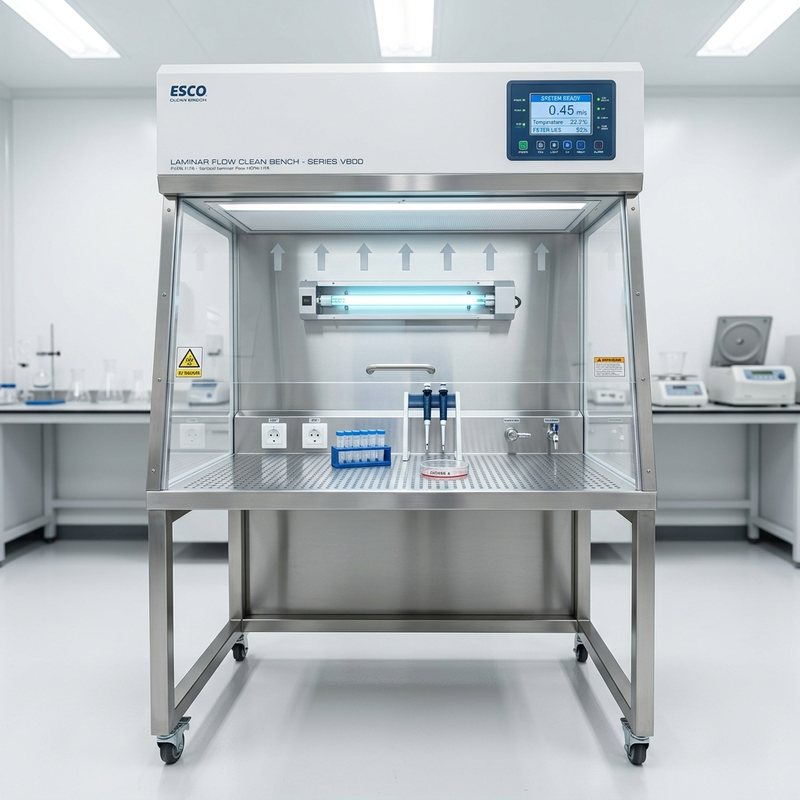
Laminar flow cabinets operate under positive pressure. HEPA‑filtered air is supplied at a uniform velocity (often 0.3–0.5 m s⁻¹) across a perforated work surface, creating a unidirectional stream that sweeps particles away from the product. Because the air moves outward, these units are unsuitable for handling toxic vapours but excel in aseptic processing, cell culture, and microelectronics work where particulate contamination must be minimized.
Key Components and Typical Specifications
- Air Handling Unit: Both systems use blowers, but fume hoods prioritize exhaust capacity (often 600–2000 CFM), whereas laminar flow cabinets focus on supply flow and filter integrity (HEPA 99.97 % at 0.3 µm).
- Filters: Fume hoods may use carbon or activated‑charcoal filters for specific gases; laminar flow units rely on a single or dual HEPA filter bank.
- Sash Design: Adjustable glass sashes in fume hoods help maintain face velocity; laminar flow cabinets usually have a fixed front panel to avoid turbulence.
- Construction Materials: Stainless‑steel (grade 304) is standard for chemical resistance, while anodised aluminium is common in laminar flow cabinets for lightweight clean‑room environments.
- Controls: Modern units feature digital airflow monitors, alarm systems for loss of containment, and optional UV‑C lamps for surface sterilisation.
- Dimensions: Bench‑top models range from 600 mm to 1200 mm width; floor‑standing hoods can exceed 1800 mm, accommodating larger vessels or equipment.
Choosing the Right Enclosure for Your Lab
When evaluating a purchase, start with the primary hazard:
- Chemical or toxic vapour? Choose a fume hood with adequate exhaust capacity and, if needed, a carbon filter for specific organics.
- Microbial or particulate sensitivity? Opt for a laminar flow cabinet with certified HEPA filtration.
- Space constraints? Bench‑top hoods occupy less floor area, but floor‑standing units often provide better airflow stability.
- Regulatory compliance? In India, occupational safety guidelines from the Ministry of Labour (e.g., OSHA fume‑hood standards) and ISO 14644‑1 clean‑room classifications must be met.
Budget considerations also play a role. Fume hoods generally cost more due to ductwork and exhaust fans, while laminar flow cabinets can be less expensive if the lab already has a clean‑room HVAC system. However, total cost of ownership—installation, annual filter replacement, and energy consumption—should be evaluated.
Comparison with Alternative Containment Solutions
Beyond the classic dichotomy, labs sometimes consider safety cabinets, glove boxes, or biosafety cabinets. Safety cabinets combine features of both fume hoods and laminar flow units, providing exhaust for chemicals and HEPA filtration for particulates. Glove boxes offer sealed environments for highly toxic or radioactive work but require complex maintenance. Understanding the exact workflow helps avoid over‑specifying equipment and inflating capital expenditure.
Installation, Maintenance, and Safety Tips
Proper installation is critical for performance. For fume hoods, the exhaust duct must be sized to maintain the design face velocity; any restriction can cause back‑pressure and reduce containment. Laminar flow cabinets need a clean, vibration‑free location and a dedicated supply of filtered air.
Routine maintenance includes:
- Monthly verification of face velocity (fume hoods) or supply flow (laminar flow) using an anemometer.
- Quarterly HEPA filter integrity testing (pressure drop measurement) and replacement according to manufacturer recommendations.
- Cleaning interior surfaces with compatible solvents; avoid abrasive pads that could damage the sash or filter housing.
- Annual certification by a qualified technician to document compliance with local safety standards.
Common Mistakes to Avoid
- Using a laminar flow cabinet for volatile solvents. The outward airflow can push vapours into the lab, creating a health hazard.
- Blocking the fume hood sash. This eliminates the designed negative pressure and can lead to accidental exposure.
- Neglecting filter replacement. A clogged HEPA filter reduces airflow, compromising both containment and clean‑room classification.
- Improper positioning of equipment inside the hood. Large items can disrupt airflow patterns, creating dead zones where contaminants accumulate.
Frequently Asked Questions
Can a laminar flow cabinet replace a fume hood for chemical work?
No. Laminar flow units provide clean air outward, not exhaust. For volatile or toxic chemicals, a fume hood with appropriate exhaust and filtration is mandatory.
What is the typical energy consumption of each system?
Fume hoods consume more power due to high‑capacity exhaust fans (often 0.5–1.5 kW). Laminar flow cabinets generally draw less power (0.2–0.8 kW) but require a stable supply of filtered air, which can add to HVAC load.
How often should HEPA filters be changed?
Manufacturers usually specify 12‑24 months based on usage intensity and pressure drop. High‑throughput labs may need quarterly changes.
Are there any special certifications required for Indian labs?
Yes. Laboratories handling hazardous chemicals must comply with the Indian Factories Act, while clean‑room environments follow ISO 14644‑1. Both fume hoods and laminar flow cabinets should carry CE or BIS certification for safety and performance.
What safety features should I look for?
Key features include alarmed face‑velocity monitors, sash‑position interlocks, automatic shutdown on airflow loss, and UV‑C sterilisation for laminar flow units.
Final Verdict and Next Steps
In summary, the fundamental difference between a fume hood and a laminar air flow cabinet lies in the direction of airflow and the type of protection they provide. Choose a fume hood when the primary risk is chemical vapour or aerosol exposure; select a laminar flow cabinet when the goal is to keep the work area free of particles and microbes. Evaluate your lab’s workflow, space, and regulatory requirements, then compare specifications such as airflow rate, filter class, and energy usage before making a purchase.
Ready to equip your Chennai or Coimbatore laboratory with the right containment solution? Explore our certified laminar air flow cabinets and find the model that matches your clean‑room needs: Laminar Air Flow Cabinets – Sathya Scientific.