Laboratory managers and quality‑control professionals in India frequently ask, Horizontal vs Vertical Laminar Air Flow: Which Is Right for You? The answer hinges on the nature of your work, space constraints, and the level of contamination control required. In this guide we break down the physics, components, applications, and buying considerations of both configurations so you can make an informed decision for your Chennai, Hyderabad or Delhi facility.
Table of Contents
- Understanding Horizontal vs Vertical Laminar Air Flow: Core Principles
- Horizontal vs Vertical Laminar Air Flow: Selecting the Right Model for Your Lab
- Applications Across Sectors
- Buying Checklist – What to Ask Your Supplier
- Maintenance, Safety, and Troubleshooting
- Common Mistakes to Avoid
- Frequently Asked Questions
- Final Verdict – Which Laminar Flow Cabinet Fits Your Needs?
Understanding Horizontal vs Vertical Laminar Air Flow: Core Principles
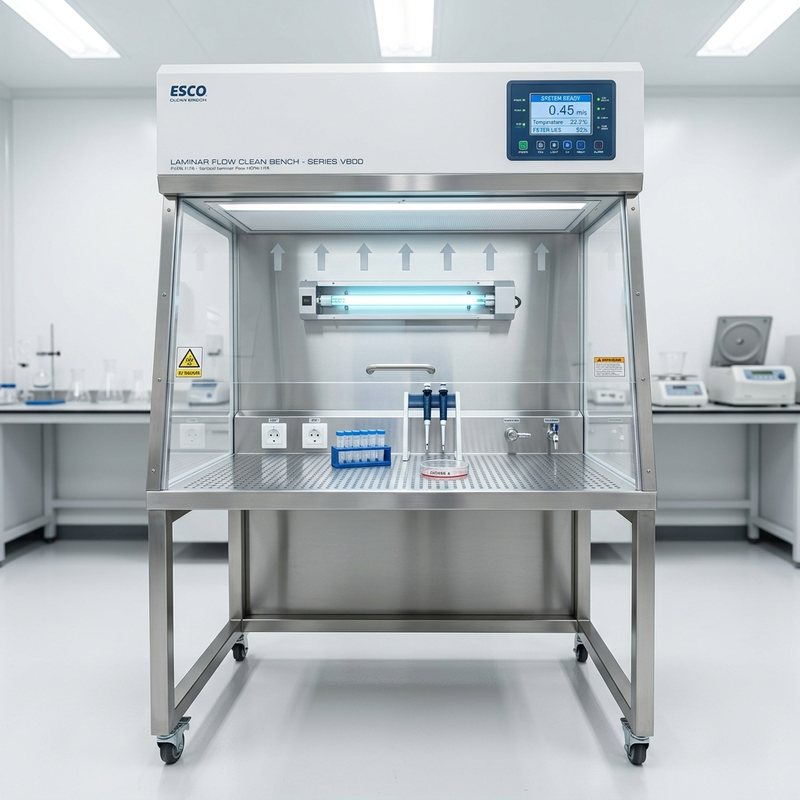
Both horizontal and vertical laminar flow cabinets (LFCs) create a unidirectional stream of HEPA‑filtered air that sweeps particles away from the work surface. The difference lies in the direction of that airflow:
- Horizontal flow: Air enters from the back of the cabinet, passes over the work area, and exits through the front grille.
- Vertical flow: Air is supplied from the top, moves straight down onto the work surface, and is drawn out through the front or a rear exhaust.
The underlying principle follows the ISO 14644‑1 cleanroom classification, which specifies that the velocity of the laminar stream should typically be 0.3–0.5 m/s to maintain ISO Class 5 conditions.
Horizontal vs Vertical Laminar Air Flow: Selecting the Right Model for Your Lab
Choosing between the two configurations depends on three practical factors:
- Workflow pattern: If you frequently pass tools or samples from the front of the cabinet, a horizontal flow minimizes turbulence caused by hand movement. Vertical flow is ideal when the operator works directly under the hood and the work area is relatively small.
- Space layout: Horizontal cabinets need clearance behind the unit for the intake grille, making them suited to labs with ample bench depth. Vertical units occupy less floor space and are often preferred in compact rooms or teaching labs.
- Product type: For aseptic preparation of injectable solutions, many Indian pharmaceutical plants follow the USP recommendation for vertical flow to protect the product from cross‑contamination. In contrast, microbiology work that involves frequent opening of plates may benefit from horizontal flow to keep the contaminated zone downstream of the operator.
Key Components of Both Configurations
Regardless of direction, a laminar flow cabinet comprises:
- Pre‑filter: Usually a 5 µm particulate filter that captures larger debris.
- HEPA filter: Certified to remove ≥99.97 % of particles ≥0.3 µm.
- Fan and motor assembly: Provides the required air velocity and maintains pressure differentials.
- Work surface: Stainless steel or phenolic resin, resistant to chemicals.
- Control panel: Digital readout for airflow velocity, alarm for filter failure, and optional UV‑C sterilization.
Typical Specifications for Indian Market
Most manufacturers, including Sathy Scientific’s laminar flow cabinets, offer models with the following ranges:
- Airflow velocity: 0.3–0.5 m/s (adjustable)
- Cabinet dimensions: 900 mm × 600 mm × 800 mm to 1500 mm × 800 mm × 1000 mm
- Temperature control: 15 °C – 30 °C (optional)
- Power consumption: 350 W – 800 W
- Certifications: ISO 14644‑1, CE, IEC 60601‑1 (electrical safety)
Applications Across Sectors
Both horizontal and vertical LFCs find use in a wide spectrum of Indian laboratories:
- Pharmaceutical manufacturing: Sterile compounding, media preparation, and aseptic filling.
- Research institutions: Cell culture, microbiology, and molecular biology.
- Educational labs: Teaching aseptic technique to undergraduates.
- Quality control units: Sample preparation for HPLC, GC, and spectroscopic analysis.
- Industrial R&D: Formulation testing for cosmetics and food additives.
Buying Checklist – What to Ask Your Supplier
Before signing a purchase order, verify the following:
- Is the HEPA filter ISO‑certified and replaceable in‑situ?
- What is the warranty period for the motor and control electronics?
- Does the unit comply with CDC guidelines on airflow for your intended application?
- Are installation, commissioning, and calibration services included?
- What is the lead time for spare parts in Chennai or other Indian cities?
- Is there a documented cleaning and maintenance schedule?
Maintenance, Safety, and Troubleshooting
Regular upkeep preserves the laminar integrity and extends the cabinet’s service life:
- Pre‑filter cleaning: Inspect monthly; replace if pressure drop exceeds 10 Pa.
- HEPA filter replacement: Typically every 12–24 months, depending on workload.
- Surface decontamination: Use 70 % isopropyl alcohol or a validated sporicidal agent; avoid abrasive cleaners that damage the work surface.
- Air velocity verification: Conduct a weekly smoke test; any deviation >20 % triggers an alarm.
- Troubleshooting common alarms:
- Low airflow – check for blocked intake grille or fan wear.
- Filter failure – verify filter integrity with a particle counter.
Common Mistakes to Avoid
- Placing the cabinet too close to walls, which disrupts the intake airflow.
- Using the cabinet as a storage space; clutter creates turbulence.
- Neglecting the temperature control in sensitive cell‑culture work.
- Skipping the annual certification; many Indian accreditation bodies require documented performance data.
Frequently Asked Questions
Can I switch a horizontal cabinet to vertical flow?
Most designs are fixed; the internal fan and grille orientation are engineered for a specific flow direction. Converting would require a complete redesign and is not cost‑effective.
Which configuration offers better protection for the operator?
Vertical flow cabinets protect the product more effectively, while horizontal flow provides better protection for the user because the contaminated zone is downstream of the operator’s hands.
Do I need a separate exhaust system?
Both types are typically “clean‑room” cabinets that recirculate filtered air. If you handle hazardous chemicals, a dedicated exhaust or a biosafety cabinet with negative pressure is required.
Is a UV‑C lamp mandatory?
UV‑C is optional and should be used only when the cabinet is empty, as it can degrade certain plastics and affect cell viability.
How does climate affect performance in India?
High ambient humidity can increase filter loading; choose cabinets with anti‑condensation features for tropical regions like Chennai.
Final Verdict – Which Laminar Flow Cabinet Fits Your Needs?
If your laboratory primarily conducts aseptic product preparation, requires a compact footprint, and follows USP or WHO sterility guidelines, a vertical laminar flow cabinet is usually the better match. Conversely, if you need a work surface that accommodates frequent front‑access tasks such as plate handling or large‑area media preparation, a horizontal laminar flow cabinet offers smoother airflow downstream of the operator.
Consider your space, workflow, and regulatory requirements before deciding. Both configurations deliver ISO‑class clean air when properly maintained, but the right choice can reduce contamination risk, improve ergonomics, and lower total cost of ownership.
Ready to explore the models that suit your Chennai or Mumbai lab? Visit our laminar flow cabinet product page for detailed specifications, after‑sales support, and installation services.