
Laboratory managers and procurement teams in Tamil Tamil Nadu often ask, “Where can I find reliable autoclave manufacturers in Chennai?” The answer lies in understanding the technology, the local market, and the service ecosystem that supports sterilisation equipment. This guide walks you through the working principles of autoclaves, the varieties available from Chennai‑based suppliers, and the practical factors you should evaluate before placing an order.
Table of Contents
- How autoclaves work – the science behind sterilisation
- Types of autoclaves offered by autoclave manufacturers in Chennai
- Key selection criteria when dealing with autoclave manufacturers in Chennai
- Pricing factors specific to the Indian market
- Comparison with alternative sterilisation technologies
- Installation, calibration, and routine maintenance
- Questions to ask autoclave manufacturers in Chennai before purchase
- Common mistakes to avoid when procuring an autoclave
- Frequently Asked Questions
- Final verdict and next steps
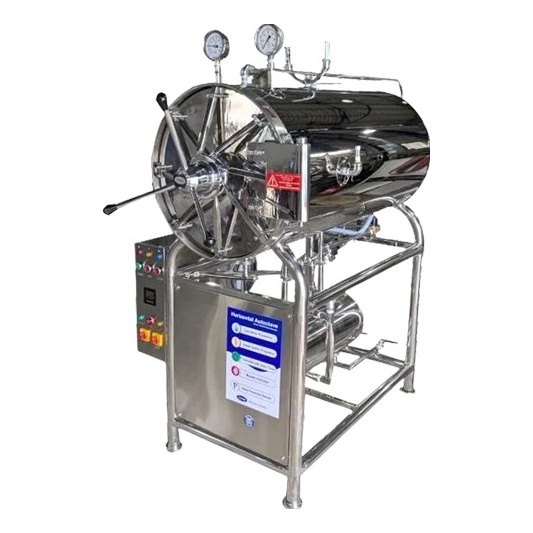
How autoclaves work – the science behind sterilisation
An autoclave uses saturated steam under pressure to achieve temperatures above 121 °C, destroying bacterial spores, viruses, and fungi. The core cycle consists of three phases:
- Heating phase: Steam is introduced, raising the chamber temperature and pressure.
- Holding phase: The set temperature is maintained for a predefined dwell time (usually 15–30 minutes) to ensure complete sterilisation.
- Cooling/venting phase: Pressure is released and the chamber cools, allowing safe removal of loads.
Key components include a steam generator, pressure vessel, control panel, safety valves, and a door interlock system. Modern units integrate micro‑processor controls, data logging, and remote monitoring, which are essential for compliance with ISO 13485 and GMP standards.
Types of autoclaves offered by autoclave manufacturers in Chennai
Chennai‑based suppliers typically provide three main configurations:
1. Table‑top (bench‑top) autoclaves
Compact units with capacities up to 30 L, ideal for microbiology labs, teaching institutions, and small‑scale pharmaceutical QC. They often feature LCD touch panels, programmable cycles, and a quick‑release door.
2. Vertical (upright) autoclaves
Mid‑size models ranging from 50 L to 200 L, suited for medium‑throughput labs. Vertical designs maximise loading efficiency for glassware, media bags, and surgical instruments.
3. Horizontal (large‑capacity) autoclaves
Industrial‑grade vessels exceeding 300 L, used in bulk sterilisation of disposable medical supplies, large‑volume media, and waste decontamination. These units may incorporate automatic loading racks, steam‑flushing systems, and integrated water‑softening.
Each type can be sourced as a fully automatic, semi‑automatic, or manual model, depending on the required level of automation and budget constraints.
Key selection criteria when dealing with autoclave manufacturers in Chennai
Choosing the right autoclave involves more than capacity. Consider the following technical and commercial parameters:
- Temperature and pressure range: Verify that the unit can sustain ≥121 °C at 15 psi for the intended dwell time. Some processes demand 134 °C for 3 minutes (e.g., prion decontamination).
- Chamber material: Stainless‑steel (grade 304 or 316) ensures corrosion resistance, especially when sterilising corrosive media.
- Control system: Look for programmable logic controllers (PLC) with user‑friendly interfaces, cycle‑recording, and optional network connectivity (Modbus/TCP).
- Safety features: Door interlocks, pressure relief valves, temperature/pressure alarms, and automatic lock‑out after a fault are mandatory for compliance.
- Energy efficiency: Insulated chambers and heat‑recovery options reduce operating costs, a vital factor for high‑volume facilities.
- Service network: Local technical support, spare‑part availability, and calibration services directly affect downtime.
- Regulatory compliance: Ensure the manufacturer follows BIS standards (e.g., IS 13154) and provides CE or ISO certifications where applicable.
Pricing factors specific to the Indian market
While exact prices vary, the following elements influence cost in Chennai:
- Capacity and automation level – larger, fully automatic units command higher prices.
- Material grade and finish – 316 L stainless steel with a polished interior is pricier than standard 304.
- Control sophistication – touch‑screen PLCs with data‑logging add to the bill.
- Local taxes and GST – currently 18 % on equipment, plus any state levies.
- After‑sales package – extended warranty, on‑site installation, and training can be bundled.
Comparison with alternative sterilisation technologies
In some scenarios, laboratories consider alternatives such as dry heat ovens, chemical sterilants, or plasma sterilisers. Compared to these options, autoclaves offer:
- Higher penetration – steam reaches complex geometries better than dry heat.
- Faster cycle times for most microbiological loads.
- Lower chemical residues, making them ideal for pharmaceutical and clinical applications.
However, for heat‑sensitive instruments (e.g., certain polymers), low‑temperature gas plasma may be preferable. Assess the material compatibility and validation requirements before substituting an autoclave.
Installation, calibration, and routine maintenance
Proper installation is critical for safety and performance:
- Location: Choose a well‑ventilated area with a dedicated water supply and drainage. The floor must support the unit’s weight; vertical autoclaves can weigh over 1 ton.
- Electrical supply: Ensure a stable 3‑phase, 415 V supply with appropriate earthing.
- Calibration: Annual verification of temperature and pressure sensors is mandatory under GMP. Use a calibrated thermocouple and pressure gauge traceable to national standards.
- Cleaning: After each cycle, wipe the chamber interior with a mild detergent and rinse. Periodic steam‑flushing removes scale buildup.
- Troubleshooting: Common issues include door latch failure, pressure valve blockage, and sensor drift. A service engineer should address these promptly to avoid prolonged downtime.
Questions to ask autoclave manufacturers in Chennai before purchase
- What certifications (BIS, ISO 9001, CE) does the unit hold?
- Can you provide a detailed specification sheet, including cycle validation data?
- What is the lead time for delivery and installation?
- Do you offer on‑site training for operators and maintenance staff?
- What is the warranty period, and what does it cover?
- Are spare parts stocked locally, and what is the typical turnaround time?
- Can the control software be integrated with our LIMS or SCADA system?
Common mistakes to avoid when procuring an autoclave
Undersizing the chamber: Selecting a capacity just below the peak load leads to frequent over‑loading and cycle failures.
Ignoring water quality: Hard water causes scaling on heating elements, reducing efficiency and shortening lifespan.
Skipping validation: For regulated environments, failure to perform Installation Qualification (IQ), Operational Qualification (OQ), and Performance Qualification (PQ) can result in compliance gaps.
Overlooking local service support: A low‑cost unit from a distant supplier may incur higher total cost of ownership due to prolonged downtime.
Frequently Asked Questions
What is the typical sterilisation cycle time for a 100 L vertical autoclave?
Standard cycles at 121 °C/15 psi usually take 30–45 minutes, including heating and cooling. Faster cycles are possible with higher temperature settings, but validation is required.
Are autoclaves from Chennai manufacturers compliant with WHO GMP guidelines?
Most reputable manufacturers design equipment to meet WHO and ISO 13485 requirements. Verify the supplied documentation, such as a Declaration of Conformity and validation protocols.
Can I use an autoclave for dry heat sterilisation?
Steam autoclaves are not intended for dry heat processes. For dry heat, consider a laboratory oven that can reach 160–180 °C with uniform temperature distribution.
How often should I replace the door gasket?
Gaskets typically last 2–3 years under normal use. Inspect them for cracks or loss of elasticity during routine maintenance and replace as needed to maintain pressure integrity.
Is remote monitoring of autoclave cycles possible?
Yes, many modern units feature Ethernet or Wi‑Fi modules that transmit cycle data to a central server, enabling real‑time alerts and compliance reporting.
Final verdict and next steps
When searching for autoclave manufacturers in Chennai, prioritize suppliers that demonstrate robust engineering, local after‑sales support, and compliance with Indian and international standards. Evaluate capacity, automation, safety features, and total cost of ownership rather than focusing solely on purchase price. By asking the right questions and planning for installation, calibration, and maintenance, you can ensure reliable sterilisation performance for years to come.
Ready to explore a curated selection of laboratory equipment that meets these criteria? Check out our guide to laboratory furnace suppliers in Chennai for additional insights on sourcing high‑quality scientific instruments locally.
For detailed standards on autoclave operation and validation, refer to the CDC autoclave guidelines, which provide best‑practice recommendations widely adopted in Indian laboratories.
