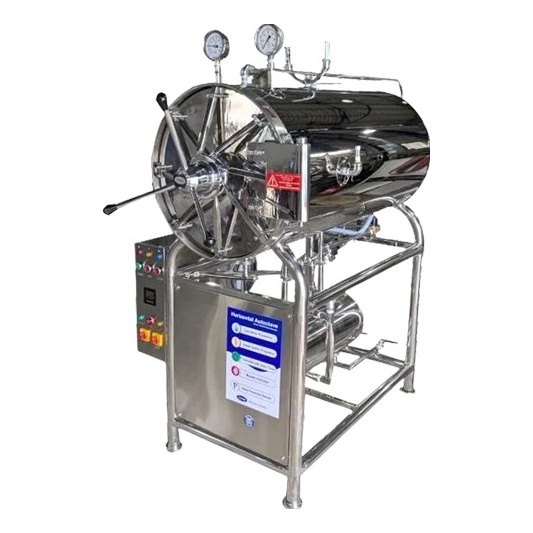
Laboratory managers and procurement professionals in Hyderabad often ask, “Where can I get reliable lab instruments without the markup of middlemen?” The answer lies with a Lab Equipment Supplier in Hyderabad: Factory-Direct Pricing. By sourcing straight from the manufacturer, you gain access to calibrated, ISO‑compliant equipment at a price that reflects true production cost, while still receiving full technical support.
Table of Contents
- Why Factory‑Direct Pricing Is a Game‑Changer for Hyderabad Laboratories
- Working Principles of Core Laboratory Instruments
- Key Categories Offered by a Lab Equipment Supplier in Hyderabad: Factory‑Direct Pricing
- Selection Checklist for Procurement Teams
- Comparing Factory‑Direct vs. Distributor Models
- Installation, Calibration, and Maintenance Best Practices
- Common Pitfalls to Avoid When Buying Direct
- Frequently Asked Questions
- Final Verdict and Call to Action
Why Factory‑Direct Pricing Is a Game‑Changer for Hyderabad Laboratories
India’s scientific ecosystem is expanding rapidly, especially in pharma hubs like Hyderabad. However, the cost of essential instruments—autoclaves, incubators, furnaces, and water baths—can erode research budgets. Factory‑direct pricing eliminates the typical 15‑30 % distributor margin, allowing institutions to allocate funds toward consumables, staff training, or new projects. Moreover, direct relationships enable faster customisation, quicker spare‑part delivery, and clearer warranty terms.
Working Principles of Core Laboratory Instruments
Understanding how equipment functions helps you ask the right technical questions during procurement.
Autoclaves – Steam Sterilisation
Autoclaves use saturated steam at 121 °C–134 °C under pressure (0.1–0.3 MPa) to denature microbial proteins. The key components are a pressure vessel, a steam generator, a temperature‑pressure controller, and safety valves. Modern units feature programmable cycles, automatic door locks, and a built‑in vacuum pump for pre‑vacuum sterilisation, which improves penetration in porous loads.
Incubators – Controlled Growth Environments
Incubators maintain a stable temperature (typically 5 °C–80 °C) and, when required, CO₂ levels (0‑10 %). Heating is achieved via resistive elements or circulating air, while thermostats and PID controllers ensure ±0.2 °C accuracy. For biochemical oxygen demand (BOD) testing, a BOD incubator provides a dark, temperature‑stable chamber to prevent photosynthetic interference.
Furnaces and Ovens – High‑Temperature Processing
Laboratory furnaces operate from ambient up to 1500 °C using refractory linings and electric heating elements. Convection furnaces circulate hot air for uniform temperature, whereas muffle furnaces isolate the sample chamber from combustion gases. Temperature uniformity (±2 °C) and ramp rates (up to 20 °C/min) are critical for material testing and ceramic sintering.
Water Baths – Precise Thermal Media
Water baths provide a liquid medium with temperature stability of ±0.1 °C. They are used for enzyme assays, sample thawing, and incubation. Features to watch include digital temperature control, overflow protection, and a stainless‑steel tank for corrosion resistance.
Key Categories Offered by a Lab Equipment Supplier in Hyderabad: Factory‑Direct Pricing
Below is a snapshot of the most requested product families, each available with factory‑direct cost structures.
- Autoclaves – Horizontal, vertical, and high‑pressure radial‑locking models for microbiology, pharmaceutical sterilisation, and tissue banking.
- Incubators – BOD, bacteriological, and CO₂ incubators for microbiology, cell culture, and environmental testing.
- Furnaces & Ovens – Muffle, grooved, high‑temperature, and refractory furnaces for materials research and heat‑treatment.
- Water Baths & Chillers – Concentric‑ring, serological, and precision water baths, plus laboratory chillers for low‑temperature assays.
- Hot Plates & Heating Mantles – Electric rectangular and round hot plates, and heating mantles for reflux and distillation.
- Laminar Flow Cabinets & Fume Hoods – Certified clean‑air workstations for aseptic processing and hazardous‑gas containment.
- Soxhlet Extraction Apparatus – Continuous solvent‑recycling system for analytical chemistry.
- Tray Dryers & Industrial Ovens – High‑capacity hot‑air ovens for food‑testing labs and material drying.

Selection Checklist for Procurement Teams
Before signing a purchase order, evaluate the following criteria:
- Application Fit – Match temperature range, capacity, and cycle programming to your standard operating procedures.
- Regulatory Compliance – Verify ISO 13485, ISO 9001, or BIS certification for medical‑grade devices.
- Energy Efficiency – Look for inverter‑controlled heating elements and insulated enclosures that reduce power consumption.
- Spare‑Part Availability – Confirm that critical components (gaskets, sensors, heating elements) are stocked locally in Hyderabad.
- Warranty & Service – A minimum 12‑month on‑site warranty with optional extended coverage ensures minimal downtime.
- Installation Support – Factory‑direct suppliers often provide site surveys, electrical checks, and commissioning assistance.
Comparing Factory‑Direct vs. Distributor Models
When you buy through a distributor, the price includes a margin, but you may gain a broader product catalog from multiple manufacturers. In contrast, a Lab Equipment Supplier in Hyderabad: Factory‑Direct Pricing offers a narrower, but deeper, portfolio with:
- Lower acquisition cost.
- Direct engineering support for custom specifications.
- Faster lead times for spare parts because the supplier holds inventory in the same city.
However, if your lab requires niche equipment from several global brands, a distributor could simplify logistics. Weigh the total cost of ownership, not just the sticker price.
Installation, Calibration, and Maintenance Best Practices
Proper setup extends equipment life and guarantees data integrity.
Installation
Ensure the floor can support the unit’s weight (e.g., a 1500 kg furnace). Verify electrical supply matches the rated voltage and phase; many high‑temperature furnaces require a dedicated 3‑phase 415 V line. Position autoclaves near a drainage system to handle condensate.
Calibration
Follow the manufacturer’s SOP for temperature, pressure, and humidity calibration. Use a calibrated thermocouple traceable to the National Physical Laboratory of India (NPLI) or an ISO‑accredited laboratory. Record calibration certificates for audit trails.
Routine Maintenance
• Autoclaves – Descale the steam generator monthly, replace door gaskets annually, and perform a leak test after each 200 cycles.
• Incubators – Clean interior surfaces with 70 % isopropyl alcohol, check CO₂ sensor accuracy, and replace HEPA filters every 12 months.
• Furnaces – Inspect refractory linings for cracks, tighten heating element connections, and verify thermocouple integrity.
Common Pitfalls to Avoid When Buying Direct
- Skipping Technical Due Diligence – Assuming “factory‑direct” means “no questions.” Always request datasheets, compliance certificates, and a demonstration.
- Ignoring Local Service Infrastructure – Confirm that the supplier has a service engineer based in Hyderabad; otherwise, you may face long downtimes.
- Underestimating Installation Costs – Heavy equipment may need a crane, reinforced flooring, or HVAC modifications.
- Overlooking Software Compatibility – Modern autoclaves and incubators often integrate with LIMS; verify communication protocols (Modbus, RS‑485, Ethernet).
Frequently Asked Questions
What is the typical lead time for factory‑direct autoclaves in Hyderabad?
Standard models are usually shipped within 2‑4 weeks after order confirmation. Custom configurations that require special gauges or control panels may extend to 6‑8 weeks.
Can I get ISO‑certified documentation for each instrument?
Yes. Reputable manufacturers provide ISO 9001‑based quality manuals, calibration certificates, and, where applicable, ISO 13485 for medical devices. For reference, see the ISO 9001:2015 standard.
Do factory‑direct suppliers offer training for lab staff?
Most suppliers include on‑site operator training as part of the purchase package. Training covers start‑up, routine maintenance, safety protocols, and basic troubleshooting.
How do I verify that a supplier’s pricing is truly factory‑direct?
Request a breakdown of component costs, manufacturing overhead, and margin. Transparent suppliers will provide a cost sheet and may offer a price‑match guarantee against other local distributors.
Is it safe to install high‑temperature furnaces in a shared laboratory space?
Furnaces must be placed in a well‑ventilated area, away from combustible materials. A dedicated exhaust system and fire‑rated enclosure are recommended. Follow the Indian Standard IS 1318 for furnace installation.
Final Verdict and Call to Action
Choosing a Lab Equipment Supplier in Hyderabad: Factory‑Direct Pricing can significantly reduce capital expenditure while preserving technical quality. Focus on equipment that aligns with your SOPs, verify compliance certificates, and ensure local after‑sales support before finalising the purchase. By following the selection checklist and maintenance guidelines outlined above, your laboratory can achieve reliable performance and long‑term cost savings.
Ready to explore a catalog of autoclaves, incubators, furnaces, and more at genuine factory prices? Read our detailed guide on laminar flow cabinet maintenance and contact our Hyderabad sales team for a personalized quotation.