When a laboratory manager or procurement specialist in Chennai searches for a Laminar Air Flow Cabinet Manufacturer in Chennai: Buyer’s Checklist, the goal is to find a reliable partner who delivers clean, contaminant‑free workspaces while meeting Indian regulatory expectations. This guide walks you through the technical fundamentals, key specifications, and practical questions to ask before signing a purchase order.
Table of Contents
- Understanding How a Laminar Air Flow Cabinet Works
- Key Types and Features to Consider
- Practical Selection Criteria – The Buyer’s Checklist
- Comparing Alternatives: Biosafety Cabinets vs. Laminar Flow Cabinets
- Installation, Calibration, and Routine Maintenance
- Common Mistakes to Avoid
- Frequently Asked Questions
- Final Verdict and Next Steps
Understanding How a Laminar Air Flow Cabinet Works
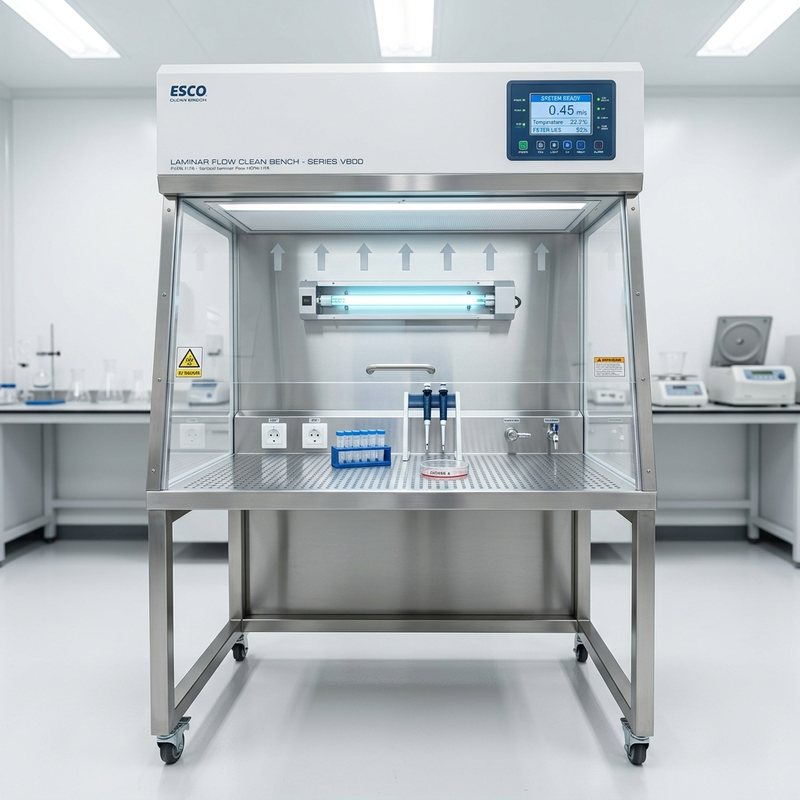
Laminar flow cabinets (LFCs) provide a unidirectional stream of HEPA‑filtered air that sweeps across the work surface, pushing particles away from the product or sample. The airflow can be vertical (down‑flow) or horizontal (front‑to‑back), depending on the design. The core components include:
- Pre‑filter: Captures large dust particles before they reach the HEPA filter.
- HEPA filter (99.97% efficiency at 0.3 µm): The heart of the cabinet, certified to standards such as ISO 14644‑1 cleanroom standards.
- Blower/Fan: Generates the laminar flow at a calibrated velocity (usually 0.3–0.5 m/s for vertical cabinets).
- Work surface and sash: Made of stainless steel or anodised aluminium for easy cleaning.
- Control panel: Allows selection of flow mode, speed, and alarms for filter breach or fan failure.
Key Types and Features to Consider
Vertical vs. Horizontal Flow
Vertical cabinets protect the product by directing filtered air downwards, ideal for aseptic preparation of media, cell culture, or sterile packaging. Horizontal cabinets protect the operator, making them suitable for handling hazardous powders or non‑sterile work where user exposure is a concern.
Classifications (ISO 5, ISO 7, ISO 8)
Depending on the required cleanliness level, manufacturers offer cabinets meeting ISO 5 (≤100 particles ≥ 0.5 µm per ft³) up to ISO 8. Choose the class that matches your application; higher classes increase filter cost and fan power.
Material Construction
Stainless‑steel interiors resist corrosion from chemicals and are easy to decontaminate with 70 % ethanol or 0.5 % sodium hypochlorite. Some manufacturers provide anodised aluminium frames for lighter weight, but verify compatibility with your cleaning regime.
Additional Options
- UV‑C germicidal lamps for post‑run surface sterilisation.
- Touch‑screen control panels with data logging for validation audits.
- Integrated gas or nitrogen purging for inert‑atmosphere work.
Practical Selection Criteria – The Buyer’s Checklist
Below is a concise checklist you can use when evaluating a Laminar Air Flow Cabinet Manufacturer in Chennai: Buyer’s Checklist. Each point addresses a real‑world laboratory need.
- Certification and compliance: Verify ISO 14644‑1, IS0 9001, and any local DGFT or CDSCO approvals.
- Filter validation documentation: Request filter test reports and a warranty period (typically 12–24 months).
- Airflow velocity and uniformity: Ensure the cabinet meets the recommended 0.3–0.5 m/s for vertical flow; ask for CFD analysis if available.
- Size and workspace dimensions: Match the cabinet footprint to your bench space; consider future expansion.
- Power requirements: Check voltage (230 V ± 10 %) and phase; Indian labs often need single‑phase with a backup UPS.
- Noise level: Fans can generate 55–65 dB(A); low‑noise models improve operator comfort.
- Service network in Chennai and Tamil Nadu: Local technical support reduces downtime.
- Spare parts availability: Stock of HEPA filters, pre‑filters, and fan assemblies should be confirmed.
- Installation and validation assistance: Look for manufacturers that provide on‑site setup, airflow certification, and documentation for GMP compliance.
- Warranty and after‑sales terms: A minimum one‑year comprehensive warranty is standard; extended service contracts are optional.
Comparing Alternatives: Biosafety Cabinets vs. Laminar Flow Cabinets
While both provide filtered airflow, biosafety cabinets (BSCs) incorporate an exhaust system that protects the user from hazardous agents. In contrast, laminar flow cabinets do not filter exhaust air, making them unsuitable for work with infectious agents. If your lab handles pathogens, a Class II BSC is mandatory; for sterile product preparation, a laminar flow cabinet is more cost‑effective.
Installation, Calibration, and Routine Maintenance
Installation Checklist
- Place the cabinet away from doors, windows, and high‑traffic zones to prevent turbulence.
- Maintain a minimum clearance of 30 cm at the rear for proper airflow.
- Connect the cabinet to a dedicated circuit with surge protection.
Calibration and Validation
After installation, perform a particle count using a calibrated laser particle counter. Record the airflow velocity at multiple points across the work surface. Documentation of these tests is essential for ISO 14644‑1 compliance and for audits by regulatory bodies.
Routine Maintenance
- Replace pre‑filters every 3–6 months depending on dust load.
- HEPA filter replacement intervals vary; typical life is 12–24 months under normal use.
- Clean the interior with a lint‑free cloth and approved disinfectant; avoid abrasive cleaners.
- Inspect the fan and motor for unusual vibrations or noise.
Common Mistakes to Avoid
- Using the cabinet for aerosol‑generating procedures: This defeats the purpose of laminar flow and can contaminate the work area.
- Blocking the airflow inlet or exhaust: Even temporary obstruction can cause turbulence and loss of sterility.
- Neglecting filter integrity testing: Without periodic leak testing, a compromised HEPA filter can let particles through.
- Choosing a cabinet based solely on price: Low‑cost units may lack proper certifications, leading to regulatory non‑compliance.
Frequently Asked Questions
What is the difference between ISO 5 and ISO 7 laminar flow cabinets?
ISO 5 provides a higher cleanliness level (≤100 particles ≥ 0.5 µm per ft³) compared to ISO 7 (≤10 000 particles). ISO 5 is required for critical aseptic manufacturing, while ISO 7 is sufficient for most microbiology and analytical work.
Can I install a laminar flow cabinet in a standard laboratory room?
Yes, provided the room meets basic environmental controls (temperature 18‑25 °C, relative humidity 30‑60 %). However, the room should be free from drafts, and the cabinet should not be placed near HVAC vents.
How often should I validate the airflow?
Regulatory guidelines suggest validation at installation, after major maintenance, and at least annually. Additional checks are recommended after any relocation.
Do I need a separate UPS for the cabinet?
A UPS is advisable to protect the fan and control electronics from power spikes, especially in regions with unstable supply.
Is a UV‑C lamp necessary?
UV‑C is optional and mainly used for surface sterilisation between runs. It does not replace routine cleaning and filter replacement.
Final Verdict and Next Steps
Choosing the right partner among Chennai’s laminar flow cabinet manufacturers requires a systematic approach. Use the checklist above to verify certifications, performance specifications, and after‑sales support. Remember that the cheapest option may compromise cleanroom compliance, while an over‑engineered system can inflate costs without added benefit.
For a reliable, locally supported solution that aligns with Indian quality standards, explore the laminar flow cabinet range offered by Sathya Scientific. Their product pages provide detailed specifications, and the team can guide you through installation, validation, and maintenance.
Explore our laminar air flow cabinets and request a quotation tailored to your laboratory’s needs.