When you search for muffle furnace manufacturers in India, you are looking for reliable sources of high‑temperature equipment that can meet the rigorous demands of research, pharmaceutical quality control, and industrial testing. In this guide we explore how a muffle furnace works, the key features offered by Indian manufacturers, and what you should evaluate before placing an order.
Table of Contents
- How a Muffle Furnace Operates – Core Working Principle
- Key Components and Their Functions
- Typical Applications in Indian Laboratories
- What Indian Manufacturers Offer – Features to Compare
- Selection Criteria – How to Choose the Right Furnace
- Comparing Alternatives – Hot Air Ovens vs. Muffle Furnaces
- Installation, Calibration, and Routine Maintenance
- Common Mistakes to Avoid
- Frequently Asked Questions
- Final Verdict and Practical Recommendations
How a Muffle Furnace Operates – Core Working Principle
A muffle furnace is an electrically heated chamber where the sample is isolated from the heating elements by a sealed “muffle” enclosure. The furnace uses resistance heating coils that raise the interior temperature uniformly, while the outer shell remains relatively cool. Temperature is monitored by a thermocouple linked to a digital controller, enabling precise set‑point control typically within ±1 °C.
In laboratory practice the sealed muffle prevents direct contact between the sample and the heating element, eliminating contamination and ensuring repeatable thermal treatment—crucial for processes such as ash analysis, calcination, sintering, and heat‑treatment of polymers.
Key Components and Their Functions
- Heating chamber (muffle): Usually made of high‑grade stainless steel or ceramic‑lined steel to resist oxidation up to 1200 °C.
- Heating elements: Nickel‑chromium (NiCr) or iron‑chromium‑aluminium (FeCrAl) coils provide rapid heat‑up and stable temperature.
- Temperature controller: Digital PID controllers with programmable ramps, soaks, and alarms for safety.
- Insulation: High‑temperature mineral wool or ceramic fiber reduces heat loss and improves energy efficiency.
- Safety interlocks: Door switches that cut power if the door is opened during operation.
Typical Applications in Indian Laboratories
From pharmaceutical batch validation to material research in Indian Institutes of Technology (IITs), muffle furnaces are used for:
- Determination of loss on ignition (LOI) in raw material testing.
- Calcination of metal oxides for catalyst preparation.
- Heat‑treatment of ceramics and glass samples.
- Sterilisation of glassware where steam autoclaves are unsuitable.
- Thermal degradation studies for polymer research.
What Indian Manufacturers Offer – Features to Compare
When you evaluate muffle furnace manufacturers in India, look for the following specifications:
- Temperature range: 100 °C – 1200 °C is common; some units go up to 1500 °C for advanced materials.
- Capacity: From 5 L bench‑top models to 200 L floor‑standing units for bulk processing.
- Temperature uniformity: ±1 °C across the chamber is ideal for analytical work.
- Control options: Touch‑screen PID, remote monitoring via RS‑485 or Ethernet, and programmable recipes.
- Construction material: Stainless steel 304/316 for corrosion resistance; ceramic lining for higher temperatures.
- Safety certifications: Compliance with BIS (Bureau of Indian Standards) and IEC 60204‑1 for electrical safety.
Selection Criteria – How to Choose the Right Furnace
A common consideration during equipment selection is matching the furnace capacity and temperature capability to your specific workflow. Use the following checklist:
- Sample size and throughput: Estimate the maximum batch volume you will process weekly.
- Temperature accuracy required: Analytical labs often need tighter tolerances than pilot‑scale production.
- Space constraints: Bench‑top models fit a 2 × 2 ft lab bench, while larger units need dedicated floor space and proper ventilation.
- Power availability: Verify that the site can supply the required voltage (typically 220 V – 415 V three‑phase).
- After‑sales support: Look for manufacturers that provide on‑site installation, calibration certificates, and a readily available spare‑parts network.
Comparing Alternatives – Hot Air Ovens vs. Muffle Furnaces
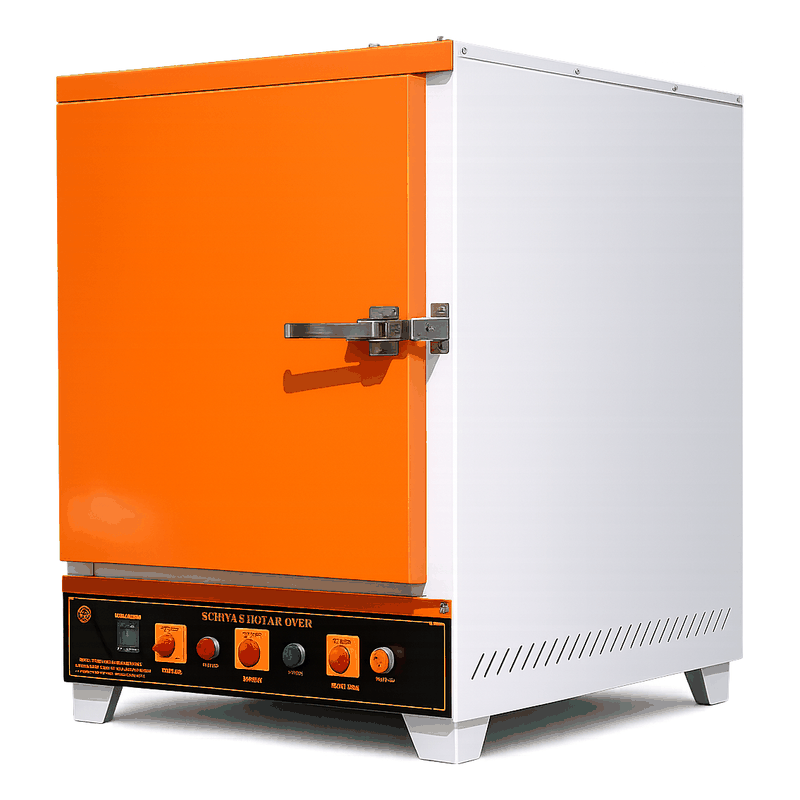
While both devices provide high‑temperature heating, a hot air oven circulates heated air directly over the samples, which can lead to surface oxidation or contamination. In contrast, a muffle furnace isolates the sample within a sealed chamber, offering a cleaner environment. For applications that demand inert or controlled atmospheres, a muffle furnace is preferable. However, if you need rapid drying of large, non‑reactive items, a hot air oven may be more energy‑efficient.
Installation, Calibration, and Routine Maintenance
Proper installation is essential for performance and safety. Indian manufacturers typically offer:
- Site survey to confirm floor loading and electrical connections.
- Professional installation with alignment of the door and sealing gasket.
- Initial calibration using a certified thermocouple traceable to NIST standards.
Routine maintenance includes:
- Monthly visual inspection of heating elements for discoloration.
- Quarterly cleaning of the interior with a soft brush to remove residue.
- Annual verification of temperature uniformity using a calibrated reference probe.
Common Mistakes to Avoid
Even experienced lab managers can fall into pitfalls:
- Overloading the chamber: Exceeding the rated capacity creates temperature gradients and may damage the furnace.
- Using incompatible crucibles: Non‑metallic crucibles can melt or emit gases at high temperatures.
- Neglecting door seals: Worn gaskets reduce insulation efficiency and increase energy consumption.
- Skipping preventive maintenance: Ignoring scheduled checks can lead to unexpected shutdowns during critical runs.
Frequently Asked Questions
What is the typical lifespan of a muffle furnace?
With regular maintenance, the heating elements and insulation can last 10–15 years. The chassis and control electronics often outlive the heating components.
Can a muffle furnace be used for inert‑gas atmospheres?
Yes. Many Indian manufacturers offer optional quartz tubes or gas inlet ports to purge the chamber with nitrogen or argon, enabling oxidation‑free heat treatment.
Are there any Indian standards governing muffle furnace safety?
Yes. The Bureau of Indian Standards (BIS) publishes relevant safety and performance criteria for laboratory heating equipment, including electrical safety (IS 302‑2013) and temperature accuracy.
How does price vary across different manufacturers?
Pricing depends on temperature range, capacity, control sophistication, and after‑sales service. Bench‑top models may start around INR 80,000, while large floor‑standing units can exceed INR 5 lakhs. Always request a detailed quotation that includes installation, training, and warranty.
Is it necessary to have a separate exhaust system?
For standard air‑oxidizing operations, a well‑ventilated lab is sufficient. If you are working with volatile compounds or inert gases, a dedicated exhaust or fume hood is recommended.
Final Verdict and Practical Recommendations
India hosts a growing ecosystem of reputable muffle furnace manufacturers in India that combine robust construction with localized support. To make an informed purchase, match the furnace’s temperature range and capacity with your application, verify compliance with BIS and IEC standards, and confirm that the supplier offers on‑site installation, calibration, and a reliable spare‑parts channel.
For laboratory managers in Chennai, Mumbai, Bengaluru, or any other Indian city, the right choice will balance technical performance with serviceability. If you are ready to explore specific models that fit your budget and space constraints, visit the detailed product page of a trusted supplier at muffle furnace manufacturers in Chennai – What You Need to Know. Their catalogue includes both bench‑top and floor‑standing units, complete with warranty and after‑sales support.