
Table of Contents
- Core Instruments in the Equipment List for Effluent Treatment Plant (ETP) Labs
- How to Choose the Right Equipment List for Effluent Treatment Plant (ETP) Labs
- Alternative Technologies and When to Use Them
- Maintenance, Safety, and Troubleshooting Essentials
- Key Questions to Ask Suppliers Before Purchase
- Frequently Asked Questions
- Final Verdict and Practical Recommendations
Designing an efficient effluent treatment plant (ETP) laboratory requires more than just space and skilled personnel; the right equipment list for effluent treatment plant (ETP) labs is the backbone of reliable analysis, compliance, and process optimisation. Whether you are a laboratory manager in Chennai, a quality control professional in Tamil Nadu, or an academic researcher setting up a pilot plant, understanding the function, specifications, and selection criteria of each instrument will save time, reduce operational risk, and ensure that your effluent data meet the Central Pollution Control Board (CPCB) standards.
Core Instruments in the Equipment List for Effluent Treatment Plant (ETP) Labs
Below is a practical breakdown of the essential equipment you will encounter in a modern ETP laboratory. Each item is described with its working principle, typical specifications, and common applications.
1. pH and Conductivity Meters
- Working principle: Glass electrode for pH; four‑probe sensor for conductivity.
- Key specs: Temperature compensation ±0.02 pH, conductivity range 0–200 mS/cm, ±1 % accuracy.
- Application: Continuous monitoring of influent and effluent streams to assess acid/base balance and ionic strength.
2. Spectrophotometers (UV‑Vis)
- Working principle: Beer‑Lambert law – absorbance proportional to concentration.
- Key specs: Wavelength range 190‑1100 nm, resolution ≤1 nm, sample cuvette size 1 mL.
- Application: Determination of colour, COD, BOD, nitrate, phosphate, and heavy‑metal complexes.
3. Dissolved Oxygen (DO) Analyzers
- Working principle: Clark‑type polarographic sensor or optical fluorescence.
- Key specs: Range 0‑20 mg/L, accuracy ±0.1 mg/L, automatic temperature compensation.
- Application: BOD testing, aerobic biodegradability studies, and compliance with CPCB effluent standards.
4. Incubators (BOD & BOD‑5)
- Working principle: Controlled temperature (typically 20 ± 0.5 °C) with gentle shaking.
- Key specs: Capacity 1‑20 L, digital temperature control, humidity control optional.
- Application: Standard BOD‑5 tests for municipal and industrial wastewater.
5. Autoclaves
- Working principle: Saturated steam under pressure (typically 121 °C, 15 psi).
- Key specs: Volume 10‑100 L, automatic cycle programming, safety interlocks.
- Application: Sterilisation of media, glassware, and bio‑hazardous samples before analysis.
6. Water Baths (Concentric Ring & Serological)
- Working principle: Uniform temperature water circulation.
- Key specs: Temperature range 5‑100 °C, ±0.5 °C stability, capacity up to 30 L.
- Application: Sample incubation, enzyme reactions, and temperature‑controlled extractions.
7. Analytical Balances
- Working principle: Electromagnetic force restoration.
- Key specs: Capacity 200 g, readability 0.01 mg, internal calibration.
- Application: Precise weighing of reagents for titrations, gravimetric analysis, and standard preparation.
8. Fume Hoods & Laminar Flow Cabinets
- Working principle: Negative pressure (fume hood) or HEPA‑filtered laminar flow (cabinet).
- Key specs: Face velocity 0.5 m/s, sash height adjustable, sash lock.
- Application: Safe handling of toxic reagents, volatile organics, and microbiological samples.
9. High‑Pressure Autoclave (Radial Locking)
- Working principle: Steam under >1 MPa for high‑temperature sterilisation.
- Key specs: Pressure up to 2 MPa, temperature up to 135 °C, programmable cycles.
- Application: Sterilisation of large‑volume media, validation of disinfection protocols.
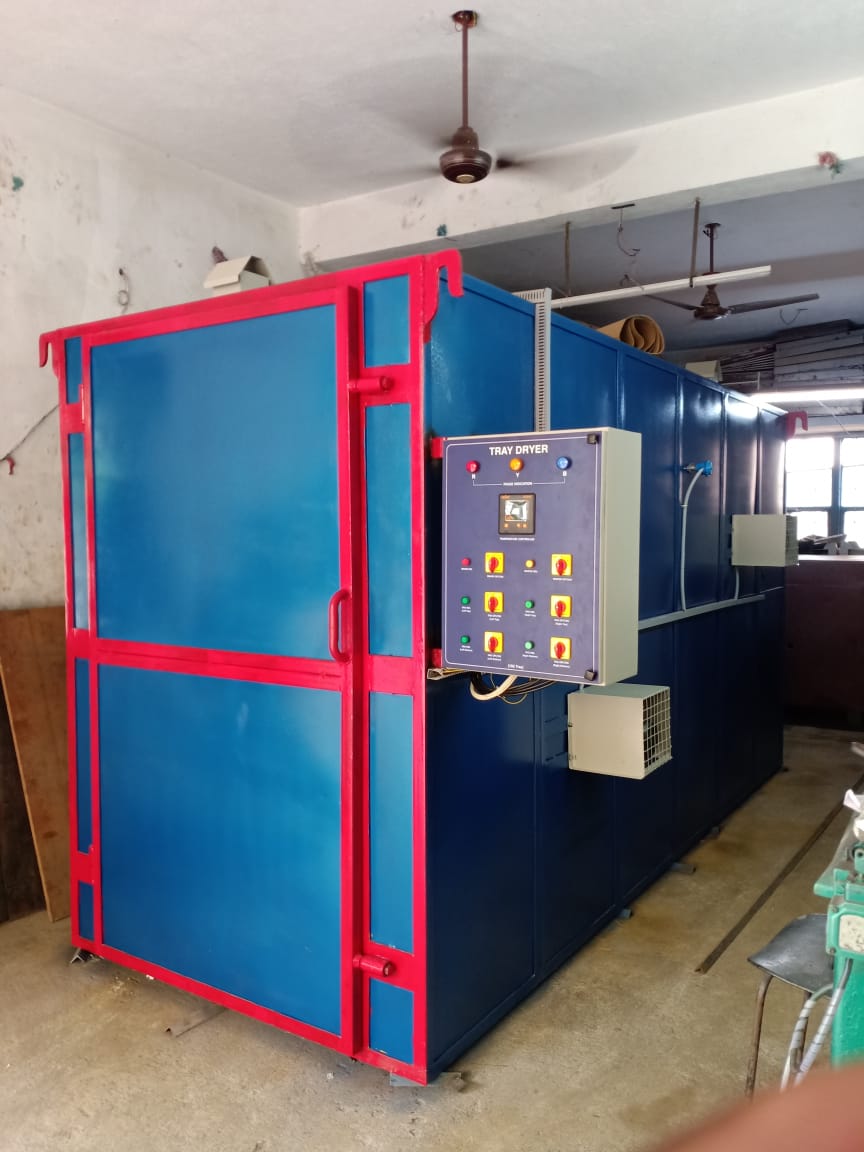
10. Drying Ovens & Tray Dryers
- Working principle: Convection heating with temperature control.
- Key specs: Temperature range 30‑250 °C, uniformity ±2 °C, capacity 30 L.
- Application: Sample drying for gravimetric analysis, preparation of solid standards.
How to Choose the Right Equipment List for Effluent Treatment Plant (ETP) Labs
Selecting equipment is not just about specifications; it involves matching the instrument to the laboratory’s workflow, regulatory requirements, and budget constraints.
Assess the Analytical Scope
Identify the parameters you must monitor – COD, BOD, TSS, heavy metals, nutrients, etc. Each parameter may need a dedicated analyser (e.g., a UV‑Vis for COD, an atomic absorption spectrometer for metals). Ensure the equipment you shortlist can handle the required detection limits as per CPCB guidelines.
Consider Local Conditions
In Chennai’s humid climate, choose devices with robust corrosion‑resistant housings (stainless‑steel 316) and reliable humidity control. For labs in Tamil Nadu’s interior regions, power stability can be an issue; look for instruments with built‑in voltage regulation or UPS compatibility.
Evaluate Calibration and Validation Options
In‑house calibration capabilities reduce downtime. Instruments that support IQ, OQ, PQ procedures simplify compliance with ISO 17025. Read more about qualification steps to ensure you select models with documented calibration protocols.
Analyze Total Cost of Ownership (TCO)
Beyond purchase price, factor in installation, training, spare parts, consumables, and service contracts. Autoclaves, for instance, require regular pressure vessel inspections – a cost that can be mitigated by choosing a supplier with a strong local service network.
Check Compatibility with Existing Infrastructure
Ensure that power requirements (230 V/50 Hz in India), bench space, and data integration (USB, RS‑232, Ethernet) align with your current lab layout. Instruments with modular designs allow future upgrades without major overhauls.
Alternative Technologies and When to Use Them
While the classic equipment list covers most routine analyses, emerging technologies can offer faster results or lower operating costs.
Portable Spectrophotometers
Handheld devices are ideal for on‑site screening of colour or turbidity before samples reach the lab. They lack the precision of benchtop models but can reduce sample backlog.
Online Sensors with SCADA Integration
Continuous flow cells for COD or nitrate provide real‑time data streams, useful for process control in large‑scale ETPs. However, they require regular cleaning and calibration, and the initial investment is higher.
Microwave‑Assisted Digestion Systems
For heavy‑metal analysis, microwave digestion reduces acid consumption and digestion time compared to conventional hot‑plate methods. Pair this with an ICP‑OES for a streamlined workflow.
Maintenance, Safety, and Troubleshooting Essentials
Proper upkeep extends equipment life and ensures data integrity.
Routine Calibration
Perform daily checks on pH electrodes, conductivity cells, and DO probes using standard solutions. Record results in a calibration log to satisfy audit trails.
Preventive Maintenance Schedule
- Autoclave: pressure vessel inspection every 12 months, gasket replacement annually.
- Water baths: clean and descale every 3 months to avoid bio‑film formation.
- Incubators: verify temperature uniformity with a calibrated thermometer quarterly.
Common Operational Mistakes
- Using tap water in conductivity cells – always use de‑ionised water.
- Skipping the pre‑heat step for BOD bottles – leads to temperature shock and erroneous results.
- Over‑loading autoclave chambers – compromises steam penetration and sterilisation efficacy.
Safety Precautions
Always wear appropriate PPE (gloves, goggles, lab coat). For high‑pressure autoclaves, ensure safety interlocks are functional and never open the door until pressure has fully released. Follow the CPCB’s guidelines on hazardous waste handling for disposal of contaminated consumables.
Key Questions to Ask Suppliers Before Purchase
- What is the warranty period and what does it cover?
- Do you provide on‑site installation, commissioning, and training?
- Are spare parts readily available in Chennai or major Indian cities?
- Can the instrument be calibrated to meet ISO 17025 requirements?
- What is the service response time for breakdowns?
Frequently Asked Questions
What is the minimum set of equipment required to start an ETP laboratory?
A functional baseline includes a pH/conductivity meter, a UV‑Vis spectrophotometer, a DO analyzer, an incubator for BOD‑5, an autoclave for sterilisation, and basic safety equipment such as a fume hood. Additional instruments can be added as the analytical scope expands.
How often should calibration standards be replaced?
Calibration standards for pH and conductivity should be replaced every 6 months or sooner if they show drift. For DO probes, the membrane typically lasts 1‑2 years depending on usage.
Can I integrate data from multiple instruments into a single software platform?
Most modern instruments support data export via USB or Ethernet. Look for models that are compatible with laboratory information management systems (LIMS) to centralise data handling.
Is it necessary to have a separate humidity chamber for effluent analysis?
Humidity chambers are essential when preparing moisture‑sensitive standards or when testing the effect of ambient humidity on sample stability. They are not mandatory for routine chemical analysis but add value for method development.
What are the typical power requirements for high‑pressure autoclaves?
Standard models operate on 230 V, 50 Hz with a power draw of 3‑5 kW. Ensure your lab’s electrical infrastructure can handle the peak load, and consider a dedicated circuit with overload protection.
Final Verdict and Practical Recommendations
Building a robust equipment list for effluent treatment plant (ETP) labs starts with understanding the analytical demands of your specific industry and aligning them with reliable, locally supported instruments. Prioritise devices that offer easy calibration, solid after‑sales service, and compliance with Indian regulatory standards. Investing in quality autoclaves, accurate pH/conductivity meters, and a versatile UV‑Vis spectrophotometer will cover the majority of routine tests, while optional online sensors and microwave digestion units can future‑proof your lab.
For a curated selection of autoclaves, incubators, and other essential lab gear, learn more about laboratory autoclaves and explore the full product range on our website. Our team can guide you through installation, validation, and maintenance to keep your ETP laboratory operating at peak performance.

