
Laboratory managers in Chennai, Mumbai, and across India often ask how to validate new instruments without getting lost in jargon. The phrase IQ, OQ, PQ Qualification for Lab Equipment Explained Simply captures the three‑stage process—Installation Qualification (IQ), Operational Qualification (OQ), and Performance Qualification (PQ)—that ensures every device meets regulatory, safety, and performance standards. This guide breaks down each step, highlights practical considerations for Indian labs, and shows how to keep your validation timeline on track.
Table of Contents
- Understanding the Three Stages: IQ, OQ, PQ Qualification for Lab Equipment Explained Simply
- Why IQ, OQ, PQ Qualification for Lab Equipment Explained Simply Matters in India
- Step‑by‑Step IQ, OQ, PQ Qualification for Lab Equipment Explained Simply
- Practical Selection Criteria for Qualified Lab Equipment
- Alternative Technologies and When to Consider Them
- Maintenance, Safety, and Troubleshooting Tips
- Common Mistakes to Avoid During Qualification
- Frequently Asked Questions
- Final Verdict and Next Steps
Understanding the Three Stages: IQ, OQ, PQ Qualification for Lab Equipment Explained Simply
In a regulated environment such as pharmaceutical manufacturing or academic research, equipment qualification is not optional—it is a core component of Good Manufacturing Practice (GMP) and ISO 9001 compliance. The three stages are:
- Installation Qualification (IQ): Verifies that the instrument is delivered and installed according to the manufacturer’s specifications, including utilities, space, and environmental conditions.
- Operational Qualification (OQ): Confirms that the equipment operates within defined limits across all intended functions, using calibrated test points.
- Performance Qualification (PQ): Demonstrates that the device consistently produces reliable results under real‑world laboratory conditions.
When you read IQ, OQ, PQ Qualification for Lab Equipment Explained Simply, think of it as a checklist that moves from “is it here?” to “does it work?” and finally “does it work every day as expected?”
Why IQ, OQ, PQ Qualification for Lab Equipment Explained Simply Matters in India
Regulatory bodies such as the Central Drugs Standard Control Organization (CDSCO) and international guidelines (e.g., ICH Q7) require documented qualification for any equipment that impacts product quality. Skipping or abbreviating these steps can lead to:
- Non‑compliance penalties during audits.
- Unreliable data that jeopardizes research outcomes.
- Increased downtime due to unexpected failures.
For labs in Tamil Nadu, where humidity and temperature fluctuations are common, proper IQ ensures that the instrument’s environmental controls (e.g., cooling fans, HVAC connections) are correctly set up before you even start OQ.
Step‑by‑Step IQ, OQ, PQ Qualification for Lab Equipment Explained Simply
1. Installation Qualification (IQ)
Key activities include:
- Reviewing the vendor’s installation manual and confirming that the site meets space, power (voltage, frequency), and utility requirements (water, gas, compressed air).
- Documenting serial numbers, model numbers, and calibration certificates for built‑in sensors.
- Verifying that safety interlocks, grounding, and emergency stop functions are functional.
- Capturing photographs of the installed unit for the qualification file.
Example: When installing a  autoclave, ensure the water supply meets the required pressure (typically 0.5 MPa) and that the drain is correctly routed to avoid backflow.
2. Operational Qualification (OQ)
During OQ you run a series of tests that prove every function works within specified limits:
- Temperature mapping using calibrated thermocouples (±0.5 °C accuracy).
- Pressure testing for steam sterilizers, confirming that the set point of 121 °C is reached within the prescribed ramp time.
- Software validation—checking that user‑interface menus display correct parameters and that data logging complies with 21 CFR Part 11.
- Alarm verification—each warning must trigger audible and visual alerts.
All test results are compared against the equipment’s specification sheet. Any deviation must be investigated and documented before moving to PQ.
3. Performance Qualification (PQ)
PQ is the final proof that the equipment delivers consistent results during routine use. Typical activities are:
- Running a representative sample batch (e.g., sterilizing a set of media bottles) for three consecutive cycles and confirming sterility assurance levels.
- Recording long‑term stability of temperature or humidity over a 30‑day period for incubators or stability chambers.
- Statistical analysis (e.g., %RSD) to demonstrate repeatability.
- Final sign‑off by the Quality Assurance manager, with the complete qualification dossier filed for regulatory inspection.
Practical Selection Criteria for Qualified Lab Equipment
Before you even begin the IQ, OQ, PQ process, choose equipment that simplifies qualification:
- Manufacturer documentation: Look for pre‑qualified designs, clear installation manuals, and available calibration certificates.
- Modular design: Units with removable sensor cartridges are easier to service and recalibrate.
- Local service network: In Chennai and other Indian cities, a nearby service engineer can reduce downtime during OQ testing.
- Compliance certifications: ISO 13485, CE marking, and FDA 21 CFR Part 11 readiness are good indicators.
For example, a high‑pressure radial‑locking autoclave offers built‑in pressure sensors that can be directly interfaced with data‑logging software, cutting OQ time by up to 30 %.
Alternative Technologies and When to Consider Them
Not every lab needs a steam autoclave. If you work with heat‑sensitive biologics, a 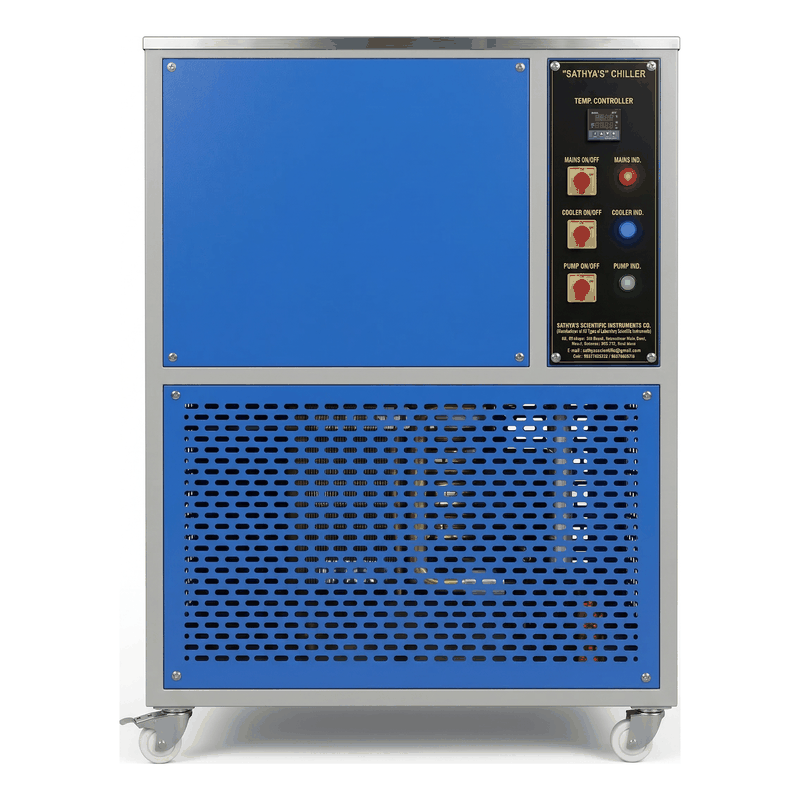 chiller or a dry heat oven may be more appropriate. Compare:
| Technology | Typical Use | Qualification Complexity |
|---|---|---|
| Steam Autoclave | Media sterilization, glassware | High (pressure, temperature, steam quality) |
| Dry Heat Oven | Glassware, metal tools | Medium (temperature uniformity) |
| UV Sterilizer | Surface decontamination | Low (light intensity, exposure time) |
Choose the technology that aligns with your process validation plan to avoid unnecessary qualification steps.
Maintenance, Safety, and Troubleshooting Tips
After successful PQ, keep the equipment qualified by following a preventive maintenance schedule:
- Calibrate temperature sensors annually (or per manufacturer recommendation).
- Inspect seals, gaskets, and pressure relief valves before each major run.
- Maintain a log of all service activities; this log becomes part of the ongoing qualification evidence.
- Train operators on emergency shutdown procedures and proper PPE usage.
Common troubleshooting scenarios:
- Temperature drift – Re‑calibrate the sensor and check for airflow obstructions.
- Pressure alarm false‑positive – Verify that the pressure transducer is not clogged with scale.
- Data‑logging failure – Ensure the PC interface complies with the latest firmware version.
Common Mistakes to Avoid During Qualification
- Skipping the IQ documentation because the equipment “looks fine”. Without a signed IQ, auditors will reject the entire qualification.
- Using uncalibrated reference standards during OQ. Always use traceable standards from NIST‑accredited labs.
- Rushing PQ with a single run. Regulatory bodies expect at least three consecutive successful cycles.
- Neglecting environmental monitoring. In a humid Chennai lab, a humidity chamber must be qualified for both temperature and RH stability.
Frequently Asked Questions
What is the difference between IQ and OQ?
IQ focuses on the physical installation—correct utilities, space, and documentation. OQ tests the functional performance of each control parameter using defined test points.
How long does a full IQ, OQ, PQ cycle take?
Typical timelines are 1–2 weeks for IQ, 2–3 weeks for OQ, and 1–2 weeks for PQ, depending on equipment complexity and availability of calibrated standards.
Can I reuse qualification data for a similar model?
Only if the manufacturer confirms that the design is identical and the software version is the same. Otherwise, a new IQ, OQ, PQ is required.
Do I need a qualified person to sign off the qualification?
Yes. A qualified engineer or a senior scientist with documented training should review and sign the qualification report.
Is IQ, OQ, PQ required for research‑grade equipment?
While not legally mandated, many research institutions adopt the same rigor to ensure data integrity, especially when publishing in peer‑reviewed journals.
Final Verdict and Next Steps
Mastering IQ, OQ, PQ Qualification for Lab Equipment Explained Simply empowers Indian laboratories to meet regulatory expectations, reduce downtime, and deliver trustworthy results. Start by selecting equipment with comprehensive documentation, plan a realistic qualification schedule, and keep meticulous records for future audits.
Ready to equip your lab with devices that simplify qualification? Contact our experienced team for delivery, installation, and validation support across Chennai and Tamil Nadu. Our engineers can guide you through every IQ, OQ, PQ step, ensuring compliance from day one.
For further reading on global equipment qualification standards, refer to the FDA Equipment Qualification Guidance, which outlines best practices aligned with both US and Indian regulatory expectations.
