
Setting up a laboratory that complies with Equipment Needed for an NABL-Accredited Testing Laboratory requirements is a strategic investment for any organization that values data integrity, regulatory acceptance, and competitive advantage. Whether you manage a pharmaceutical quality‑control suite in Chennai, a research facility at a university in Tamil Nadu, or an industrial testing centre in Hyderabad, the equipment you select must meet the stringent criteria laid down by the National Accreditation Board for Testing and Calibration Laboratories (NABL). This article walks you through the essential instruments, selection tips, maintenance practices, and common pitfalls, helping you build a compliant and efficient testing environment.
Table of Contents
- Core Instrumentation: Equipment Needed for an NABL-Accredited Testing Laboratory
- How to Choose Equipment Needed for an NABL-Accredited Testing Laboratory
- Alternative Technologies and When to Use Them
- Installation, Calibration, and Routine Maintenance
- Common Mistakes to Avoid When Procuring Equipment Needed for an NABL-Accredited Testing Laboratory
- Frequently Asked Questions
- Final Verdict and Practical Recommendations
Core Instrumentation: Equipment Needed for an NABL-Accredited Testing Laboratory
At the heart of any NABL‑accredited lab lies a suite of calibrated, traceable, and documented instruments. Below is a categorised list of the most frequently required equipment, together with a brief description of their working principles and typical applications.
- Autoclaves (Steam Sterilizers) – Use pressurised saturated steam to achieve sterilisation at 121 °C–134 °C. Critical for microbiology, pharmaceutical aseptic processing, and waste decontamination. Models range from horizontal semi‑automatic units to high‑pressure radial‑locking autoclaves.
- Incubators (BOD, Bacteriological, CO₂) – Provide precise temperature, humidity, and gas control for microbial growth. Essential for environmental monitoring, cell culture, and biochemical oxygen demand (BOD) testing.
- Ovens and Furnaces (Hot‑Air Oven, Muffle Furnace, High‑Temperature Furnace) – Deliver uniform heating for drying, ashing, and high‑temperature material testing. Temperature uniformity and programmable ramps are key performance indicators.
- Water Baths (Concentric Ring, Serological) – Offer stable temperature environments for sample incubation, reagent preparation, and enzyme assays.
- Refrigerated/Chilled Systems (Laboratory Chiller, Cold Room) – Maintain low temperatures for stability studies, sample storage, and certain analytical methods.
- Laminar Flow Hoods and Fume Hoods – Provide contaminant‑free work zones (laminar flow) or safe exhaust of hazardous vapours (fume hoods). Airflow velocity and filter integrity are regularly verified.
- Analytical Balances and Weighing Stations – High‑precision mass measurement (down to 0.01 mg) required for quantitative analysis, formulation, and standard preparation.
- Soxhlet Extraction Apparatus – Continuous solvent extraction for fat, oil, and pesticide residue analysis.
- Electric Heating Mantles and Hot Plates – Direct heating for reactions, distillations, and sample preparation.
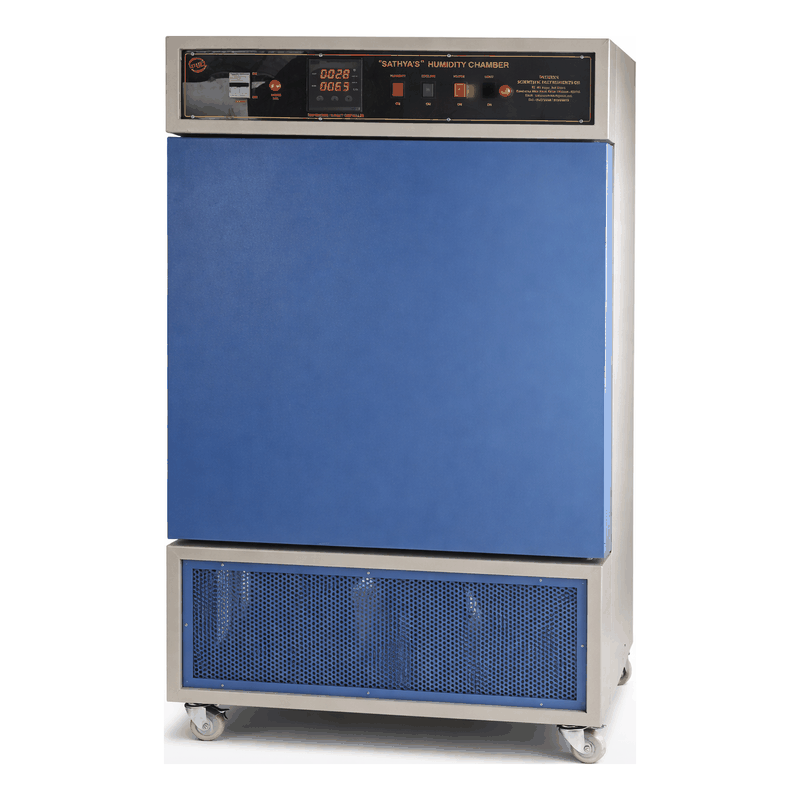
- Humidity Chambers – Controlled relative humidity (RH) environments for stability testing of pharmaceuticals and materials.
How to Choose Equipment Needed for an NABL-Accredited Testing Laboratory
Choosing the right instrument goes beyond price comparison. Consider the following criteria to ensure compliance and long‑term reliability:
1. Accreditation‑Specific Specifications
Review the NABL scope of accreditation for your lab. Each test method (e.g., ISO 17025, USP ) lists performance criteria such as temperature accuracy (±0.5 °C), humidity control (±2 % RH), or pressure stability (±0.05 MPa). Select equipment that meets or exceeds these tolerances.
2. Traceability and Calibration
Instruments must be calibrated against national or international standards (NIST, BIPM). Look for manufacturers that provide calibration certificates and a clear schedule for re‑calibration. A built‑in calibration log or software interface simplifies documentation for audits.
3. Capacity and Throughput
Match the instrument’s load capacity to your sample volume. For high‑throughput pharmaceutical QC, a large‑capacity autoclave or a multi‑chamber oven reduces bottlenecks, whereas a research lab may prefer a compact benchtop model.
4. Energy Efficiency and Local Power Conditions
India’s power supply can be variable. Choose equipment with robust voltage regulation, low power consumption, and optional UPS compatibility. Energy‑efficient models also lower operating costs in the long run.
5. Service Network and Spare Parts Availability
Prefer suppliers with a local service centre in Chennai, Hyderabad, or Bengaluru. Prompt technical support, readily available spare parts, and on‑site training are vital for maintaining accreditation status.
6. User Interface and Data Management
Modern instruments feature touchscreen panels, remote monitoring, and data export in formats compatible with LIMS (Laboratory Information Management Systems). This reduces manual transcription errors and speeds up report generation.
Alternative Technologies and When to Use Them
While traditional equipment fulfills most accreditation needs, emerging alternatives can offer advantages in specific scenarios:
- Microwave‑Assisted Sterilisation – Faster cycles for heat‑sensitive materials, but limited to small loads and requires validation against steam sterilisation standards.
- Infrared Drying Ovens – Provide rapid surface drying; however, temperature gradients can affect uniformity, making them unsuitable for critical weight‑loss tests.
- Digital Water Baths with PID Control – Offer tighter temperature control than conventional baths, ideal for enzymatic assays demanding ±0.1 °C stability.
When evaluating alternatives, conduct a risk assessment and verify that the new technology can be validated per NABL guidelines.
Installation, Calibration, and Routine Maintenance
Proper installation is the first step toward sustained compliance:
- Site Preparation – Verify floor load capacity, provide adequate ventilation, and install grounding for electrical safety.
- Instrument Qualification – Perform Installation Qualification (IQ), Operational Qualification (OQ), and Performance Qualification (PQ) as defined in ISO 17025.
- Calibration Schedule – Follow the manufacturer’s recommended interval, typically annually for temperature‑critical devices, and document each activity in a calibrated logbook.
- Preventive Maintenance – Clean filters, replace seals, and check sensor drift. Many suppliers offer service contracts that include routine checks.
- Safety Checks – Verify emergency stop functions, pressure relief valves, and interlocks before each use.
Common Mistakes to Avoid When Procuring Equipment Needed for an NABL-Accredited Testing Laboratory
- Over‑looking Accreditation Scope – Buying a high‑end instrument that does not align with the lab’s accredited test methods leads to wasted capital.
- Ignoring Local Power Quality – Failure to install voltage stabilisers can cause premature equipment failure.
- Skipping Validation – Deploying equipment without IQ/OQ/PQ jeopardises audit outcomes.
- Under‑estimating Training Needs – Operators must be competent in both use and documentation; insufficient training results in non‑conformities.
- Choosing Based Solely on Price – Low‑cost models often lack calibration certificates, spare parts, or service support, increasing total cost of ownership.
Frequently Asked Questions
What documentation is required for NABL accreditation of equipment?
Each instrument must have a calibration certificate traceable to national standards, an SOP for operation, a maintenance log, and records of IQ/OQ/PQ. The lab’s quality manual should reference these documents.
Can I use refurbished equipment for an NABL‑accredited lab?
Refurbished units are permissible if they are fully re‑qualified, come with a current calibration certificate, and have a documented service history. However, verify that the supplier offers a warranty and after‑sales support.
How often should temperature‑sensitive equipment be recalibrated?
Typically, annually or after any major repair. Some high‑precision incubators may require semi‑annual checks if they operate near the limits of their specification.
Is it necessary to have a separate LIMS for an NABL‑accredited laboratory?
While not mandatory, a LIMS simplifies data integrity, audit trails, and report generation, aligning well with ISO 17025 requirements.
What are the key performance indicators (KPIs) for equipment reliability?
Mean time between failures (MTBF), calibration drift, and percentage of preventive maintenance completed on schedule are common KPIs used to monitor equipment health.
Final Verdict and Practical Recommendations
Investing in the right Equipment Needed for an NABL-Accredited Testing Laboratory is a balance between technical capability, regulatory compliance, and lifecycle cost. Prioritise instruments that provide documented traceability, robust service support, and user‑friendly data handling. Conduct a thorough gap analysis against your intended NABL scope, validate each device through IQ/OQ/PQ, and establish a disciplined maintenance programme.
Ready to explore a curated selection of autoclaves, incubators, ovens, and other essential lab instruments? Visit our temperature uniformity guide for deeper insights and discover how our product portfolio can help you achieve and maintain NABL accreditation.

