
When a laboratory manager in Chennai or any Indian research institute needs to keep analytical instruments, reactors or chromatography columns at a precise temperature, the Laboratory Chiller Buying Guide: Capacity, Cooling and Price becomes the first reference point. This guide walks you through the physics of chilling, the key specifications, and the cost drivers that influence the final purchase decision.
Table of Contents
- How a Laboratory Chiller Works – Core Principles
- Key Components and Their Functions
- Understanding Capacity in a Laboratory Chiller Buying Guide: Capacity, Cooling and Price
- Cooling Performance – Temperature Range and Stability
- Price Drivers in the Indian Market
- Practical Selection Criteria for Procurement Teams
- Alternative Cooling Solutions
- Installation, Calibration and Routine Maintenance
- Common Mistakes to Avoid
- Frequently Asked Questions
- Final Verdict – Making the Right Choice
How a Laboratory Chiller Works – Core Principles
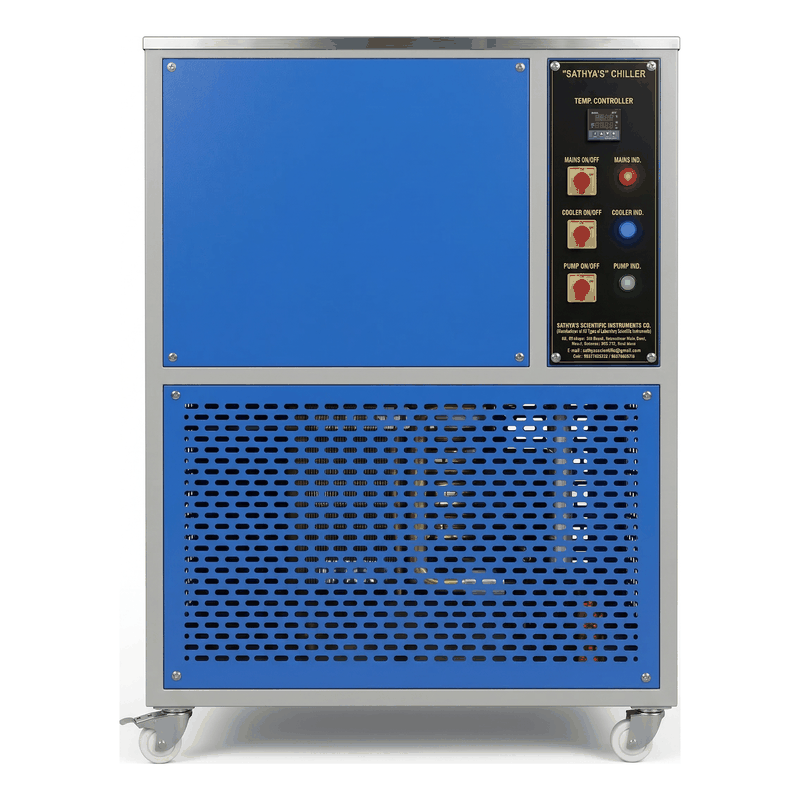
At its heart, a laboratory chiller is a closed‑loop refrigeration system. A compressor compresses refrigerant, raising its temperature and pressure. The hot gas passes through a condenser where it releases heat to ambient air or water. The cooled liquid then travels through an evaporator that sits inside the circulating bath or jacket. As the refrigerant evaporates, it absorbs heat from the process fluid, delivering the desired low temperature. Control electronics modulate the compressor speed and valve opening to maintain set‑point accuracy, typically within ±0.2 °C.
Key Components and Their Functions
The main parts you will encounter are:
Compressor: Drives the refrigeration cycle; variable‑speed models improve energy efficiency.
Condenser: Air‑cooled or water‑cooled; the choice impacts installation space and noise levels.
Evaporator/Jacket: Directly contacts the process fluid; material is usually stainless steel for corrosion resistance.
Control Panel: Digital display, programmable alarms, and remote I/O for integration with laboratory LIMS.
Safety Features: Over‑temperature shutdown, low‑pressure protection, and leak detection are mandatory for reliable operation.
Understanding Capacity in a Laboratory Chiller Buying Guide: Capacity, Cooling and Price
Capacity is expressed in kilowatts (kW) or British Thermal Units per hour (BTU/h). It defines the maximum heat load the chiller can reject while maintaining the set temperature. To calculate the required capacity, sum the heat generated by all equipment connected to the chiller (e.g., HPLC pumps, incubators, reactors) and add a 20‑30 % safety margin. Undersizing leads to temperature drift, while oversizing increases purchase price and operating costs.
Cooling Performance – Temperature Range and Stability
Typical laboratory chillers cover –20 °C to +40 °C, but specialized units can reach –40 °C. Choose a model whose range comfortably exceeds your lowest required temperature. Stability is equally important: look for specifications such as “±0.2 °C” or “±0.5 °C” over a 24‑hour period. For high‑precision chromatography, tighter stability reduces baseline noise and improves reproducibility.
Price Drivers in the Indian Market
Several factors influence the final price tag in India:
1. Capacity: Higher kW ratings require larger compressors and more robust heat exchangers.
2. Cooling Technology: Variable‑speed compressors and advanced PID controllers add to cost but save energy.
3. Construction Materials: Stainless‑steel jackets and corrosion‑resistant seals are pricier than aluminium.
4. Certification: Units meeting IS 1350 (Indian Standards for laboratory refrigeration) or ISO 9001 may carry a premium.
5. After‑sales Service: Local warranty, spare‑part availability, and calibration support are factored into the quoted price.
Practical Selection Criteria for Procurement Teams
When drafting a purchase request, consider the following checklist:
Application Profile: Identify the exact temperature set‑points, load fluctuations, and whether the chiller will serve a single instrument or multiple stations.
Space Constraints: Air‑cooled condensers need clearance for airflow; water‑cooled systems require a coolant loop and drainage.
Power Supply: Verify voltage (220 V or 380 V) and phase requirements; some Indian labs have single‑phase only.
Control Integration: Compatibility with LabVIEW, SCADA or building management systems can simplify data logging.
Regulatory Compliance: For pharmaceutical labs, adherence to GMP and validation guidelines is non‑negotiable.
Alternative Cooling Solutions
In some cases, a recirculating water bath with a built‑in chiller or a thermoelectric cooler (Peltier) may be sufficient for low‑load applications. However, these alternatives often lack the capacity and temperature stability of dedicated laboratory chillers, especially when multiple high‑heat instruments are connected.
Installation, Calibration and Routine Maintenance
Proper installation minimizes vibration and ensures optimal heat exchange. Position the unit on a level, vibration‑isolated platform, and keep at least 30 cm clearance around the condenser. Calibration should be performed annually using a traceable temperature reference (e.g., a calibrated platinum resistance thermometer). Maintenance tasks include:
• Cleaning or replacing condenser filters every 3‑6 months.
• Checking refrigerant charge for leaks.
• Inspecting seals and gaskets for wear.
• Updating firmware to the latest version.
Common Mistakes to Avoid
1. Ignoring Total Heat Load: Adding new equipment without re‑evaluating capacity leads to temperature excursions.
2. Improper Coolant Management: Using de‑ionized water without corrosion inhibitors can damage stainless‑steel jackets.
3. Neglecting Ventilation: Air‑cooled chillers placed in confined cabinets overheat, shortening component life.
4. Skipping Validation: In regulated environments, failure to document qualification (IQ/OQ/PQ) can cause compliance issues.
Frequently Asked Questions
What is the typical warranty period for a laboratory chiller in India?
Most manufacturers, including suppliers on the Indian market, offer a 12‑month parts and labor warranty, with optional extensions up to three years.
Can a laboratory chiller be used for cryogenic applications?
Standard chillers are limited to –20 °C to –40 °C. For true cryogenic temperatures (below –80 °C), a dedicated cryostat or liquid nitrogen system is required.
How does energy consumption scale with capacity?
Energy use rises roughly linearly with kW rating, but variable‑speed compressors can reduce average power draw by up to 30 % during low‑load periods.
Is it necessary to have a water‑cooled condenser in a hot climate like Chennai?
Air‑cooled condensers work well if ambient temperature stays below 35 °C and there is adequate airflow. In hotter or more humid environments, a water‑cooled condenser provides more reliable heat rejection.
What standards should I refer to for validation?
Refer to ISO 13485 for medical device labs and the Indian Pharmacopeia (IP) guidelines for pharmaceutical testing. The International Organization for Standardization also publishes relevant refrigeration standards such as ISO 50001 – Energy Management.
Final Verdict – Making the Right Choice
Choosing the right laboratory chiller hinges on matching capacity to the total heat load, ensuring the temperature range and stability meet your analytical needs, and understanding the price components that affect total cost of ownership. Prioritize units with proven Indian service networks, clear warranty terms, and documented compliance with IS 1350 or ISO standards. By following this Laboratory Chiller Buying Guide: Capacity, Cooling and Price, procurement teams can avoid common pitfalls and secure a reliable cooling solution for their labs.
Ready to explore chiller options that fit your lab’s specifications? Visit our Equipment Needed for an NABL‑Accredited Testing Laboratory page for additional insights and contact our sales team for a personalized quote.

