
Laboratory managers and quality‑control professionals across India often ask, “What is the Stability Chamber Price in India: 25°C/60% RH and 40°C/75% RH Models and which features justify the cost?” In this article we break down the technology, key specifications, and buying considerations for the two most common humidity‑temperature set‑points used in pharmaceutical and food‑product stability testing. Whether you are in Chennai, Bengaluru or New Delhi, understanding the price drivers will help you make a financially sound decision.
Table of Contents
- How a Stability Chamber Works – Core Principles
- Key Components and Typical Specifications
- Applications of 25 °C/60 % RH and 40 °C/75 % RH Models
- Factors That Influence Stability Chamber Price in India
- How to Choose the Right Model for Your Lab
- Comparison with Alternative Technologies
- Installation, Calibration, and Routine Maintenance
- Common Mistakes to Avoid
- Frequently Asked Questions
- Final Verdict and Recommendation
How a Stability Chamber Works – Core Principles
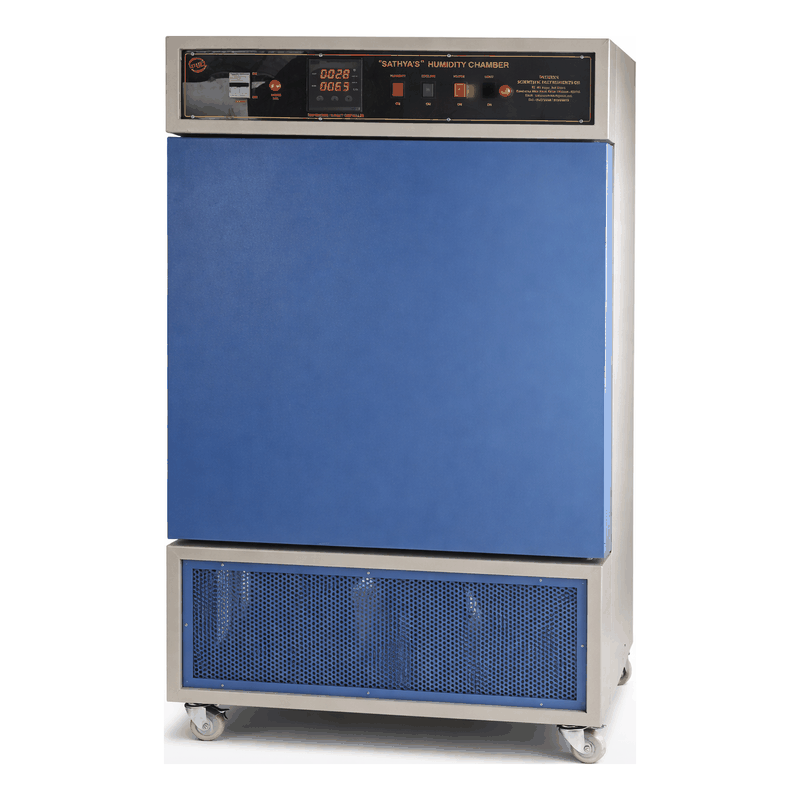
A stability chamber, also called an environmental or humidity chamber, maintains a tightly controlled temperature and relative humidity (RH) over extended periods. The core principle relies on a closed‑loop system:
- Temperature control: A refrigeration compressor (for cooling) and a heating element work together with a PID (proportional‑integral‑derivative) controller to keep the internal temperature within ±0.5 °C of the set point.
- Humidity regulation: A humidifier injects moisture while a de‑humidifier (often a silica‑gel or Peltier‑based unit) removes excess water vapor, allowing the chamber to hold RH at ±2 % of the target.
- Air circulation: A low‑speed fan creates uniform airflow, preventing hot or cold spots that could skew stability data.
The chamber’s insulated steel shell, stainless‑steel interior, and sealed door gaskets protect the environment from external fluctuations, making it suitable for ICH‑Q1A(R2) stability studies.
Key Components and Typical Specifications
When evaluating the Stability Chamber Price in India: 25°C/60% RH and 40°C/75% RH Models, focus on the following components and specs:
- Temperature range: –20 °C to +60 °C (most models cover the 25 °C and 40 °C set points comfortably).
- Relative humidity range: 10 %–95 % (non‑condensing).
- Capacity: 200 L to 1200 L interior volume; larger chambers cost more but allow more samples per run.
- Accuracy: ±0.5 °C temperature, ±2 % RH (critical for regulatory compliance).
- Control interface: Touchscreen with data logging, USB/RS‑232 connectivity for LabVIEW or LIMS integration.
- Construction: Double‑wall stainless steel, double‑seal doors, and optional HEPA‑filtered inlet for clean‑room environments.
- Safety features: Over‑temperature alarm, door‑open alarm, automatic power‑off on fault.
Applications of 25 °C/60 % RH and 40 °C/75 % RH Models
The two set‑points are standard in the pharmaceutical industry:
- 25 °C/60 % RH: Long‑term (12‑month) stability testing for products stored at room temperature, as recommended by the ICH.
- 40 °C/75 % RH: Accelerated stability testing to predict shelf life in a shorter timeframe.
Beyond drugs, food‑grade manufacturers, cosmetics firms, and academic research labs use these chambers for microbiological studies, polymer ageing, and sensor calibration.
Factors That Influence Stability Chamber Price in India
Understanding the price structure helps you compare quotes from different suppliers:
- Capacity: Larger internal volume raises material and motor costs.
- Control system: Advanced PID controllers with remote logging are priced higher than basic analog units.
- Construction material: Stainless‑steel interiors cost more than painted metal but offer better corrosion resistance.
- Certification: Chambers meeting ISO 9001, CE, or US FDA GMP requirements often carry a premium.
- After‑sales service: Warranty length, on‑site calibration, and spare‑part availability affect total cost of ownership.
In major Indian metros like Chennai and Mumbai, local distributors may offer lower freight charges, which can shave a few lakhs off the quoted price.
How to Choose the Right Model for Your Lab
Follow this practical checklist before finalising the purchase:
- Define the sample load – number of trays, bottles, or pallets per run.
- Confirm the required set‑points – 25 °C/60 % RH, 40 °C/75 % RH, or both.
- Check space constraints – measure floor area and ceiling height.
- Verify power availability – most chambers need a dedicated 3‑phase supply.
- Assess data‑logging needs – does your LIMS need real‑time API access?
- Ask the supplier about calibration services and spare‑part lead times.
For a quick reference on related equipment, you may also explore the humidity chamber product page on our website.
Comparison with Alternative Technologies
While a conventional stability chamber is the workhorse for most labs, there are alternatives:
- Modular climate cabinets: Offer flexibility but often lack the temperature‑RH precision required for regulatory studies.
- Refrigerated incubators: Suitable for low‑temperature studies but cannot reach 40 °C reliably.
- Environmental test chambers with forced‑air circulation: Provide faster temperature ramp rates, useful for stress‑testing, but are usually more expensive.
If your budget is tight and you only need short‑term accelerated testing, a modular cabinet may be acceptable. However, for ICH‑compliant long‑term studies, the dedicated 25 °C/60 % RH and 40 °C/75 % RH models remain the most reliable choice.
Installation, Calibration, and Routine Maintenance
Proper installation is essential to preserve accuracy:
- Place the chamber on a level, vibration‑free concrete slab.
- Leave a 150 mm clearance on all sides for proper airflow.
- Connect the unit to a clean, dry power source; use a UPS if power cuts are frequent.
Calibration should be performed at least once a year by an accredited service provider. Use NIST‑traceable temperature probes and a chilled‑mirror hygrometer for RH verification. Routine maintenance includes cleaning the interior with a lint‑free cloth, checking door seals for wear, and descaling the humidifier to prevent microbial growth.
Common Mistakes to Avoid
Even experienced lab managers can fall into pitfalls:
- Overloading the chamber: Packing trays too tightly impedes airflow and creates temperature gradients.
- Neglecting door gasket inspection: Worn seals cause humidity drift, invalidating results.
- Using non‑sterile water in the humidifier: Leads to microbial contamination of samples.
- Skipping periodic calibration: Small sensor drift accumulates, causing regulatory non‑compliance.
Frequently Asked Questions
What is the typical price range for a 25 °C/60 % RH stability chamber in India?
Prices vary widely based on capacity and features, ranging from INR 5 lakh for a compact 200 L unit to INR 15 lakh for a 1200 L stainless‑steel model with advanced data logging.
Can I use the same chamber for both 25 °C/60 % RH and 40 °C/75 % RH studies?
Yes. Most modern chambers allow programmable set‑points, so you can switch between the two profiles without hardware changes.
Do Indian labs need any specific certification for stability chambers?
While the chamber itself is not regulated, labs performing GMP‑level studies must follow ICH guidelines and may need ISO 9001‑certified equipment to satisfy auditors.
How long does installation typically take?
From delivery to commissioning, expect 2‑3 business days if the site is prepared in advance.
Is there a warranty on the temperature and humidity sensors?
Most manufacturers provide a 12‑month warranty on sensors, with optional extended coverage available.
Final Verdict and Recommendation
The Stability Chamber Price in India: 25°C/60% RH and 40°C/75% RH Models is driven by capacity, control precision, and after‑sales support. For most pharmaceutical and food‑testing labs in Chennai, Bengaluru, or Delhi, a stainless‑steel chamber with a 500‑800 L volume, PID control, and USB data logging offers the best balance of cost and compliance. Ensure the supplier provides on‑site calibration, a clear warranty, and readily available spare parts.
Ready to upgrade your lab’s environmental testing capability? Explore our range of humidity‑controlled chambers and request a quotation today.
For further guidance on regulatory standards, refer to the International Council for Harmonisation’s quality guidelines at ICH Quality Guidelines.

