Laboratory managers and procurement teams in Chennai and the wider Tamil Nadu region often ask, “where can I source reliable batch ovens and tray dryers for my facility?” As an Industrial Oven Manufacturer in Tamil Nadu: Batch Ovens and Tray Dryers specialist, we understand the balance between performance, regulatory compliance, and cost. This guide walks you through the technical fundamentals, selection criteria, and practical tips to help you make an informed purchase.
Table of Contents
- Working principle of batch ovens and tray dryers
- Industrial Oven Manufacturer in Tamil Nadu: Batch Ovens and Tray Dryers – Key components
- Industrial Oven Manufacturer in Tamil Nadu: Batch Ovens and Tray Dryers – How to select the right equipment
- Batch ovens vs. tray dryers – When to choose which
- Installation, calibration and routine maintenance
- Safety and common operational pitfalls
- Frequently Asked Questions
- Final recommendation
Working principle of batch ovens and tray dryers
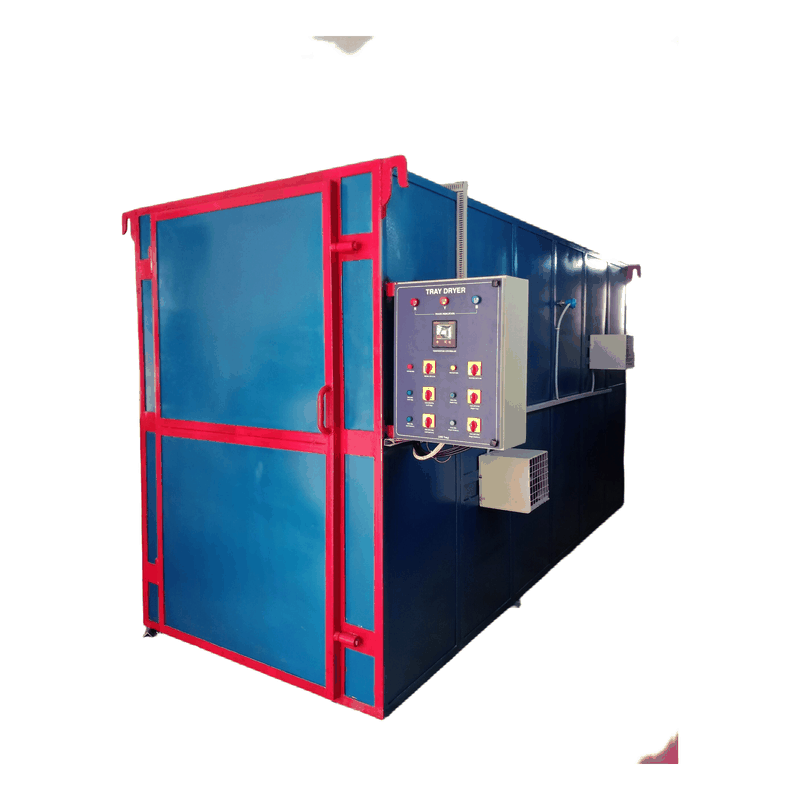
Both batch ovens and tray dryers rely on forced hot‑air circulation to achieve uniform heating. In a batch oven, the product is placed inside a sealed chamber; a fan draws heated air from the heating elements and distributes it evenly. A tray dryer, on the other hand, uses a perforated tray system that allows hot air to pass through the material, accelerating moisture removal. Temperature is regulated by a PID controller that compares the setpoint with a thermocouple reading and adjusts the heating element power accordingly.
Industrial Oven Manufacturer in Tamil Nadu: Batch Ovens and Tray Dryers – Key components
The essential components include:
- Heating elements: Typically stainless‑steel or nickel‑chromium coils designed for temperatures up to 300 °C.
- Air circulation system: Axial or centrifugal fans with variable speed drives for precise airflow control.
- Control panel: Digital touch‑screen or keypad interface with programmable recipes, alarms, and data logging.
- Insulation: High‑temperature ceramic fiber or mineral wool to minimize heat loss and improve energy efficiency.
- Safety devices: Over‑temperature cut‑offs, door interlocks, and emergency stop buttons in compliance with BIS standards for industrial ovens.
Temperature range and accuracy
Standard batch ovens in India offer a temperature span of 30 °C to 300 °C with ±1 °C accuracy, while tray dryers typically operate from 40 °C to 250 °C with similar precision. For pharmaceutical applications, tighter control (±0.5 °C) may be required, and manufacturers often provide calibrated thermocouples traceable to national standards.
Industrial Oven Manufacturer in Tamil Nadu: Batch Ovens and Tray Dryers – How to select the right equipment
Choosing the proper oven depends on three core factors:
- Application type: Drying powders, curing composites, or sterilizing glassware each demand different airflow patterns and temperature profiles.
- Capacity needs: Batch ovens are measured in liters (e.g., 200 L, 500 L), whereas tray dryers are rated by tray size and the number of trays (e.g., 4‑tray, 12‑tray models).
- Regulatory compliance: For GMP‑controlled environments, look for ISO 13485‑compatible documentation, validation protocols, and clean‑room‑compatible finishes.
A practical tip: draft a “process matrix” that lists required temperature, humidity, batch size, and cycle time. Match each row to the specifications of available ovens to narrow the shortlist.
Batch ovens vs. tray dryers – When to choose which
Batch ovens excel when you need a sealed environment, such as for heat‑curing adhesives, polymer annealing, or microbiological sterilization. Their enclosed chamber reduces contamination risk and enables precise humidity control.
Tray dryers are ideal for high‑throughput drying of powders, granules, or small components. The open‑tray design shortens drying cycles because hot air penetrates the material directly. However, they may expose the load to ambient contaminants unless placed inside a laminar‑flow hood.
In many Indian pharma plants, a hybrid approach—using a batch oven for final sterilization and a tray dryer for bulk drying—optimises both throughput and product integrity.
Installation, calibration and routine maintenance
Proper installation minimizes thermal gradients and prolongs equipment life:
- Position the oven on a level, vibration‑free concrete slab; avoid direct sunlight.
- Allow at least 300 mm clearance on all sides for airflow and service access.
- Connect the control panel to a stable 230 V supply with surge protection.
Calibration should be performed annually using a certified reference thermometer. Record the deviation and adjust the PID parameters accordingly. Routine maintenance includes:
- Cleaning the interior with lint‑free cloths; avoid abrasive chemicals that could damage the insulation.
- Inspecting fan bearings and replacing filters every 6 months.
- Checking door seals for wear; a compromised seal can cause temperature drift.
Safety and common operational pitfalls
Key safety practices:
- Never exceed the maximum rated temperature; overheating can degrade the insulation and trigger fire hazards.
- Always engage the door interlock before starting a cycle.
- Use heat‑resistant gloves when loading or unloading trays.
Common mistakes include:
- Loading trays too tightly, which blocks airflow and leads to uneven drying.
- Skipping pre‑heat; rapid temperature ramps can stress heating elements.
- Neglecting regular calibration, resulting in batch failures and costly re‑work.
Frequently Asked Questions
What is the typical temperature uniformity across the chamber?
Well‑designed batch ovens achieve ±2 °C uniformity from top to bottom, while tray dryers maintain ±3 °C across the tray surface when the fan speed is correctly set.
Can I integrate the oven with a LIMS or SCADA system?
Most modern units offer RS‑485 or Ethernet ports for data logging. Custom integration can be arranged through the manufacturer’s engineering team.
How long does installation take?
From site preparation to commissioning, a standard 500 L batch oven typically requires 2–3 days. Tray dryers, being lighter, can be installed within a single day.
Is a warranty included?
Manufacturers in Tamil Nadu commonly provide a 12‑month comprehensive warranty covering parts, labor, and on‑site calibration.
Final recommendation
For laboratories and production facilities in Chennai, Coimbatore, or elsewhere in Tamil Nadu, the decision between a batch oven and a tray dryer hinges on your specific drying or heating workflow. Evaluate capacity, temperature precision, and compliance needs before committing. When you’re ready to explore a proven solution, consider our industrial tray dryer hot‑air oven—designed for robust performance, easy maintenance, and adherence to Indian safety standards.