
For laboratory managers and procurement teams in Bangalore, the search for reliable, cost‑effective scientific instruments often leads to a critical question: should I buy locally or source directly from a manufacturer in another Indian city? Laboratory Equipment Supplier in Bangalore: Direct from a Chennai Manufacturer offers a practical answer—access to high‑quality autoclaves, ovens, incubators, and other core equipment without the markup of multiple middlemen. In this guide we explore how the Chennai‑based production hub works, what equipment is most relevant for Indian labs, and the key criteria you should evaluate before signing a purchase order.
Table of Contents
- How Direct Sourcing Works: The Chennai Manufacturing Model
- Core Equipment Categories Frequently Sourced Directly
- Why Choose a Laboratory Equipment Supplier in Bangalore: Direct from a Chennai Manufacturer
- Key Selection Criteria for Bangalore Laboratories
- Comparing Direct Purchase with Local Distributors
- Installation, Calibration, and Maintenance Best Practices
- Common Mistakes to Avoid When Buying Direct
- Frequently Asked Questions
- Final Verdict and Practical Recommendation
How Direct Sourcing Works: The Chennai Manufacturing Model
Chennai hosts a cluster of precision engineering firms that specialise in stainless‑steel fabrication, electronic control panels, and rigorous quality‑control processes required for laboratory gear. When you partner with a Laboratory Equipment Supplier in Bangalore: Direct from a Chennai Manufacturer, the workflow typically follows these steps:
- Specification finalisation: Your lab’s SOPs, temperature range, and safety standards are translated into an engineering drawing.
- Prototype approval: A small batch is produced and tested for compliance with ISO 9001 and IS IIT standards.
- Production run: Full‑scale manufacturing on CNC‑machined frames, with in‑process calibration of sensors and controllers.
- Factory acceptance test (FAT): Independent verification of accuracy, uniformity, and safety interlocks before shipment.
- On‑site commissioning: Installation, user training, and calibration at your Bangalore facility.
This end‑to‑end visibility reduces lead time, improves traceability, and often lowers the total cost of ownership compared with purchasing from a third‑party distributor.
Core Equipment Categories Frequently Sourced Directly
Below is a snapshot of the most common laboratory instruments that Bangalore labs procure directly from Chennai manufacturers, along with their operating principles and typical specifications.
Autoclaves (Steam Sterilizers)
Autoclaves use saturated steam at 121 °C–134 °C under pressure (0.1–0.3 MPa) to achieve a 12‑log reduction of bacterial spores. Key components include a stainless‑steel pressure vessel, a thermostatic controller, and safety valves. Applications range from microbiology media sterilisation to surgical instrument re‑use.

Typical specifications:
- Capacity: 10 L – 200 L (customisable)
- Temperature range: 100 °C – 135 °C
- Control: Digital PID with programmable cycles
- Safety: Pressure‑release valve, door interlock, emergency stop
Laboratory Ovens & Furnaces
Drying ovens, muffle furnaces, and high‑temperature furnaces rely on electric heating elements and insulated chambers to provide uniform heat. They are essential for sample preparation, material testing, and polymer curing.

Key specs to compare:
- Temperature range: 100 °C – 1200 °C (muffle) or up to 1400 °C (high‑temperature furnace)
- Uniformity: ±2 °C across the chamber
- Construction: 304/316 stainless steel for corrosion‑resistant models
- Control: Touch‑screen PID, programmable ramps
Incubators & BOD Chambers
Incubators maintain a stable temperature (15 °C – 60 °C) and, optionally, CO₂ or humidity levels for cell culture, microbiology, and biochemical oxygen demand (BOD) testing.

Important parameters:
- Temperature accuracy: ±0.2 °C
- Uniformity: ≤0.5 °C across shelves
- Airflow: Forced‑air or static, with HEPA filtration for aseptic work
Water Baths & Chillers
Water baths provide precise temperature control (0 °C – 100 °C) for sample incubation, while laboratory chillers maintain sub‑ambient temperatures for reagents.
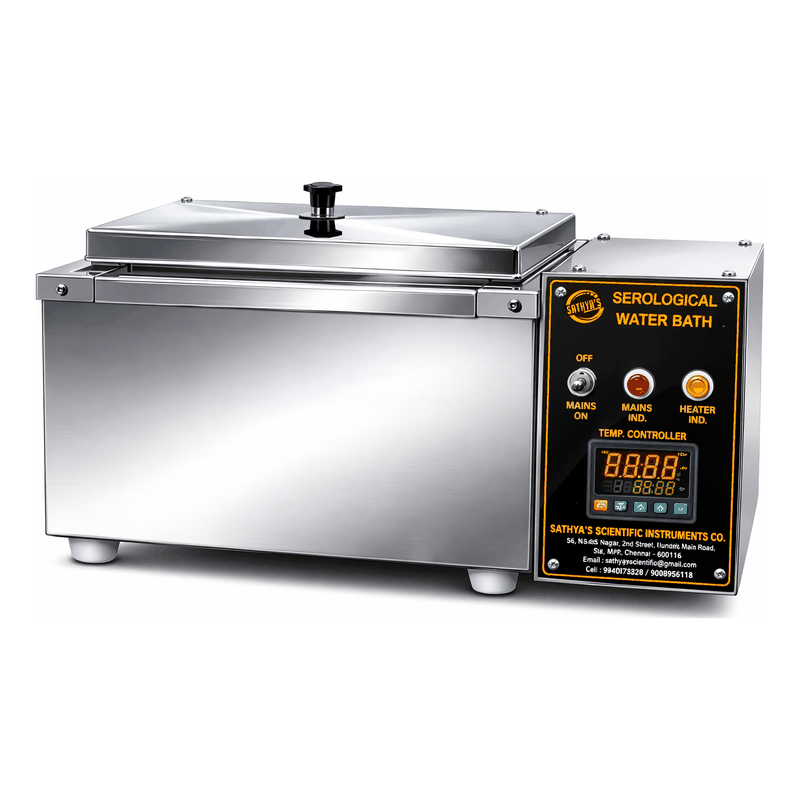
Selection tips:
- Capacity: 5 L – 30 L per bath
- Circulation: Uniform flow reduces temperature gradients
- Safety: Over‑temperature shut‑off, insulated housing
Why Choose a Laboratory Equipment Supplier in Bangalore: Direct from a Chennai Manufacturer
When you bypass regional distributors, several tangible benefits emerge:
- Cost efficiency: Manufacturing margins are passed directly to the buyer, often saving 10‑20 % on high‑value items such as autoclaves and high‑temperature furnaces.
- Customisation: Chennai factories can adapt chamber dimensions, control panels, or safety interlocks to meet specific regulatory or space constraints in Bangalore labs.
- Regulatory compliance: Many manufacturers hold ISO 9001 certification and design equipment to meet BIS (Bureau of Indian Standards) and US FDA GMP requirements, simplifying validation.
- After‑sales support: Direct lines to engineering teams mean faster response for spare parts, firmware updates, and on‑site calibration.
Key Selection Criteria for Bangalore Laboratories
Before finalising a purchase, evaluate the following parameters to ensure the equipment aligns with your operational needs:
Performance Specifications
Check temperature accuracy, uniformity, and pressure stability. For autoclaves, verify the sterilisation cycle time and steam penetration depth. For ovens, confirm the ramp rate and maximum temperature.
Material Compatibility
Laboratory environments often involve corrosive chemicals. Stainless‑steel 316 offers superior resistance compared with 304, especially for high‑humidity or saline applications.
Control Interface
Modern units feature touch‑screen PID controllers with data‑logging capabilities (USB or Ethernet). Ensure the software can export logs in CSV format for audit trails.
Safety Features
Look for pressure‑release valves, door interlocks, over‑temperature cut‑offs, and compliance with IEC 60335‑2‑11 (electrical safety for laboratory ovens).
Warranty and Service Agreements
Standard warranties range from 12 to 24 months. A comprehensive service contract covering annual preventive maintenance can extend equipment life by 30‑40 %.
Comparing Direct Purchase with Local Distributors
Many Bangalore labs are accustomed to buying from regional distributors who stock a limited range of brands. While distributors provide quick delivery, they often add a 15‑25 % margin and may lack the engineering depth to customise equipment.
In contrast, a Laboratory Equipment Supplier in Bangalore: Direct from a Chennai Manufacturer can:
- Offer a broader portfolio, including niche items such as high‑pressure radial‑locking autoclaves and laminar flow cabinets.
- Provide detailed technical documentation (factory acceptance test reports, calibration certificates) that simplify validation.
- Facilitate bulk orders with staggered delivery, reducing storage constraints.
However, direct sourcing may involve longer lead times (4‑6 weeks for custom builds) and requires more active project management from the buyer.
Installation, Calibration, and Maintenance Best Practices
Proper installation is critical to equipment longevity:
- Site preparation: Ensure a level, vibration‑free floor, adequate clearance for service access, and a dedicated electrical circuit with proper grounding.
- Calibration: Autoclaves should be calibrated annually using a calibrated pressure gauge and temperature probe. Ovens require a thermocouple traceable to a national standard.
- Cleaning: Stainless‑steel chambers benefit from weekly cleaning with mild detergent; avoid abrasive pads that can damage the surface.
- Troubleshooting: Common issues include door seal wear (replace gasket), sensor drift (re‑calibrate or replace thermocouple), and pressure valve blockage (clear debris).
Common Mistakes to Avoid When Buying Direct
Even experienced procurement teams can slip into pitfalls:
- Skipping the factory acceptance test report—this document confirms that the unit meets all specified performance criteria before shipping.
- Overlooking local regulatory approvals (e.g., BIS certification for electrical safety) which can delay installation.
- Assuming all stainless steel is the same; verify the grade (304 vs. 316) based on chemical exposure.
- Neglecting to negotiate a spare‑parts kit; having critical components on hand prevents downtime.
Frequently Asked Questions
Can I get a quotation for a custom‑size autoclave?
Yes. Most Chennai manufacturers accept detailed drawings and will provide a quotation that includes engineering, tooling, and delivery costs. The lead time for a custom chamber is typically 6‑8 weeks.
What certifications should I look for?
ISO 9001 for quality management, ISO 13485 for medical device manufacturing (if applicable), and BIS IEC 60335‑2‑11 for electrical safety of ovens. Compliance with CDC laboratory safety guidelines is also advisable for biosafety equipment.
How does after‑sales support differ between a direct manufacturer and a distributor?
Direct manufacturers often provide a dedicated engineer for on‑site commissioning and a 24‑hour helpline for critical faults. Distributors may rely on third‑party service partners, which can increase response time.
Is it possible to integrate the equipment with a Laboratory Information Management System (LIMS)?
Modern controllers support Ethernet or RS‑232 interfaces. Verify that the manufacturer provides API documentation or MODBUS support for seamless LIMS integration.
What financing options are available?
Many manufacturers partner with Indian banks to offer equipment leasing or deferred payment plans. Discuss these options during the quotation stage.
Final Verdict and Practical Recommendation
Choosing a Laboratory Equipment Supplier in Bangalore: Direct from a Chennai Manufacturer can deliver significant cost savings, customisation flexibility, and robust technical support—provided you perform thorough due diligence on specifications, certifications, and service agreements. For most Bangalore laboratories seeking reliable autoclaves, ovens, incubators, or water baths, the direct‑to‑manufacturer route is a compelling option.
Ready to explore a specific product line? Visit our Soxhlet extraction apparatus guide for an example of detailed technical documentation and how we present specifications, or browse our catalog for autoclaves, ovens, and more.
