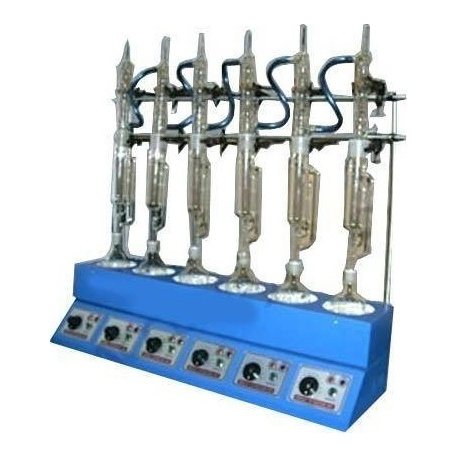
Laboratory managers and research scientists in India often ask, “How does a Soxhlet extraction apparatus work and what should I look for before buying one?” This article explains the operating principle, key components, common applications, and practical purchasing tips so you can make an informed decision for your lab in Chennai, Tamil Nadu or elsewhere in the country.
Table of Contents
- Working Principle of the Soxhlet Extraction Apparatus
- Core Components and Their Functions
- Typical Applications in Indian Laboratories
- Key Specifications to Compare
- Buying Guide: How to Choose the Right Soxhlet Extraction Apparatus
- Alternative Technologies to Consider
- Installation, Calibration, and Routine Maintenance
- Common Mistakes to Avoid
- Frequently Asked Questions
- Final Verdict and Recommendation
Working Principle of the Soxhlet Extraction Apparatus
The Soxhlet extractor is a time‑tested device for continuous liquid‑solid extraction. A solvent is heated in a flask, vaporises, travels up a distillation arm, and condenses in a cooling coil. The condensate drips onto the solid sample held in a porous thimble. When the thimble fills, the solvent‑rich extract overflows into a siphon tube, which automatically empties the chamber back into the boiling flask. This cycle repeats, allowing fresh solvent to percolate through the sample until the desired analyte is fully recovered.
Because the solvent is recycled many times, the Soxhlet method achieves high extraction efficiency with relatively low solvent consumption—ideal for phytochemical studies, pesticide residue analysis, and pharmaceutical impurity profiling.
Core Components and Their Functions
- Extraction Flask: Typically made of borosilicate glass; holds the solvent and tolerates temperatures up to 250 °C.
- Distillation Head: Connects the flask to the condenser; directs vapour flow.
- Condenser: Water‑cooled jacket that turns vapour back into liquid; ensures a steady drip rate.
- Thimble Holder and Thimble: Holds a cellulose or glass fibre thimble containing the solid matrix; allows solvent to percolate uniformly.
- Siphon (or “draw‑down” tube): Automatically empties the extraction chamber once it reaches a preset level.
- Receiving Flask: Collects the solvent‑rich extract for subsequent analysis or evaporation.
Typical Applications in Indian Laboratories
In pharmaceutical R&D, the Soxhlet extractor isolates active compounds from plant material for drug discovery. Quality‑control labs use it to determine residual solvents in APIs, following USP guidelines. Academic institutions employ the apparatus for teaching solvent‑extraction fundamentals and for preparing reference standards. Industrial settings, such as food‑grade solvent recovery, also benefit from the continuous operation.
Key Specifications to Compare
- Capacity: Common sizes range from 250 mL to 2 L flasks; choose based on sample mass and solvent volume.
- Material: Borosilicate glass is standard; some models offer quartz or stainless‑steel for aggressive solvents.
- Temperature Range: Verify the condenser’s cooling capacity and the flask’s heat resistance.
- Compatibility: Ensure the thimble size matches the holder and that the apparatus can be assembled on standard laboratory stands.
- Safety Features: Look for pressure‑relief valves, secure clamps, and heat‑resistant handles.
Buying Guide: How to Choose the Right Soxhlet Extraction Apparatus
1. Define Your Extraction Needs
Identify the sample type (plant, soil, polymer), target analyte, and required throughput. For high‑throughput screening, a larger 2 L system reduces batch time. For teaching labs, a 250 mL unit is more manageable and cost‑effective.
2. Evaluate Build Quality and Certifications
Look for apparatuses that meet Indian Standard (IS) specifications for laboratory glassware and have CE or ISO‑9001 certification from the manufacturer. These marks indicate conformity to safety and quality norms.
3. Consider Ancillary Equipment
A reliable water‑circulating chiller for the condenser, a sturdy heating mantle or oil bath, and compatible glassware (e.g., round‑bottom flasks) are essential. Purchasing a complete kit from a single supplier can simplify installation and after‑sales support.
4. Assess After‑Sales Service
In India, prompt spare‑part availability and on‑site calibration are crucial. Ask the supplier about warranty length, technical support, and training options for lab staff.
5. Budget vs. Long‑Term Cost
Initial price varies with capacity, material, and brand. However, consider the total cost of ownership: cleaning solvents, replacement thimbles, and potential downtime. A slightly higher upfront investment often pays off through durability and lower maintenance.
Alternative Technologies to Consider
While the Soxhlet extractor excels for exhaustive extraction, other methods may be faster or greener:
- Accelerated Solvent Extraction (ASE): Uses high pressure and temperature to shorten extraction time to minutes, but equipment is significantly more expensive.
- Ultrasonic Assisted Extraction (UAE): Reduces solvent use and time, yet may not achieve the same completeness for tough matrices.
- Microwave‑Assisted Extraction (MAE): Offers rapid heating but requires specialized vessels and careful control of dielectric properties.
If your lab prioritises speed over exhaustive recovery, these alternatives could complement a traditional Soxhlet system.
Installation, Calibration, and Routine Maintenance
1. Installation: Place the extractor on a stable, vibration‑free bench. Connect the condenser to a continuous water supply with a flow rate of at least 1 L min⁻¹. Secure all joints with appropriate clamps.
2. Calibration: Verify the temperature of the heating mantle with a calibrated thermometer. Check the siphon action by running a water test; the chamber should empty at the designed level.
3. Cleaning: After each use, disassemble the thimble holder and rinse with appropriate solvent. For stubborn residues, soak the glassware in a mild alkaline solution followed by thorough rinsing with de‑ionised water.
4. Troubleshooting: Common issues include incomplete siphon drainage (often due to blockage) and excessive solvent loss (check for cracked joints). Replace worn thimbles regularly to maintain consistent flow.
Common Mistakes to Avoid
- Using incompatible solvents that exceed the glass’s thermal tolerance.
- Over‑filling the extraction flask, which can cause solvent boil‑over and safety hazards.
- Neglecting condenser water flow, leading to incomplete condensation and loss of solvent.
- Skipping regular inspection of seals and joints, which can result in leaks.
- Choosing a thimble size that does not match the sample mass, causing channeling or incomplete extraction.
Frequently Asked Questions
What solvents are most commonly used in Soxhlet extraction?
Hexane, ethanol, methanol, acetone, and dichloromethane are popular due to their volatility and ability to dissolve a wide range of organic compounds. Always consult the material safety data sheet (MSDS) for handling precautions.
Can I automate the Soxhlet extraction process?
Yes. Motorised heating mantles with temperature controllers and programmable timers can automate cycles. Some manufacturers also offer integrated reflux condensers with digital read‑outs.
How long does a typical Soxhlet run take?
Extraction time depends on sample matrix and solvent. For plant material, 6–12 hours is common. Monitoring the colour or concentration of the extract can help decide when the process is complete.
Is the Soxhlet method compliant with GLP/GMP?
When performed with validated procedures, calibrated equipment, and proper documentation, Soxhlet extraction meets Good Laboratory Practice (GLP) and Good Manufacturing Practice (GMP) requirements for pharmaceutical analysis.
What safety equipment is required?
Wear lab coat, chemical‑resistant gloves, and safety goggles. Use a fume hood if the solvent is volatile or toxic. Ensure the water‑cooling system is leak‑free to avoid sudden temperature spikes.
Final Verdict and Recommendation
The Soxhlet extraction apparatus remains a reliable workhorse for exhaustive solvent extraction in Indian labs. By matching capacity, material quality, and safety features to your specific workflow, you can achieve reproducible results while controlling costs. For most research and quality‑control applications, a 500 mL to 1 L borosilicate system with a robust condenser provides the best balance of performance and affordability.
Ready to upgrade your lab? Explore the Soxhlet Extraction Apparatus at Sathya Scientific and benefit from local support, spare‑part availability, and expert guidance for installation and maintenance.