
Laboratory managers and procurement professionals in Chennai often search for a reliable tray dryer manufacturer in Chennai: uses, sizes and price to meet the demanding drying requirements of pharmaceutical, biotech and research facilities. A tray dryer provides uniform hot‑air circulation over multiple trays, enabling rapid moisture removal from powders, granules, filters and solid samples. Choosing the right model involves understanding its operating principle, capacity options, temperature control accuracy, and the cost factors that influence the final quotation in India.
Table of Contents
- Tray Dryer Manufacturer in Chennai: Key Features and Sizes
- Tray Dryer Manufacturer in Chennai: Uses Across Sectors
- Tray Dryer Manufacturer in Chennai: Pricing Factors in India
- How to Choose the Right Tray Dryer – Practical Selection Criteria
- Alternative Technologies – When a Tray Dryer May Not Be Ideal
- Maintenance, Safety and Troubleshooting Tips
- Common Mistakes to Avoid When Purchasing a Tray Dryer
- Frequently Asked Questions
- Final Verdict and Call to Action
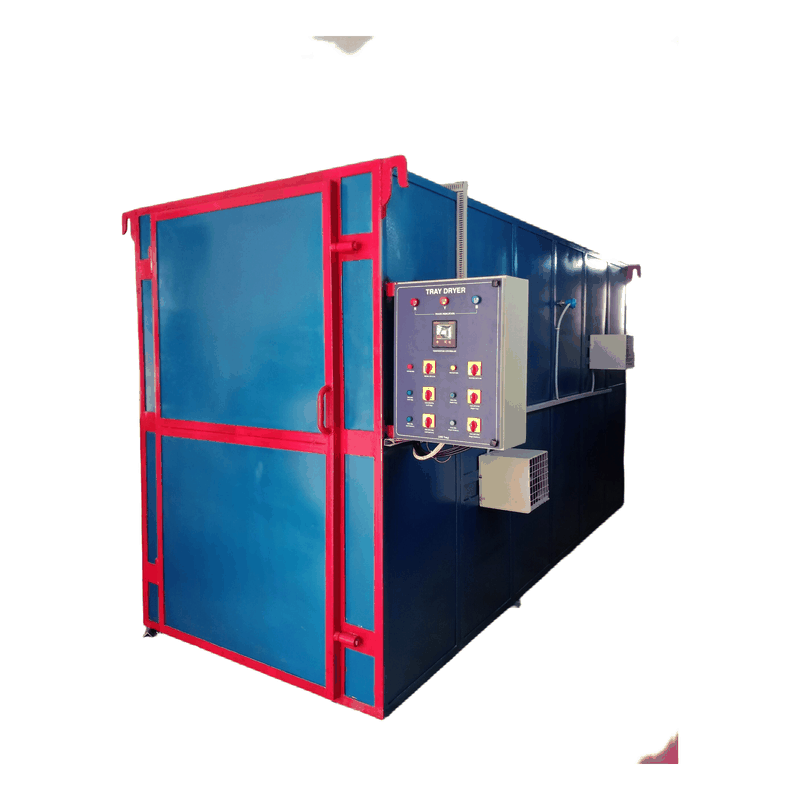
Tray Dryer Manufacturer in Chennai: Key Features and Sizes
Modern tray dryers supplied by manufacturers in Chennai are built around a stainless‑steel chamber equipped with a high‑efficiency fan, electric heating elements and a programmable controller. The main components include:
- Heating system: tubular or cartridge heaters delivering temperatures from 30 °C to 250 °C, depending on the model.
- Air distribution: perforated baffles or diffusers that ensure laminar flow across each tray.
- Control panel: digital LCD with PID temperature control, timer, and optional data logging.
- Tray system: removable stainless‑steel or Teflon‑coated trays ranging from 1 kg to 50 kg load capacity per tray.
- Safety devices: over‑temperature cut‑off, door interlock and emergency stop.
Size categories typically offered by Chennai manufacturers are:
- Bench‑top units: chamber volume 0.02–0.05 m³, ideal for academic labs and small‑scale QC.
- Compact floor models: 0.1–0.3 m³, supporting 4–8 trays for medium‑size production runs.
- Industrial‑grade ovens: 0.5 m³ and above, capable of handling 10–20 trays simultaneously for bulk drying.
When specifying size, consider the maximum tray dimensions, the total batch weight, and the available floor space in your facility. For example, a 0.3 m³ dryer with eight 30 cm × 30 cm trays fits comfortably in a standard 2 m × 2 m laboratory bench area in Chennai.
Tray Dryer Manufacturer in Chennai: Uses Across Sectors
In laboratory practice, a tray dryer is a versatile instrument. Typical applications include:
- Pharmaceutical formulation: drying granules after granulation, removing residual solvents from APIs, and conditioning powders for downstream processing.
- Biotechnology: drying cell culture media, lyophilized reagents, and filter membranes used in aseptic filtration.
- Food analysis: moisture determination of raw ingredients, drying of test samples before proximate analysis.
- Environmental testing: conditioning soil or sediment samples prior to gravimetric moisture content measurement.
- Quality control labs: standardising sample moisture levels to meet ICH and USP specifications.
Because the drying environment is sealed, the process complies with ICH Q1A(R2) stability testing requirements, ensuring reproducible results across batches.
Tray Dryer Manufacturer in Chennai: Pricing Factors in India
The price of a tray dryer in Chennai varies according to several measurable factors:
- Capacity and chamber volume: larger ovens require more steel, thicker insulation and higher‑power heaters, raising the base cost.
- Temperature range and control precision: models with ±0.5 °C PID accuracy and advanced PLC controllers command a premium.
- Material of construction: 304 L stainless steel with polished interior finishes costs more than standard 304.
- Automation options: remote monitoring, Ethernet connectivity, and programmable drying curves add to the quotation.
- After‑sales package: warranty length, on‑site installation, calibration service and availability of spare parts influence the total ownership cost.
In the Indian market, a bench‑top dryer typically starts around INR 1.5 lakh, while an industrial floor model can range from INR 5 lakh to INR 12 lakh, depending on the specifications listed above. It is advisable to request a detailed quotation that breaks down equipment cost, GST, transportation and any optional accessories.
How to Choose the Right Tray Dryer – Practical Selection Criteria
A systematic approach helps procurement teams avoid over‑specifying or under‑specifying the equipment:
- Define the drying load: calculate the maximum batch weight and the number of trays required per cycle.
- Identify temperature and humidity needs: some pharmaceutical processes demand a dry‑air environment below 10 % relative humidity; verify that the dryer can achieve the target RH.
- Check regulatory compliance: ensure the unit meets ISO 2248:2004 (drying ovens) and any local Indian standards for laboratory equipment.
- Evaluate footprint and ventilation: confirm that the laboratory’s exhaust system can accommodate the dryer’s heat dissipation.
- Consider future scalability: modular designs allow adding extra trays or upgrading the controller without replacing the whole unit.
When speaking with a tray dryer manufacturer in Chennai, ask for a performance curve that shows temperature uniformity across the chamber at different load conditions. Uniformity within ±2 °C is generally acceptable for most QC applications.
Alternative Technologies – When a Tray Dryer May Not Be Ideal
Other drying equipment can complement or replace a tray dryer depending on the process:
- Vacuum ovens: provide lower temperature drying for heat‑sensitive compounds but have higher energy consumption.
- Microwave dryers: achieve rapid moisture removal for bulk powders but may cause uneven heating.
- Fluidised‑bed dryers: suitable for large‑scale granule drying but require more complex maintenance.
For most laboratory‑scale applications, a tray dryer remains the most cost‑effective and easy‑to‑maintain solution, especially when space and budget constraints are present in Chennai‑based research institutes.
Maintenance, Safety and Troubleshooting Tips
Proper upkeep extends the service life of a tray dryer and ensures consistent performance:
- Routine cleaning: after each use, remove residue from trays and wipe the interior with a lint‑free cloth. Avoid abrasive cleaners that could damage the stainless‑steel surface.
- Calibration: schedule temperature calibration annually using a NIST‑traceable thermocouple or a calibrated infrared thermometer.
- Filter replacement: replace the air filter every 6 months to maintain airflow efficiency.
- Safety checks: verify door interlock operation and test the over‑temperature cut‑off before each shift.
- Troubleshooting common issues:
- Uneven temperature – check for blocked baffles or worn fan bearings.
- Excessive humidity – inspect the heating elements for degradation or verify the chamber seal.
- Control panel errors – reset the PLC and ensure firmware is up‑to‑date.
Common Mistakes to Avoid When Purchasing a Tray Dryer
Even experienced buyers can overlook critical details:
- Focusing solely on price and ignoring temperature uniformity specifications.
- Neglecting to verify that the dryer’s electrical rating matches the facility’s supply (e.g., 3‑phase vs. single‑phase).
- Overlooking the need for a spare tray set, which can cause downtime during cleaning cycles.
- Assuming the warranty covers all components; confirm whether the heating elements are included.
- Skipping a site‑visit by the manufacturer’s service engineer to assess ventilation and floor loading.
Frequently Asked Questions
What is the typical drying time for a pharmaceutical powder in a tray dryer?
Drying time depends on the initial moisture content, target final moisture, and temperature set point. For a common API with 5 % moisture to be reduced to <1 %, a 150 °C setting with good airflow usually completes in 2–4 hours for a 10 kg batch.
Can a tray dryer be integrated with a data‑logging system?
Yes. Most modern units from Chennai manufacturers offer optional RS‑485 or Ethernet ports that allow real‑time temperature and humidity logging, which can be exported to CSV for compliance documentation.
Is it possible to dry heat‑sensitive biologics in a tray dryer?
For heat‑sensitive materials, select a model with a low‑temperature range (30 °C–80 °C) and precise PID control. Some manufacturers also provide a nitrogen‑purged version to minimise oxidative degradation.
How does the energy consumption of a tray dryer compare with a vacuum oven?
Tray dryers generally consume 1.5–2.5 kW per 0.1 m³ chamber at 150 °C, whereas vacuum ovens can require 3–4 kW for comparable batch sizes due to the additional vacuum pump power.
What certifications should I look for?
Look for ISO 9001 quality management, ISO 2248:2004 for drying ovens, and compliance with Indian Standard IS 13169 for laboratory equipment safety.
Final Verdict and Call to Action
For laboratories and production units in Chennai, a tray dryer from a reputable local manufacturer offers a balanced mix of capacity, temperature control, and cost‑effectiveness. Evaluate your batch size, required temperature uniformity, and future scalability before finalising the purchase. Remember to request a detailed quotation that includes installation, calibration and after‑sales support.
Ready to explore the range of tray dryers that meet Indian regulatory standards and fit your laboratory footprint? Browse the curated equipment list from Sathya Scientific to compare specifications and request a personalized quote.
For additional guidance on international standards governing drying ovens, refer to the ISO 2248:2004 standard which outlines performance testing and safety requirements.

