
Laboratory managers and research scientists often face the same dilemma: should they equip the bench with a hot plate or a heating mantle? In this guide we break down the Hot Plate vs Heating Mantle: Which One Should You Buy? question, comparing performance, safety, and cost so you can make a decision that fits the needs of your lab in Chennai, Tamil Nadu, or any Indian research facility.
Table of Contents
- Working Principles – How Does Each Device Generate Heat?
- Key Components and Their Functions
- Typical Applications in Indian Laboratories
- Selection Criteria – What to Look for Before Buying
- Hot Plate vs Heating Mantle: Direct Comparison
- Maintenance, Calibration, and Troubleshooting
- Common Mistakes to Avoid
- Frequently Asked Questions
- Final Verdict – Which One Should You Buy?
Working Principles – How Does Each Device Generate Heat?
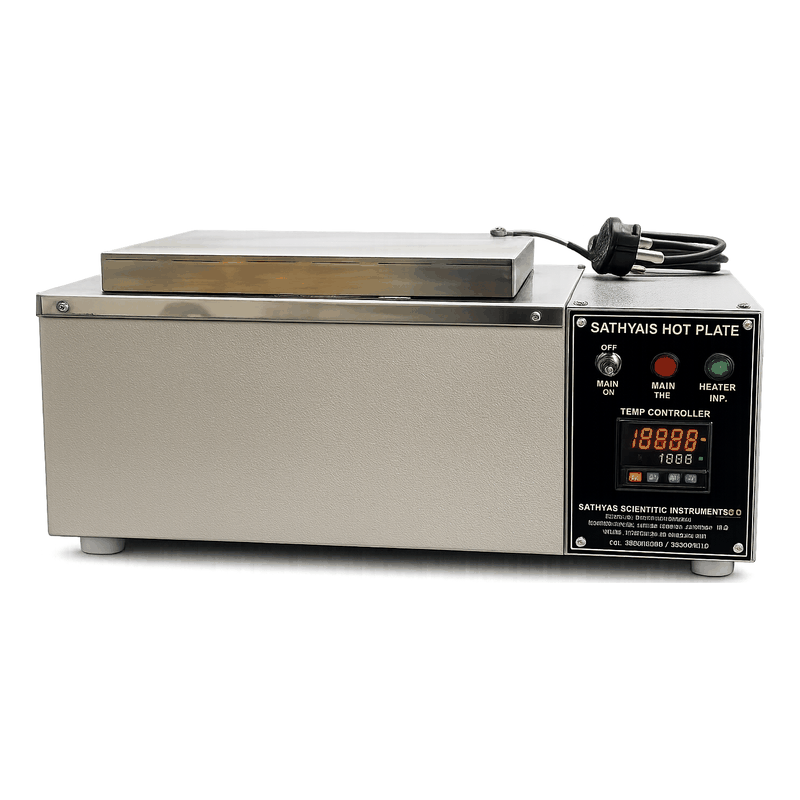
Hot Plate: A hot plate uses an electrically powered resistive heating element (often a nichrome coil) that sits beneath a smooth ceramic or metal surface. The element converts electric current into heat, which is transferred through conduction to the vessel placed on the plate. Most modern units incorporate a PID (proportional‑integral‑derivative) controller for precise temperature regulation.
Heating Mantle: A heating mantle consists of a flexible, insulated fabric or silicone “mantle” that wraps around the outside of a round‑bottom flask. Inside the mantle are embedded heating wires or silicone‑rubber heating cartridges that provide uniform circumferential heating. Because the heat is applied directly to the glass surface, temperature gradients are minimized, making mantles ideal for reflux, distillation, and reactions requiring even heating.
Key Components and Their Functions
- Temperature controller – Both devices usually feature a digital display, set‑point knob, and PID circuitry for accuracy (±0.5 °C is common).
- Heating element – Nichrome or ceramic coil for hot plates; silicone‑rubber heating cartridges for mantles.
- Surface material – Hot plates have a ceramic, PTFE‑coated, or stainless‑steel top; mantles have an insulated fabric or silicone shell.
- Safety features – Over‑temperature cut‑off, tip‑over switch, and insulated housing are standard on reputable models.
- Power rating – Hot plates range from 200 W to 1500 W; mantles typically operate between 300 W and 1000 W, depending on flask size.
Typical Applications in Indian Laboratories
Understanding the practical use‑cases helps answer the Hot Plate vs Heating Mantle: Which One Should You Buy? query for specific sectors:
- Pharmaceutical formulation – Reflux and solvent removal benefit from the uniform heating of a mantle.
- Quality control labs – Simple heating, drying, or sample preparation often use a hot plate.
- Educational institutions – Hot plates are inexpensive and easy for teaching basic techniques.
- Industrial R&D (Chennai) – Large‑scale synthesis may require multiple mantles for parallel reactions.
- Analytical chemistry – Precise temperature control for gravimetric analysis is achievable with either device, but mantles reduce hot‑spot errors.
Selection Criteria – What to Look for Before Buying
Temperature Range and Accuracy
If you need to maintain temperatures above 200 °C, a high‑power hot plate with a ceramic top is suitable. For reactions that must stay below 150 °C with tight tolerance, a heating mantle with PID control is preferable.
Flask Compatibility
Heating mantles are designed for round‑bottom flasks (50 mL–2 L). Hot plates accept any container that fits on the surface, including beakers, Erlenmeyer flasks, and reaction vessels with magnetic stir bars.
Stirring Capability
Most hot plates incorporate a magnetic stirrer, which is essential for homogeneous mixing. Mantles usually do not have built‑in stirring; a separate magnetic stirrer or overhead stirrer is required.
Power Supply and Energy Efficiency
India’s power tariffs vary by state; a mantle’s focused heating can be more energy‑efficient for small‑volume reactions, while a hot plate may consume more power when heating large open vessels.
Safety and Compliance
Check for IEC 60335‑2‑14 certification (electrical safety) and look for an over‑temperature shut‑off. The ISO 9001 quality‑management standard is often referenced by reputable suppliers.
After‑Sales Support
When purchasing in India, consider warranty length (typically 1‑2 years), availability of spare heating elements, and local service technicians. A supplier that offers calibration certificates can simplify compliance audits.
Hot Plate vs Heating Mantle: Direct Comparison
| Feature | Hot Plate | Heating Mantle |
|---|---|---|
| Temperature Uniformity | Good for open vessels; possible hot spots | Excellent – circumferential heating |
| Stirring Integration | Built‑in magnetic stirrer common | Usually none; requires external stirrer |
| Flask Types | All flat‑bottom vessels | Round‑bottom flasks only |
| Maximum Temperature | Up to 350 °C (high‑end models) | Typically ≤200 °C (depends on mantle rating) |
| Energy Consumption | Higher for large open vessels | Lower for small‑volume reactions |
| Safety | Tip‑over switch, over‑temp cut‑off | Insulated mantle, low external surface temperature |
| Cost (India) | ₹8,000–₹30,000 | ₹12,000–₹45,000 (depends on size) |
Maintenance, Calibration, and Troubleshooting
Hot Plate
- Wipe the surface with a soft, damp cloth after each use; avoid abrasive cleaners that can damage the coating.
- Check the magnetic stir bar for corrosion; replace if it shows signs of wear.
- If temperature deviates >2 °C from set point, recalibrate the PID controller using a certified thermocouple.
- Common fault: “No heat” – inspect the power cord and internal fuse.
Heating Mantle
- Inspect the silicone or fabric shell for cracks; a damaged mantle can cause uneven heating or electrical leakage.
- Periodically clean the outer surface with isopropyl alcohol to remove solvent residues.
- Use a calibrated external thermometer to verify temperature accuracy; many mantles allow a ±1 °C adjustment.
- Common fault: “Over‑heat alarm” – ensure the flask size matches the mantle rating and that the vent holes are not blocked.
Common Mistakes to Avoid
- Placing a non‑round flask on a heating mantle – this reduces contact and creates hot spots.
- Relying solely on the hot plate’s built‑in stirrer for viscous mixtures; a magnetic stir bar may slip or stop.
- Ignoring the recommended maximum power rating – over‑driving a mantle can melt the silicone shell.
- Skipping routine calibration; temperature drift can affect reaction yields and regulatory compliance.
Frequently Asked Questions
Can I use a hot plate for reflux without a mantle?
Yes, but you will need a condenser and a separate heating source. The lack of uniform heating may cause bumping; a mantle provides smoother temperature distribution for reflux setups.
Are heating mantles compatible with magnetic stir bars?
Most mantles have a built‑in magnetic stirrer option, but many Indian models do not. If stirring is required, place a magnetic stir bar inside the flask and use an external magnetic stirrer plate.
What is the typical lifespan of a heating mantle?
With proper care, a silicone‑rubber heating mantle can last 5–7 years. The heating element may need replacement after 2–3 years of intensive use.
Do hot plates need a dedicated circuit?
High‑power hot plates (≥1200 W) should be connected to a dedicated 15 A circuit to avoid tripping breakers, especially in older laboratory buildings in Chennai.
Which device offers better energy efficiency?
For small‑volume reactions (≤250 mL), a heating mantle is generally more efficient because heat is transferred directly to the flask. For larger volumes, a hot plate may be more practical despite higher power draw.
Final Verdict – Which One Should You Buy?
Answering the Hot Plate vs Heating Mantle: Which One Should You Buy? question boils down to the nature of your work:
- Choose a hot plate if you need a versatile, low‑cost bench heater for open vessels, routine sample prep, or teaching labs where magnetic stirring is essential.
- Opt for a heating mantle when you conduct reflux, distillation, or any reaction that benefits from uniform, low‑profile heating of round‑bottom flasks, especially in pharmaceutical or fine‑chemical synthesis.
For most Indian laboratories that run a mix of routine and specialized protocols, maintaining both types provides flexibility. When budgeting, factor in the long‑term cost of spare parts, calibration services, and energy consumption.
Ready to equip your bench with the right heating solution? Explore our range of electric heating mantles and find the model that matches your workflow, or contact our Chennai sales team for a free consultation.

